What is the Fed and what is its role?
The world’s most powerful central bank and why its decisions affect every investor
30 August 2025 · 15 min read

What is the Federal Reserve (Fed)?
The Federal Reserve (Fed) is the central bank of the United States and one of the most powerful economic institutions in the world. It was founded in 1913, following a series of banking crises that revealed the need for a more stable and reliable financial system.
The Fed is not simply "a bank". It is a complex organisation with multiple responsibilities that directly affect not only the American but also the global economy.

Its core roles are:
- Setting monetary policy in the U.S.
- Controlling lending rates and providing guidance on the cost of money.
- Supervising and regulating the banking system, so it stays stable and healthy.
- Acting as “lender of last resort”, providing liquidity in times of crisis to prevent a collapse of the system.
In simple terms: the Fed is the "economic brain" of the U.S.
Its decisions on interest rates and liquidity are not confined to U.S. borders; they affect global markets, currencies and capital flows internationally.
🔑 The Fed’s Structure
The Fed has a distinctive, hybrid structure that combines public and private elements:
- Board of Governors: 7 members appointed by the U.S. President and confirmed by the Senate. They set the central direction of policy.
- Federal Open Market Committee (FOMC): The body that decides on monetary policy and interest rates. It meets regularly and every announcement is closely watched by the markets.
- 12 regional Federal Reserve Banks: they act as the Fed’s "arms" across various U.S. districts (New York, San Francisco, Chicago and others), ensuring its policy is applied throughout the country.

👉 The Fed is neither fully “public” nor fully “private”.
- It is a hybrid institution: public in its mission and in its oversight by Congress, but with private banks also participating in its structure.
- This makes it unique compared with other central banks, such as the ECB.
What is the Fed’s main objective?
Unlike the European Central Bank (ECB), which has almost exclusively the goal of price stability, the Federal Reserve (Fed) operates with a more complex mission.
The U.S. Congress has assigned it the so-called “dual mandate”:
- Price stability → keeping inflation at low and stable levels.
- Maximum employment → ensuring an environment where unemployment stays low and the economy creates jobs.
Having two goals makes the Fed’s job more complex, since their aims often pull in opposite directions.

1. Price stability
The Fed targets inflation of around 2% per year, with the official target gauge being the PCE, while the CPI is also monitored.
Moderate inflation is considered healthy: it encourages consumption and investment, without eroding purchasing power.
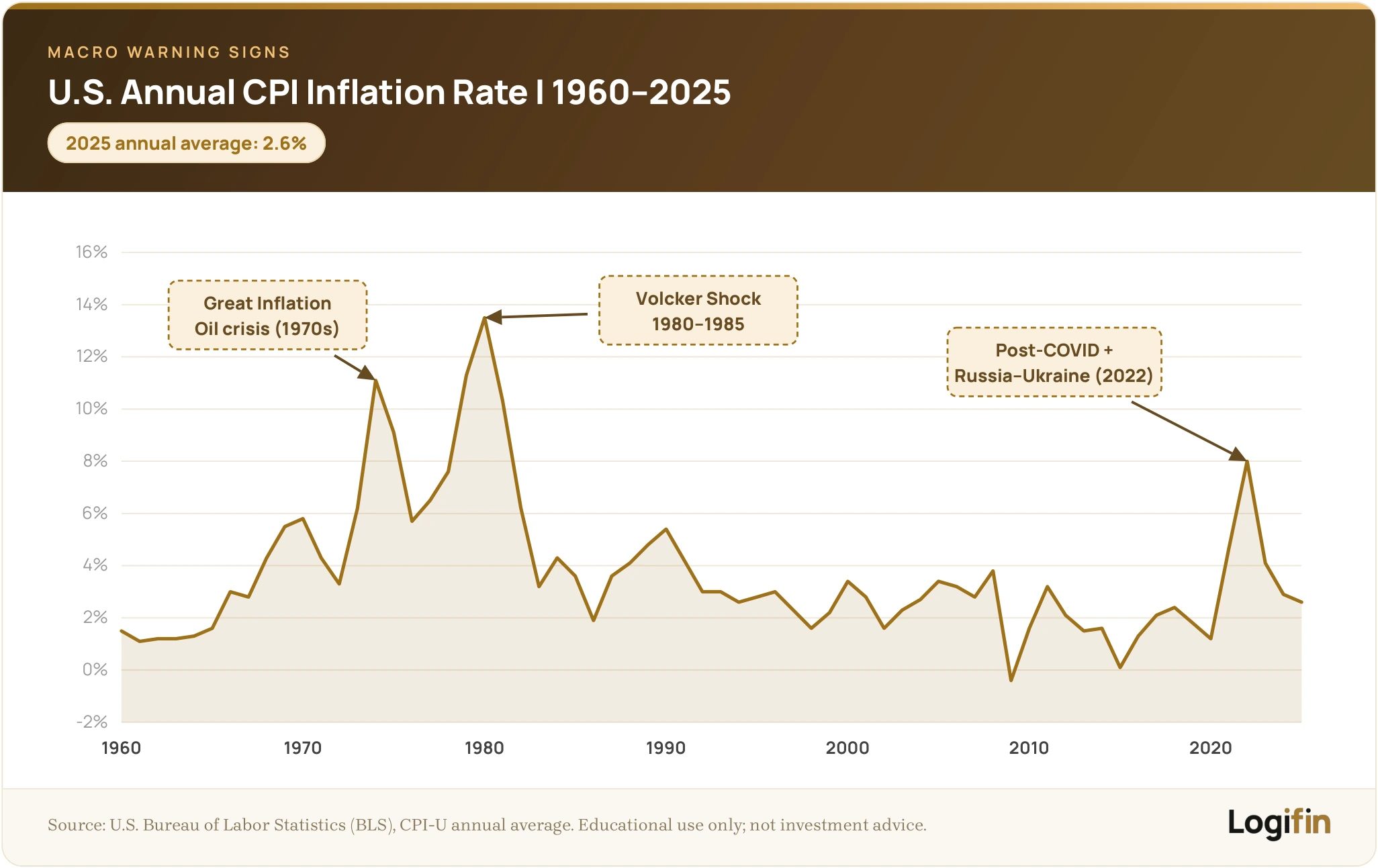
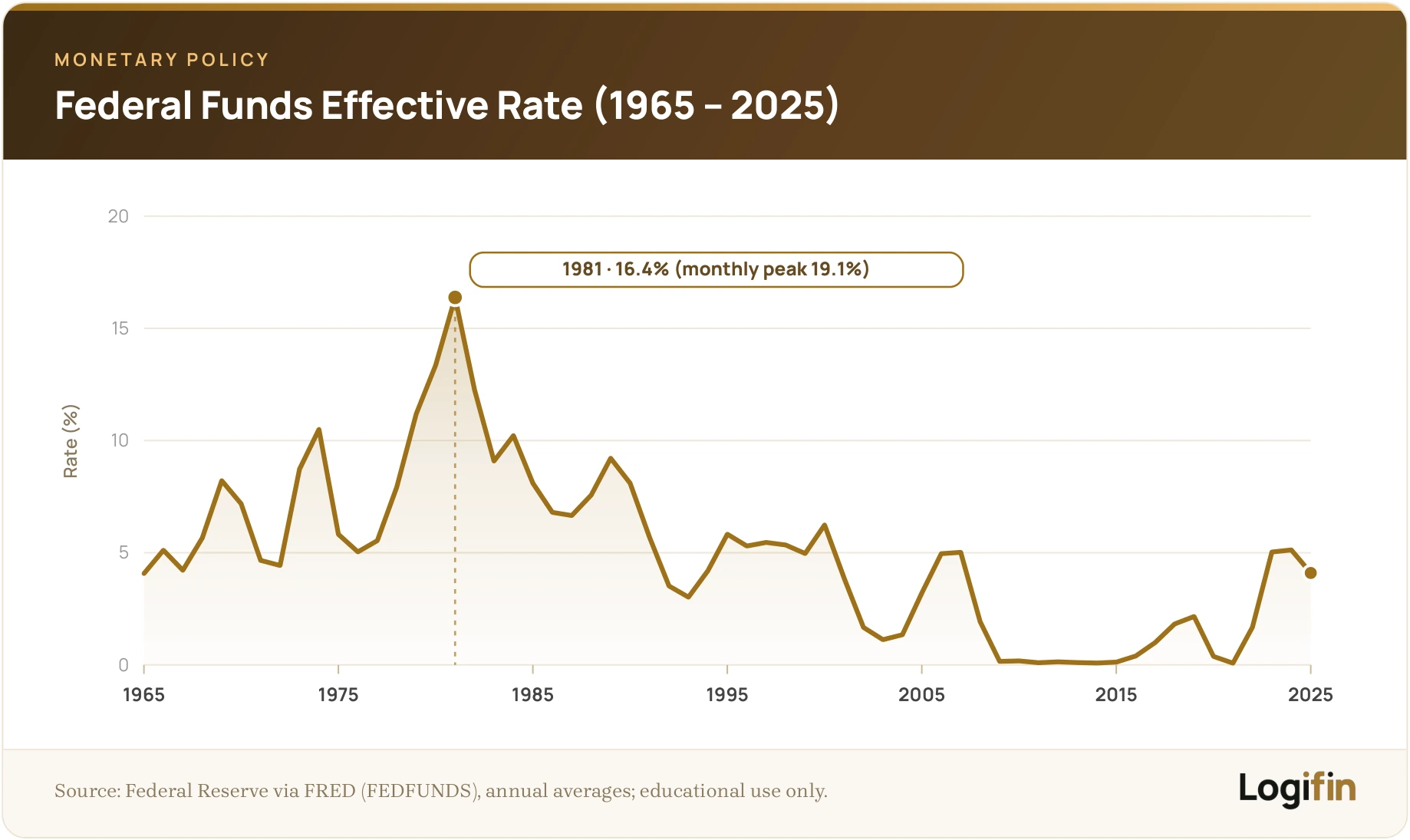
In the early ’80s, with U.S. inflation reaching 13.5%, the Fed under Paul Volcker raised interest rates close to 20%.
This aggressive policy led to a recession and a short-term surge in unemployment, but it restored confidence and brought inflation below 5% by the middle of the decade.
2. Maximum employment
The Fed does not directly determine how many people are employed.
Through monetary policy it influences the cost of borrowing and the financing conditions that determine whether businesses expand or contract.
- When rates are low, businesses borrow more cheaply, expand and hire staff.
- In an environment of excessive growth that threatens to cause inflation, the Fed raises rates, even if this temporarily increases unemployment.
In the 1990s, the Fed kept inflation low (around 2–3%) and, after 1997, unemployment fell below 5% for several years.

This period is often seen as a “golden era” of the dual mandate in action, with steady growth, rising productivity and strong markets.
3. A third, informal goal: financial stability
Although it is not explicitly described in legislation, the Fed has also taken on the critical role of financial-system stability.
Example:
- In the subprime crisis (2008–2009), the Fed launched its first QE (Quantitative Easing, i.e. massive bond purchases to boost liquidity), buying securities worth over $1 trillion and activating emergency liquidity programmes to prevent the collapse of the banks.
- Twelve years later, in the COVID-19 pandemic, it repeated the aggressive easing with unlimited purchases of government securities and (for the first time in its history) purchases of corporate bonds, to ensure markets functioned smoothly.

The Fed’s main tools
To achieve its goals (price stability & maximum employment), the Federal Reserve has a powerful “toolbox”.
Its tools are not theoretical; they directly affect lending rates, consumption, investment and ultimately the path of the markets themselves.
1. Policy rates (Federal Funds Rate)
The Fed’s most important tool. This is the rate at which banks lend short-term funds to each other (overnight).
- When the Fed lowers it, money becomes cheaper → loans, consumption and investment increase.
- When it raises it, money becomes more expensive → demand shrinks, inflation falls, but growth often slows too.
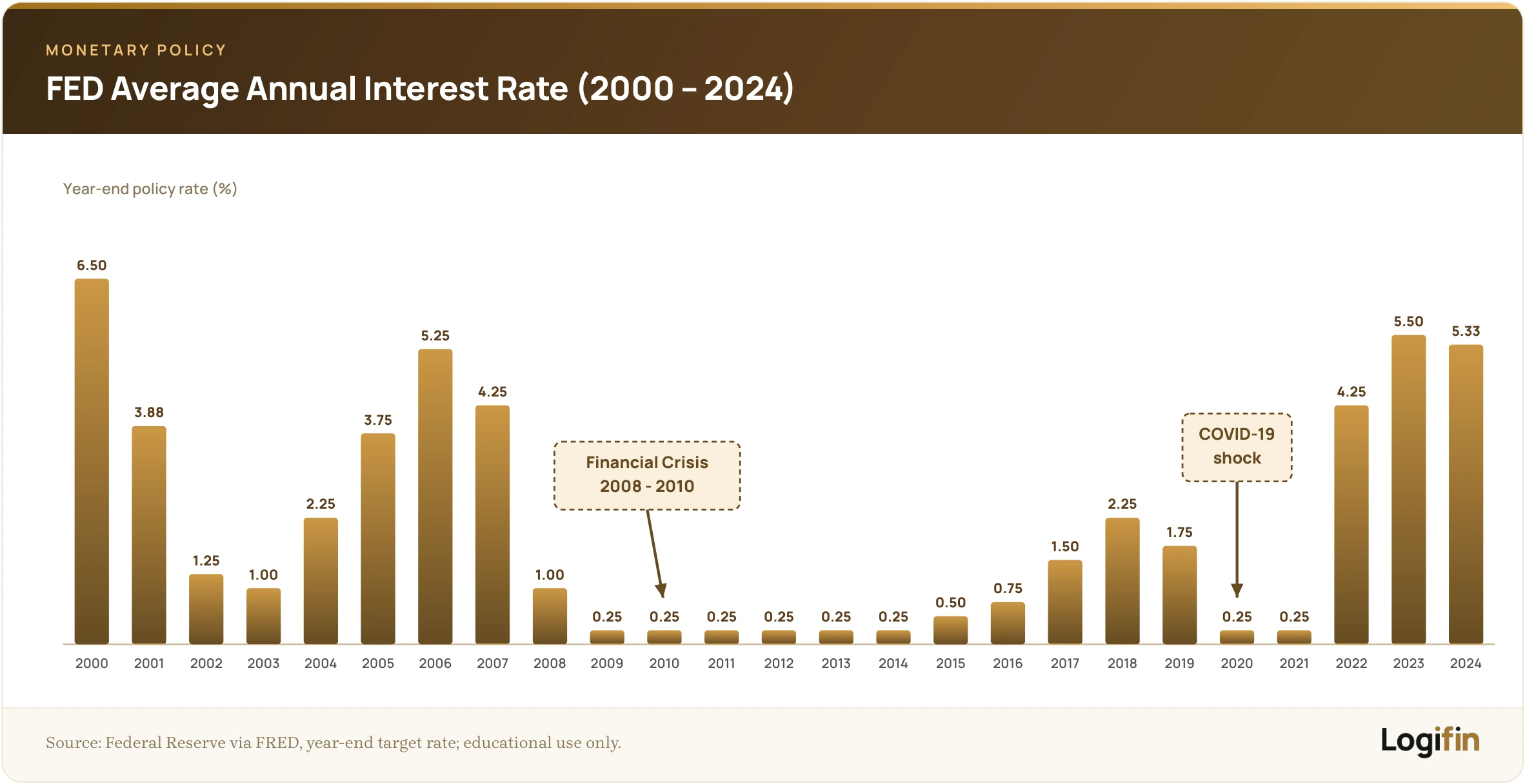
Example: In 2020, with the outbreak of the pandemic, the Fed cut the rate to nearly 0% to support the economy, giving breathing room to businesses and households.
2. Open Market Operations (OMO)
The Fed buys or sells government bonds to regulate liquidity in the banking system.
- Buying bonds → increases liquidity, lowers rates.
- Selling bonds → absorbs liquidity, pushes rates up.
These decisions are made by the FOMC (Federal Open Market Committee), the body that sets the Fed’s monetary policy.
Open Market Operations (OMO) are the most frequent and flexible tool the Fed has at its disposal and are used on a daily basis for the “fine-tuning” of the money market.
Through purchases or sales of government bonds, the FOMC can quickly adjust liquidity in the banking system, ensuring that the target rate (federal funds rate) stays close to the decided level.
3. Quantitative Easing (QE)
- In extreme situations, the Fed moves to massive purchases of bonds and mortgage-backed securities, affecting not only short-term but also long-term rates.
- Goal: to push yields to historic lows, boost liquidity and support the markets.
- It is often applied when rates have already fallen to near zero and there is no further “room” for cuts.
Example:
- After the 2008 crisis, the quantitative easing (QE) programmes increased the Federal Reserve’s balance sheet from roughly $900 billion to about $4.5 trillion by the mid-2010s.
- During the 2020 pandemic, QE was applied on an even larger scale: the balance sheet surpassed $7 trillion within a few months and peaked near $9 trillion during 2022.
4. Reserve Requirements
The Fed sets how much capital banks must hold in reserve against their deposits.
- Lowering the requirements → banks can lend more, boosting the circulation of money.
- Raising them → credit expansion is curbed and so is the chance of the economy overheating.
Example:
- In March 2020, amid the COVID-19 crisis, the Fed set reserve requirements to 0%, for the first time in history.
- This allowed banks to lend without reserve constraints, easing the flow of liquidity into the real economy.
5. Forward Guidance (communication strategy)
Markets react not only to the Fed’s actions, but also to its words.
Communication strategy (forward guidance) is used to steer the expectations of investors and businesses.
Example:
- In August 2022, at Jackson Hole, Jerome Powell made clear that the Fed would maintain a strict stance until inflation was brought under control.
- His speech triggered an immediate rise in bond yields and a drop in stocks, underlining that the Fed’s communication can move markets almost as much as the policy decisions themselves.
How do the Fed’s decisions affect the U.S. and global economy?
The Federal Reserve’s (Fed) decisions are not “technical details”.
They have a direct and indirect impact on the economic life of billions of people, not only in the U.S. but also internationally, due to the central role of the dollar as the global reserve currency.
🔶 Effects on the U.S. economy
Consumption and loans:
- When the Fed lowers rates, mortgages, consumer loans and business loans become cheaper.
- This increases consumption and investment, giving the economy a boost.
- Conversely, raising rates curbs demand.
Real-estate market:
- Falling rates strengthen housing demand, leading to higher prices.
- When rates rise, monthly instalments become more expensive, causing the market to “brake”.
Employment:
- The Fed indirectly affects the labour market.
- Low rates → cheaper financing → more hiring.
- High rates → reduced investment → possible rise in unemployment.
Example: During the pandemic (2020), the Fed slashed rates to nearly 0% and provided enormous liquidity. This policy averted a new Great Depression and helped the labour market recover far faster than in the 2008 crisis.
🔶 International effects
Exchange rates:
- When the Fed raises rates, the dollar strengthens as it becomes more attractive to investors.
- This makes imports more expensive for other countries and pressures local currencies.
Capital flows:
- Higher U.S. rates attract international capital into American assets, often at the expense of emerging markets that see capital outflows.
Commodity prices:
- Since most commodities (e.g. oil, gold, grains) are priced in dollars, the strength of the USD directly affects international prices.
- A strong dollar → commodities become more expensive for the rest of the world.
🔶 Effects on Europe and the ECB
- The Fed often acts as a “driver” of global monetary policy.
- When it raises rates, the ECB and other central banks are forced to follow in order to protect the exchange rate and contain inflationary pressures.
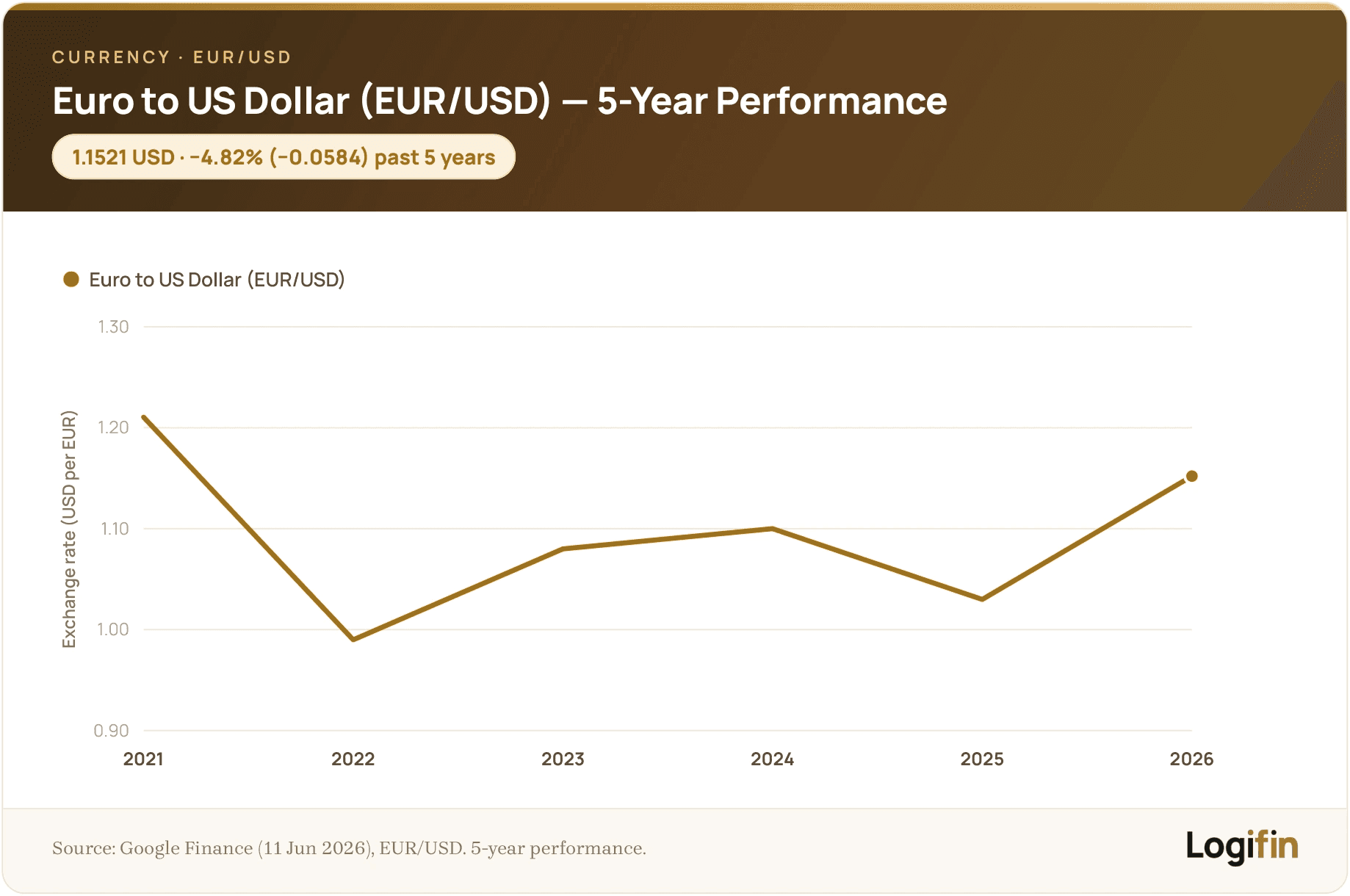
Example: In 2022–23, the Fed began raising rates much earlier and more aggressively than the ECB. This policy gap drove the euro below 1:1 parity against the dollar, for the first time in 20 years (July 2022).
🔶 Risks from the Fed’s decisions
- Too-rapid rate hikes can lead to a recession in the U.S. and globally.
- Reacting too slowly to inflation can cause a loss of confidence and even more extreme measures later.
- Emerging markets are hit especially hard, as they depend on dollar borrowing and see massive capital outflows when U.S. yields rise.
How does the Fed affect the markets: stocks, bonds, ETFs and crypto?
The Federal Reserve’s decisions are not confined to the U.S. economy; they are directly reflected in global markets.
From stock exchanges to crypto, every category of investment product reacts differently to monetary policy.
🔶 Stocks
The Fed’s decisions are directly reflected in stocks, as they affect both companies’ borrowing costs and investors’ alternatives.
Low rates → positive for stocks
- Borrowing becomes cheaper, companies can invest more in growth, their profits rise and valuations climb.
- Also, when bonds offer low yields, investors turn more to stocks in search of higher returns.
High rates → pressure on stocks
- The cost of capital rises, loans become more expensive and companies cut investment or grow more slowly.
- At the same time, consumers cut back spending, which pressures revenues. In such an environment, investors prefer “safer” bonds that now offer more attractive yields, so demand for stocks falls.
Example: In 2020–21, with rates near 0%, the Nasdaq soared, as tech companies benefited from cheap money. By contrast, in 2022, when the Fed began the most aggressive rate hikes in decades, the Nasdaq posted a decline of over –30%.

Tip: “Growth” stocks (e.g. tech) are usually more vulnerable to rate hikes, because they rely on future earnings. “Value” stocks (e.g. energy, banks) tend to hold up better.
🔶 Bonds
Bonds are perhaps the asset most directly affected by the Fed’s decisions, as rates and their yields are closely linked.
When the Fed raises rates:
- Yields on new bonds rise, since investors demand a greater reward to lend.
- But this makes older bonds with lower coupons less attractive → their prices fall in the secondary market.
When the Fed lowers rates:
- Yields on new securities fall.
- So, existing bonds with a higher coupon gain in value and their prices rise.
Example: A 10-year bond with a 2% coupon becomes less attractive when new ones are issued at 4%. Its price will adjust downward so that its real yield keeps pace with the market.
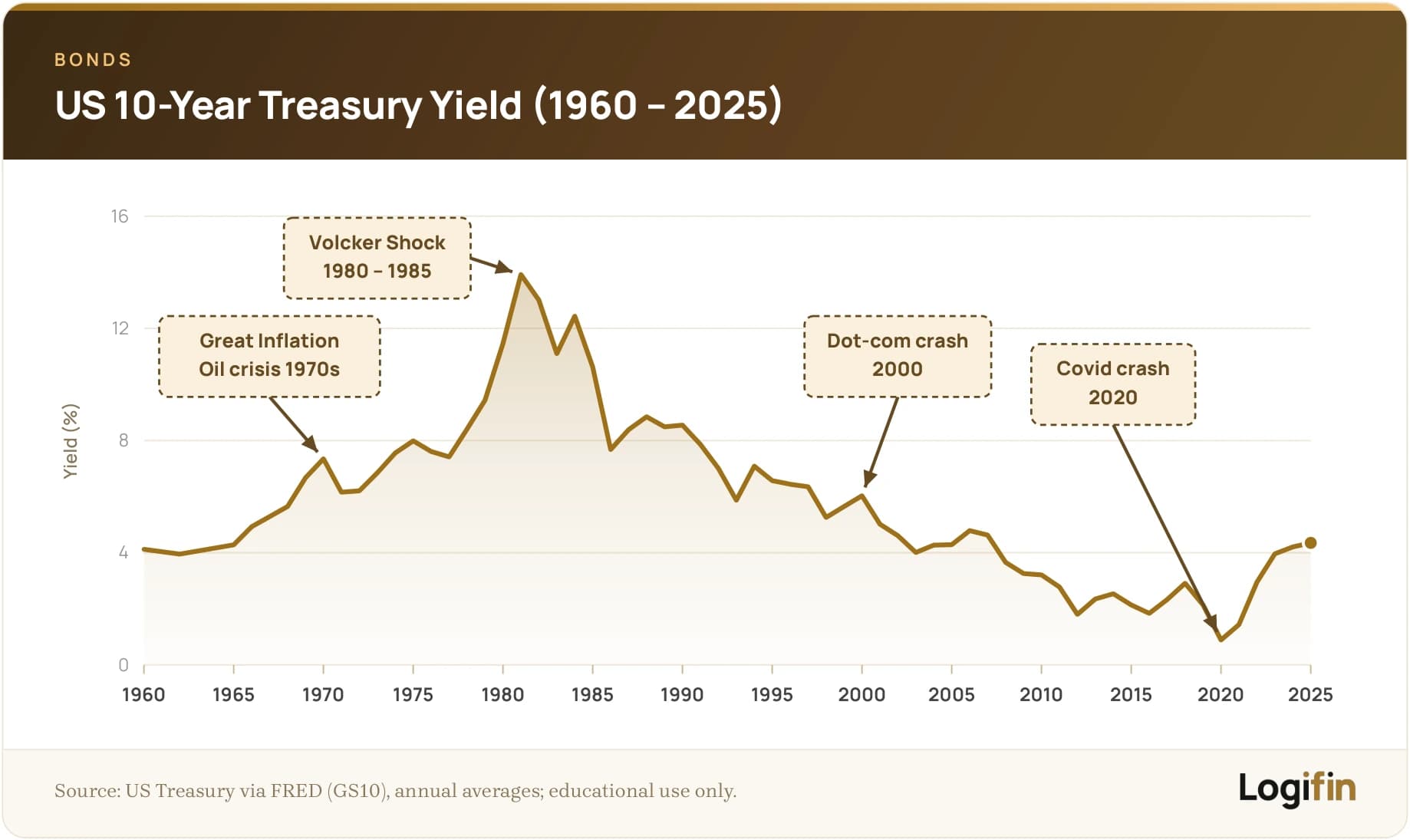
Tip: The longer a bond’s duration, the more strongly its price is affected by rate changes. That is why, in periods of rising rates, short-term bonds are considered “safer” against capital losses.
🔶 ETFs
Equity ETFs (e.g. S&P 500, Nasdaq) naturally track the path of stocks and are affected by the same forces: low rates favour growth and lift prices, while high rates create pressure.
Bond ETFs, by contrast, are particularly sensitive to the Fed’s decisions, since rising rates reduce the prices of the bonds they hold. The mechanism is simple: when new bonds are issued with higher yields, older ones with a lower coupon lose value.

The crucial factor here is duration:
- The longer a bond ETF’s duration, the more strongly it is affected by rate moves.
- Short-term ETFs have smaller fluctuations, while long-term ones can see sharp price swings even with a small rate increase.
Tip: If you want bond exposure through ETFs in a rising-rate environment, prefer short-term bond ETFs to limit losses from rising yields.
🔶 Commodities & Gold
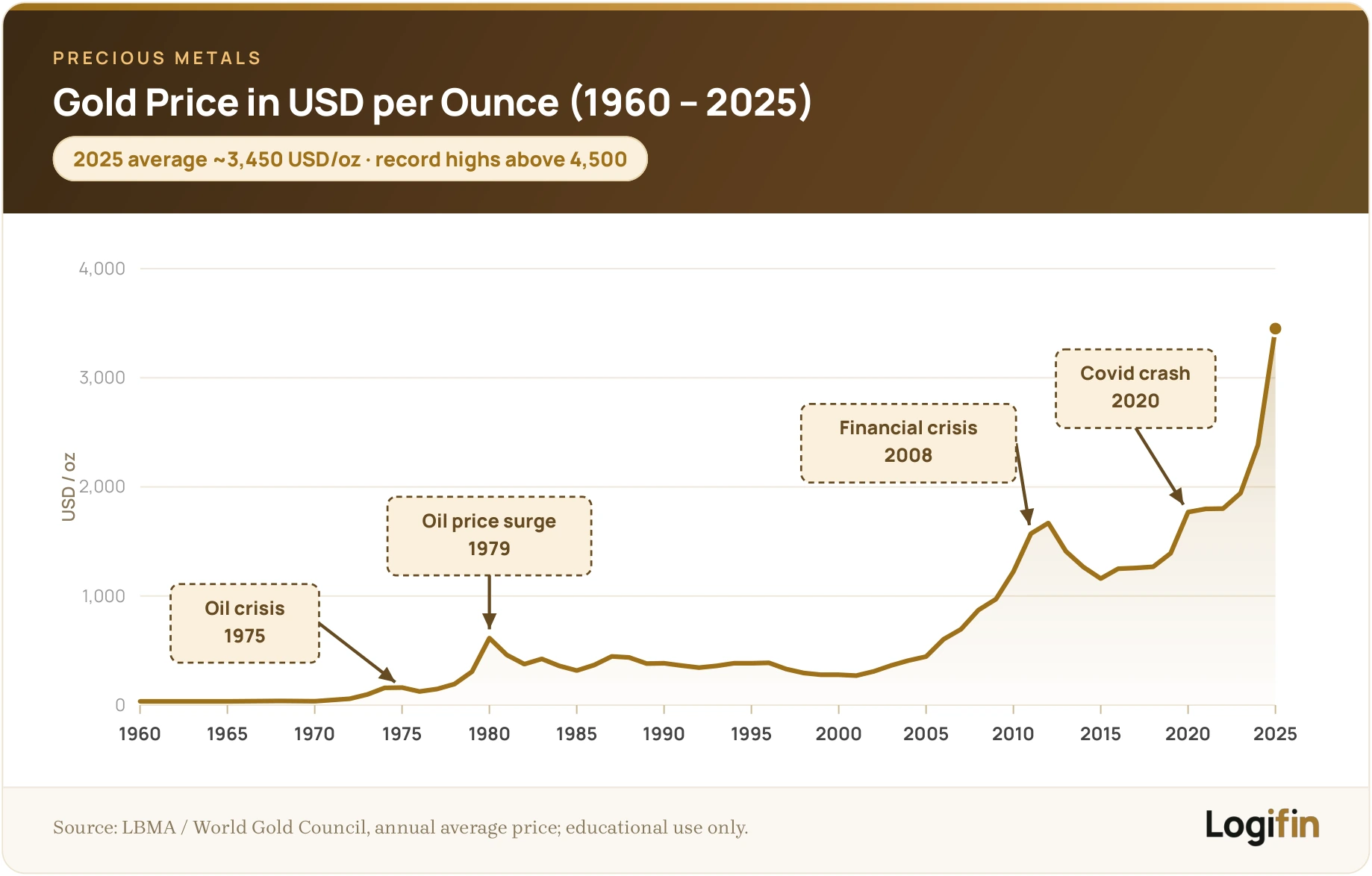
- Gold often strengthens when the Fed eases monetary policy: low rates and increased liquidity lead to higher demand.
- But when the dollar strengthens due to high rates, gold comes under pressure.
Example: In the ’70s, amid high inflation and uncertainty, gold more than tripled in value, acting as a "safe haven" for investors.
🔶 Crypto
Cryptocurrencies are considered risk assets, i.e. high-risk, high-volatility investments.
Their path is directly affected by the Fed’s decisions on liquidity and rates, as investors treat them more like a “bet” on the abundance or tightening of money.
- When the Fed keeps rates low and floods the market with liquidity, crypto benefits.
- But when the Fed "tightens" monetary policy, investors avoid risk and crypto prices drop sharply.
In practice:
- In 2020–21, under zero rates and massive QE, Bitcoin surpassed $60,000, with a huge inflow of capital and a spectacular rise across the whole crypto market.
- In 2022, the continuous rate hikes led to a bear market, with Bitcoin falling below $20,000.

Conclusion and practical takeaways
The Fed is far more than an “American affair”. It is the institution that holds the global “steering wheel” of monetary policy.
🔑 What to keep in mind
- The Fed has a dual mandate: price stability & maximum employment.
- It has powerful tools (rates, QE/QT, open market operations, forward guidance).
- Its decisions directly affect the markets for stocks, bonds, ETFs and crypto.
- It has greater global power than the ECB, due to the role of the dollar.
Practical tips for new investors
1. Follow the FOMC meetings
- Every announcement on rates can move markets on a global level.
- Even a single phrase in the Fed Chair’s press conference can lift or sink bond yields and stock indices.
2. Watch long-duration bonds
- They are the most vulnerable to rate hikes.
- If you want to avoid large losses in inflationary periods, consider shifting to short-term bonds or inflation-linked securities.
3. Think globally
- When the dollar strengthens, assets in emerging markets come under pressure (due to capital outflows and more expensive borrowing).
- A balanced portfolio should take into account the global dimension of the Fed and be allocated across geographic regions.

The content of this article is provided exclusively for informational and educational purposes and does not constitute investment advice or a recommendation to buy or sell financial products. The information is based on publicly available sources considered reliable, without any guarantee of accuracy or completeness. Before making any financial or investment decision, it is recommended that you consult a certified professional advisor or accountant, taking into account your own financial situation and risk profile. The Logifin team bears no responsibility for any direct or indirect damages arising from the application of the information presented.
Related articles

What is the ECB and how does it affect the economy and the markets?
The role of the European Central Bank in our everyday lives and investments
15 min read

What is inflation and how does it affect your investments?
The “invisible tax” that reduces purchasing power and changes the rules of the game for investors
16 min read

What is a recession and how it affects investors?
How a recession is defined, what causes one, how the markets usually behave during it and what an investor can do to prepare in advance.
24 min read

What are the signs before a bear market?
How to read the macroeconomic indicators, the market behaviour and the investor psychology that often appear before a fall of more than 20%.
19 min read
EXPLORE LOGIFIN
Everything you need in order to learn, plan and track your investments.
Logifin Blog
Learn everything you need to get your finances in order and invest with confidence.
Logifin Insights
What moves the markets and what it means for a long term investor. Short and without the noise.
Logifin Tools
Free, inside the site, no signup. Everything you calculate stays on your device.
Logifin ETF Hub
Find the ETF that fits you: 550+ UCITS ETFs, smart filters and in-depth comparisons.
Logifin Guides
A series of guides that builds your investment plan step by step. The first guide is free for everyone.
Logifin Circle
The tools and the Hub are free for everyone. You become a member for the intelligence that never stops.