DCA: The most stable investment strategy
What dollar cost averaging is, how it lowers risk and when it beats lump sum investing.
15 July 2025 · 15 min read

Introduction: Can you invest without predicting the market?
If you are starting your journey into the world of investing right now, there is one question that probably troubles you more than any other: when is the right time to invest?
It is the question that has haunted millions of investors. It is often the one that leads to postponements, hesitation or even completely wrong decisions. Some wait for the "good opportunity". Others convince themselves that they must get in quickly "before they miss the train". And almost everyone ends up losing precious time trying to predict the future.
The truth is simpler, but also harder: Trying to "time the market" is one of the most dangerous traps in investing.
Even professional investors, with decades of experience and access to complex tools, often fail when they try to predict short-term market moves. Let alone an everyday investor, with limited time and uncertain psychology.
This is where DCA (Dollar Cost Averaging) comes in: the strategy of investing the same amount at regular intervals, regardless of what the market is doing.
It is not based on prediction, but on consistency: it removes noise, emotion and gambling from the equation, offering the investor a simple yet highly effective tool for building wealth.
What DCA is and how it works
Dollar-Cost Averaging (DCA) is an investing strategy built on consistency and discipline. Instead of investing a large amount all at once (a so-called lump sum), you invest the same amount at regular intervals, usually every month.
The idea is so simple it almost sounds “boring”: you put the same amount into the same ETF every month, no matter what the market is doing at the time.
- You do not change the amount.
- You do not change the product.
- You do not try to “buy the dip”.
And yet, it is exactly this simplicity that makes DCA so practical, especially for someone investing out of a monthly salary.
🔶 A simple example
Let us say you decide to invest 100 € every month in an ETF. Its price changes from month to month, but you keep putting in the same amount, without worrying whether the price is “good” or “bad”.
- January: the price is 100 € per unit. With 100 € you buy 1 unit.
- February: the price drops to 80 €. The same amount buys 1.25 units.
- March: the price falls to 50 €. Now 100 € gets you 2 units.
- April: the price hits 40 €, its lowest point. The same 100 € buys 2.5 units.
- May: the price recovers to 80 €: 1.25 units again.
- June: the price returns to 100 €: 1 unit.

After 6 months you have invested 600 € in total, but you have bought a different number of units each time: more when they were cheap, fewer when they were expensive. Altogether you collected 9 units.
💡 The result: Your average purchase price comes to 66.67 € per unit (600 € ÷ 9 units), lower than the simple average of the period’s prices, which was 75 €. And all without having to predict anything.

That happens because, by buying steadily, you automatically put “more weight” on the cheap months. So your cost gets smoothed out and does not depend on whether you nailed the “right” day.
🔶 The essence:
- DCA reduces the risk of investing all your capital “at the wrong moment” and eases the emotional strain during market downturns.
- You do not care whether the price went up or down today. You do not need to open apps every morning: you just invest and let time and compounding work for you.
⚠️ Let us be honest, though: DCA is not a “magic trick” that always beats lump sum.
- When the market rises steadily, investing the full amount early often performs better.
- The value of DCA lies elsewhere: it gives you a realistic, stress-free way to invest continuously out of your income, something most people can actually stick to.
What the studies say about DCA versus lump sum
One of the most common questions that comes up once someone learns about DCA is this: "Since I have the whole amount available now, why not invest it all at once? Will I not make more?"
The answer is a little more complex than it seems. Let us start with the data.
🔶 The Vanguard study: lump sum performs better, but with conditions
Vanguard, one of the largest asset managers in the world, carried out a major study in 2012 titled "Dollar-Cost Averaging Just Means Taking Risk Later".
The research analysed rolling ten-year periods across three markets: the United States, the United Kingdom and Australia (Vanguard, 2012).
The results showed that the lump sum strategy delivered better returns roughly 66% of the time, mainly in rising phases of the market. This is to be expected, since when you invest all at once in a bull market, you benefit from full participation in the rise from the start.

However, the same study highlighted something crucial:
- Lump sum can have a higher return, but also higher risk, especially when the market is in a phase of high volatility or recession.
- DCA, on the other hand, offers the investor a smoother experience, reducing volatility and psychological load. The same research showed that investors with lower risk tolerance would benefit more from a DCA plan, even if the final return was marginally smaller.

🔶 Why this matters in practice
Theory says that "if you can stay 100% invested from day one, then lump sum is better". But practice says something else:
Most people do not have the psychology to "sit still" when their portfolio drops 10% within three weeks.
Fear of loss, overthinking and the desire for "protection" often lead to premature selling, wrong decisions and "jumping" from strategy to strategy.
This is where DCA has the edge:
- It does not require you to be a psychologist or a market analyst.
- It protects you from making big mistakes abruptly.
- It gives you time to enter the market gradually and adjust.
🔶 What would happen if you did lump sum just before a fall?
Let us look at a realistic scenario.
- Suppose you have 10,000 € available to invest and you decide to put it all at once into the S&P 500 in January 2022.
- At that time the index is near its historical highs and the market looks strong. It seems like a good moment.
- A few months later, however, the energy crisis breaks out, central banks raise interest rates sharply and stocks enter a downward path.
- By October, your portfolio has fallen by more than 20%, while the original 10,000 € investment has "dropped" below 8,000 €.

But if, instead of investing the whole amount at the start, you had applied DCA, that is 1,000 € every month for 10 months, the result would have been completely different:
- You would have bought more units in the months when the market was sinking and fewer at the start, when prices were high.
- Your average purchase price would have been noticeably lower and the total loss in your portfolio clearly smaller.
🔶 Even more important is the psychological benefit.
- You would not have thrown all your money in at the "top" only to watch your account bleed later on.
- You would not have to wonder every week whether you had made "the biggest mistake".
With DCA, you would experience the same period with less pressure and more control, because you would know that you are buying more cheaply each month. And when the market eventually recovered, as it usually does, you would already be "in", with a healthier profile.
Why DCA is more than just a safe method
If you search online for information about DCA, you will very likely come across a phrase that keeps repeating: "DCA is a good strategy to reduce risk."
And indeed, that is correct. DCA reduces the chance that you invest your entire amount at the top of the market.
But this description, though accurate, underestimates the deeper value of this strategy.
DCA is not merely a risk-management tool. It is a system of investing that helps you stay in the game over the long term. And that, on its own, is the biggest advantage it can offer you.
🔶 DCA protects you from… yourself
The biggest threat to the path of a portfolio is not the market itself, but the investor who "breaks" under pressure.
- When a fall begins, your instinct says "stop investing, you will lose more".
- When the market rises sharply, you think "get in now with everything, or you will miss the opportunity".
- And when you see someone else getting better returns with riskier choices, you feel the urge to change strategy.
DCA is like switching on an autopilot that keeps working for you even when you feel insecure or doubtful.
🔶 The power of discipline and repeatability
How many times have you started a plan for saving, dieting or exercise, only to abandon it within a few weeks? The reason is almost always the same: lack of a steady system.
DCA, however, helps you build a habit. To turn investing into something as predictable as paying the rent or the electricity bill.
If you apply it for several months, it becomes second nature. If you apply it for several years, it becomes a pillar of your financial future.
🔶 It is not impressive, but it works
DCA will not give you a reason to brag at the office that you "made +30% in one month". It will not give you the adrenaline of catching the "big opportunity".
But it will keep you in the market when everyone else is panicking.
It will help you accumulate units when prices are low. And it will give you a system that works without your intervention.
Consistency is the super-factor that makes the difference in the end. And DCA is designed to secure it, even when you lack the mood, the time or the confidence.
Which investors benefit most from DCA?
One of the most important questions worth asking before choosing an investment strategy is this: "Does this approach fit the way I live, think and operate?"
Whether DCA is for you depends less on the amount of money you have and more on your profile and psychology as an investor.
So let us look at which types of investors tend to do better with the Dollar Cost Averaging method.
🔶 Beginners who are just starting
- If you are new to the world of investing, it is perfectly reasonable not to feel comfortable with complex charts, economic cycles or aggressive moves.
- DCA lets you start without stress, learn gradually how the market moves and, most importantly, avoid exposing yourself to a single point in time that might turn out to be unlucky.
- It is like learning to swim in shallow water: you will not drown, but little by little you will gain confidence.
🔶 People with limited time
- If you work long hours, have family obligations or simply have no interest in following the market daily, then DCA is ideal for you.
- It does not require constant monitoring. You do not need to "time" the market. It simply runs in the background, like a subscription that serves you without you thinking about it.
- This automation is particularly useful for busy professionals or people who want to invest without also investing their time.
🔶 Those with a steady monthly income
- If you are paid monthly, like the majority of employees, then DCA aligns perfectly with the way money comes into your account.
- You do not need to gather a large capital. Instead, you can invest part of your monthly surplus, creating stability without stress.
- Investing this way becomes part of your routine, like Monday coffee or the Thursday gym session.
- You do not wait for the "ideal moment". You create it yourself through your consistency.
🔶 Conservative investors or those with low risk tolerance
- If the idea that you could lose a large part of your money "from one day to the next" makes you anxious, DCA gives you a calmer and more composed framework.
- Every time the market falls, you do not see it as a threat, but as an opportunity to buy more cheaply. You have no reason to panic: the plan continues.
- In an era where "I do everything myself" has become a trend, DCA reminds you that sometimes, less is more.
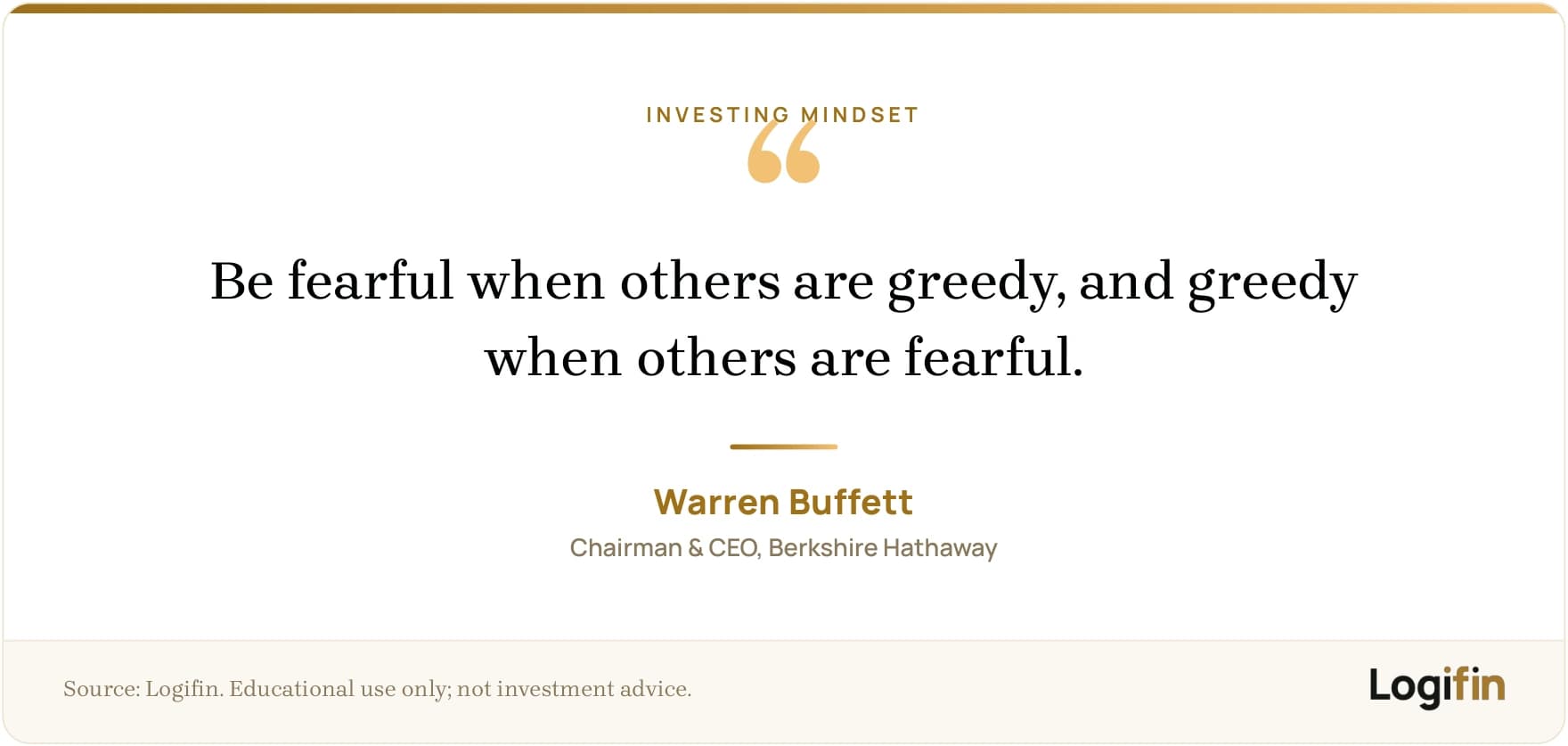
💡 Tip for everyone:
- DCA is not a strategy only for beginners.
- Many experienced investors apply it to parts of their portfolio, for example for buying thematic ETFs, reinvesting dividends or dollar-based hedging.
- The difference is that they apply it consciously and with discipline, not as a "second choice".
How to apply DCA correctly, step by step
The great advantage of DCA is that almost anyone can apply it, as long as there is consistency.
What follows is a simple and practical guide to applying it without complications and stress.
1. You set the amount you can invest each month.
- It does not matter whether it is 50 €, 150 € or 500 €.
- What matters is that it is an amount that fits the pace of your life and that you can keep steadily, month after month, for years.
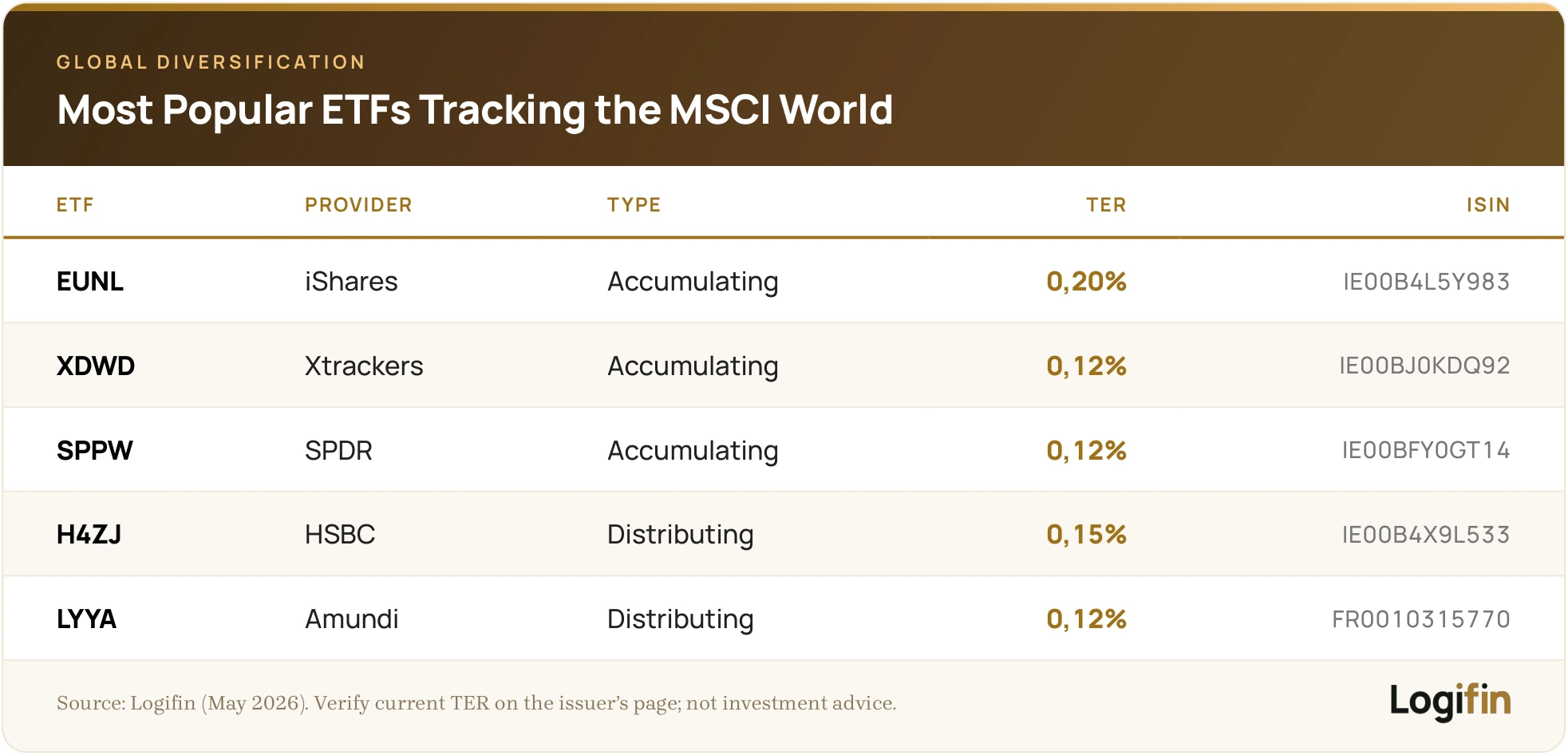
2. You choose where to invest this amount.
- Most people start with ETFs, since they offer broad diversification, low cost and are suitable for small, recurring contributions.
- Depending on your experience, you can also consider thematic ETFs, mutual funds or individual stocks.
3. Automation.
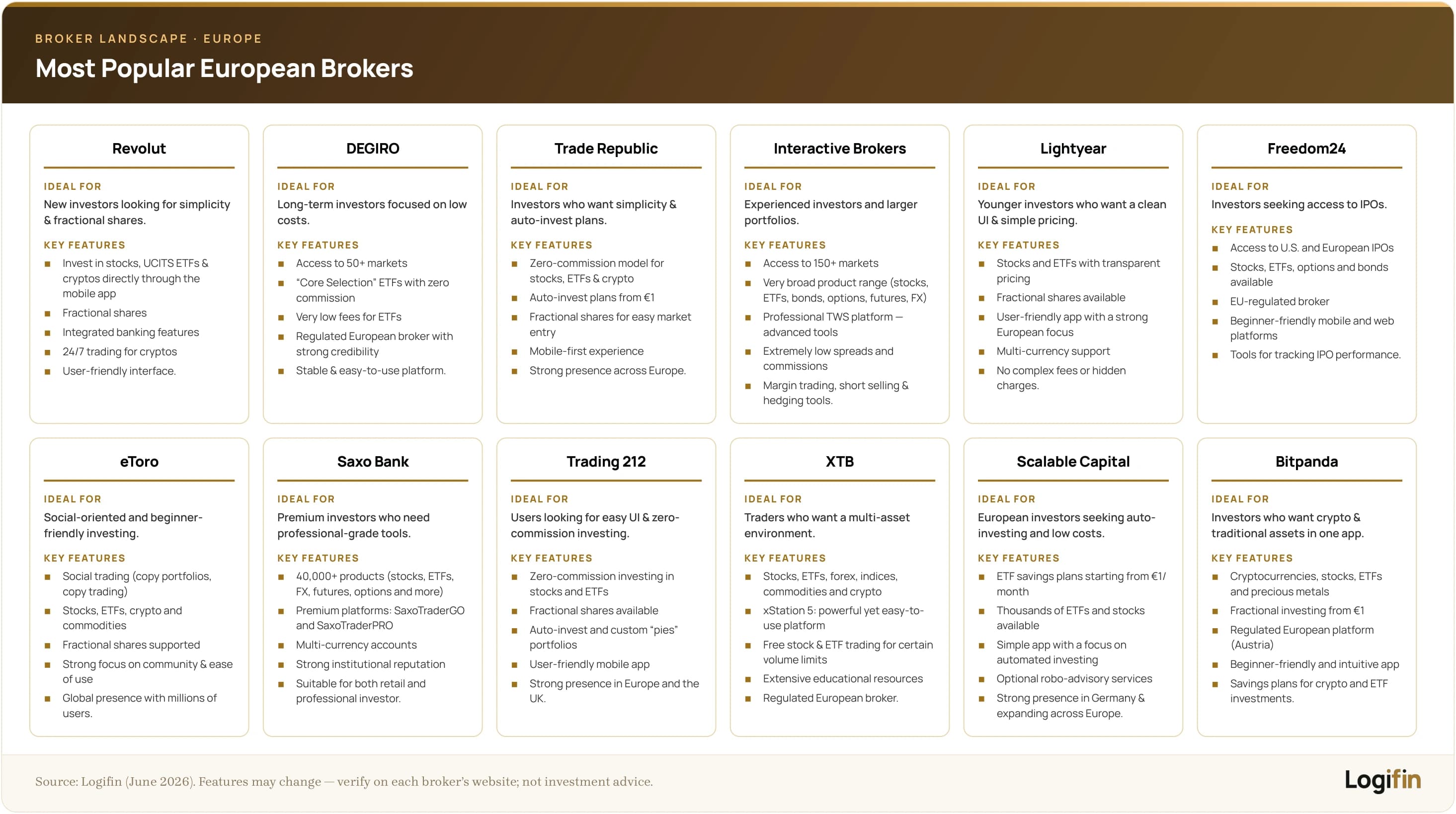
- Whether you use a standing bank order or a recurring buy inside your platform, make sure the process happens automatically.
- The fewer decisions you have to make each month, the easier it is to stay consistent.
- Most brokerage platforms allow investors to automate their investments through a standing order.
4️⃣ Stay with the plan. Not because "you are not allowed to change it", but because consistency is what creates added value in DCA.
The most common mistakes that undermine the strategy
As simple as DCA looks in theory, there are specific traps that can undermine its effectiveness. Most of them have nothing to do with technical errors, but with psychological reactions and impulsive decisions.
🔶 Stopping DCA when the market falls.
- This is perhaps the most common and the most destructive.
- When prices drop, DCA works in your favour: you buy more units cheaply and lower your average entry price.
- To stop at that moment is like avoiding the discounts on something you intend to buy anyway.
🔶 Constantly changing strategy.
- One ETF in January, another in March, a pause in April, a fresh start in June.
- That is not DCA. It is inconsistency with a hint of regularity.
- DCA is based on continuity, not on the variability of your choices.
🔶 Choosing the wrong product.
- The fact that you apply DCA does not mean every product is suitable.
- If you invest consistently in something you do not understand or that has excessive cost, the problem is not the strategy, but the tool you are using.
🔶 Comparing yourself with others.
- Your friend who invested all at once in 2020 and made +80% in one year does not follow the same plan, nor does he have the same psychological tolerance for risk.
- DCA is not about winning the month.
- It is about winning the war of time, with calm, endurance and step-by-step wealth building.
Conclusion and practical takeaways
Dollar Cost Averaging is not merely an investment technique. It is a philosophy, a way to invest without having to predict, to stress or to hope for the "right moment".
- It is the choice of consistency over impulse.
- Of discipline over prediction.
- Of the plan over instinct.
In a world full of noise, where markets move up and down daily and social media floods you with "opportunities" you must not miss, DCA helps you to step back and build wealth at your own pace.

The content of this article is provided exclusively for informational and educational purposes and does not constitute investment advice or a recommendation to buy or sell financial products. The information is based on publicly available sources considered reliable, without any guarantee of accuracy or completeness. Before making any financial or investment decision, it is recommended that you consult a certified professional advisor or accountant, taking into account your own financial situation and risk profile. The Logifin team bears no responsibility for any direct or indirect damages arising from the application of the information presented.
Related articles

Compound interest: Why it is called the "eighth wonder of the world"
The phenomenon that turns time into the strongest ally of your investments. And how not to cancel it.
11 min read

How to start investing: A beginner's guide
The complete guide to start investing: strategy, products, choosing a platform and the traps you need to avoid.
15 min read

How to build a resilient portfolio
A guide for investors who want to build something stable, simple and rewarding over the long term.
19 min read

What is a recession and how it affects investors?
How a recession is defined, what causes one, how the markets usually behave during it and what an investor can do to prepare in advance.
24 min read
EXPLORE LOGIFIN
Everything you need in order to learn, plan and track your investments.
Logifin Blog
Learn everything you need to get your finances in order and invest with confidence.
Logifin Insights
What moves the markets and what it means for a long term investor. Short and without the noise.
Logifin Tools
Free, inside the site, no signup. Everything you calculate stays on your device.
Logifin ETF Hub
Find the ETF that fits you: 550+ UCITS ETFs, smart filters and in-depth comparisons.
Logifin Guides
A series of guides that builds your investment plan step by step. The first guide is free for everyone.
Logifin Circle
The tools and the Hub are free for everyone. You become a member for the intelligence that never stops.