What is a mutual fund? The complete guide
The most widely used form of collective investment and why it remains popular worldwide
22 August 2025 · 16 min read

What is a mutual fund?
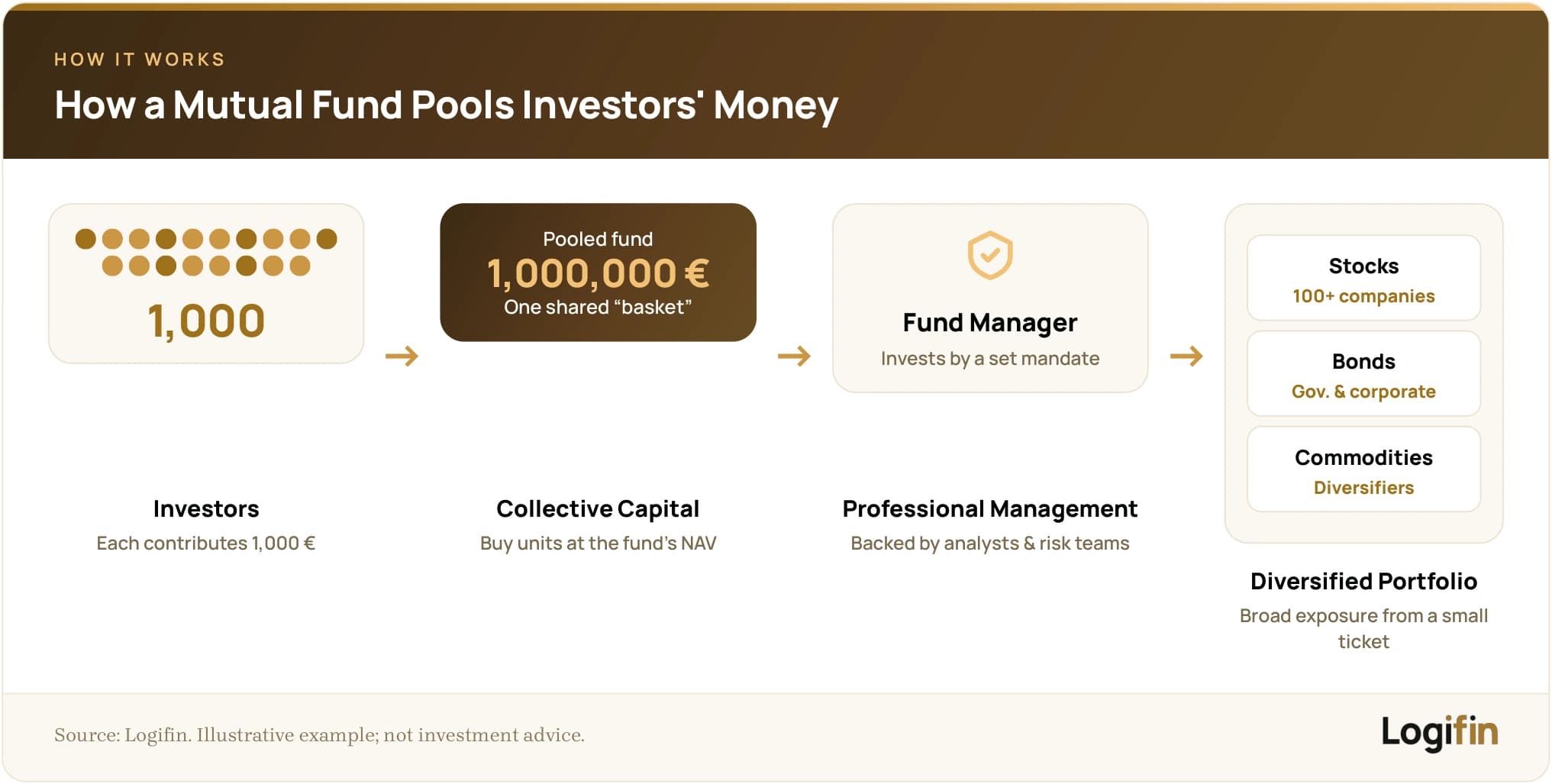
A mutual fund is a collective investment: many investors pool their money into a shared "basket", which is managed by a professional fund manager.
The manager decides where the capital will be invested – in stocks, bonds, commodities or a combination of all of these, aiming to achieve the optimal balance between risk and return.
This way, even someone with a small amount of capital gains access to a diversified portfolio and to professional management. Something that would otherwise require large sums, specialised knowledge and a lot of time.
In essence, the investor "buys" a share of the total fund and, together with thousands of others, takes part in the same investment choices.
Example:
- If 1,000 investors each contribute 1,000 €, the fund gathers 1,000,000 € in capital. The manager can allocate this money across 100 different stocks, giving every small investor indirect exposure to a full, diversified portfolio.
- Without the fund, the same investor would have to buy dozens of stocks individually, something practically impossible with a small amount of capital.
🔶 Why is it considered a "ticket" into the world of investing?
- You do not have to pick stocks or bonds yourself; the professional manager does it on your behalf.
- You can start with small amounts (often even from 50–100 €), making it accessible to a wide audience.
- You gain access to professional knowledge and analysis, something that would be difficult or expensive for the average investor.
- In addition, mutual funds offer transparency: their composition is published regularly, so you know where your money is invested.
Main types of mutual funds
Mutual funds are not all the same. They differ depending on what they invest in, what goal they have and how they manage risk.
Understanding the main categories is the first step in choosing the one that suits your own profile.
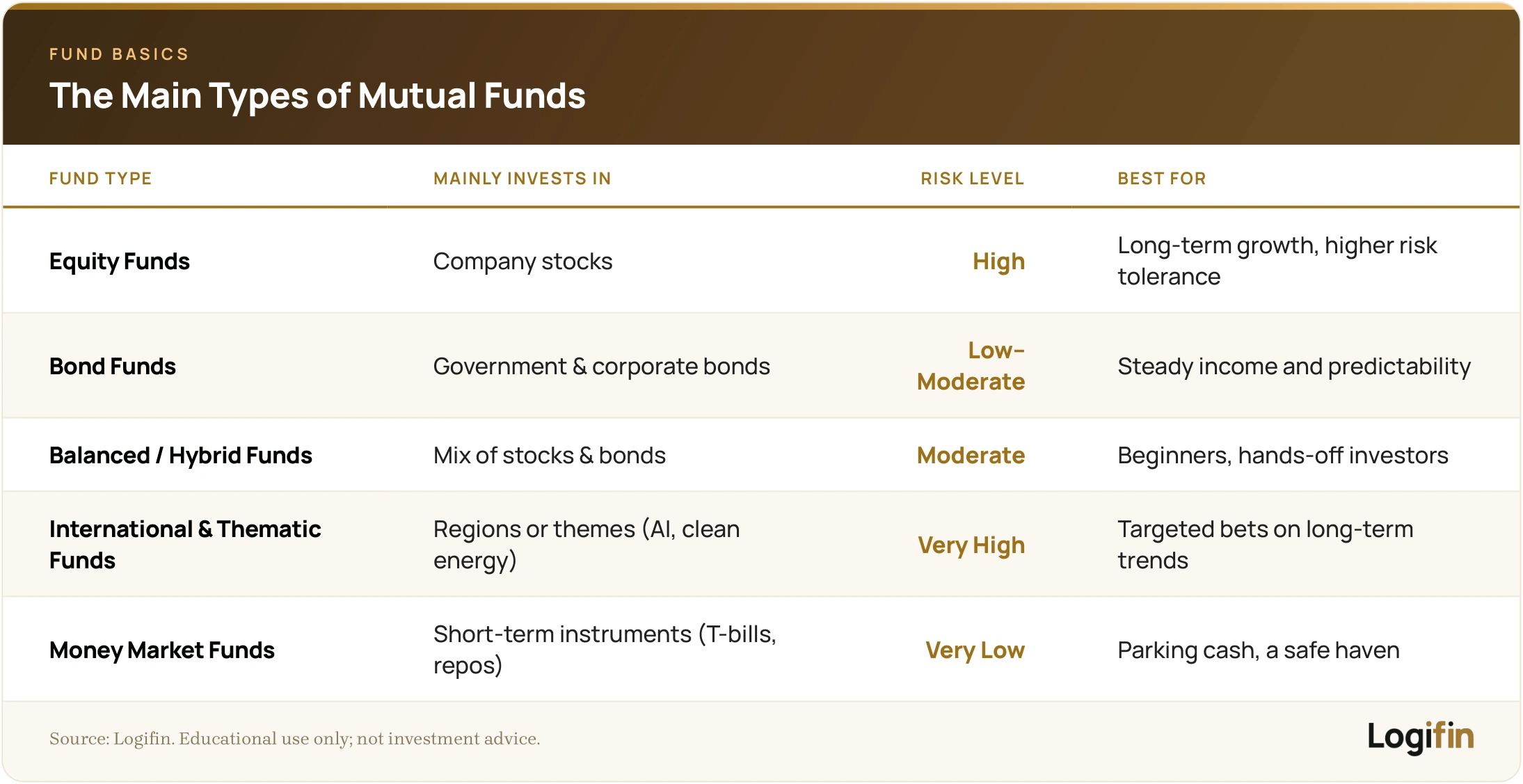
🔶 Equity Funds
- They invest mainly in company stocks.
- They are aimed at those who seek higher returns but also accept greater volatility.
- They are often categorised further by geography (US, Europe, Emerging Markets) or by sector (technology, healthcare, energy).
Example:
- An equity fund investing in the Nasdaq can deliver significant gains in a bull market, but suffer large losses during periods of crisis.
- That is why it is considered suitable mainly for long-term investors with a higher risk tolerance.
🔶 Bond Funds
- They invest in government or corporate bonds.
- They offer more stable income through coupons and lower risk compared with equity funds.
- Ideal for investors who want predictability and lower exposure to fluctuations.
They are often preferred by older investors or by institutions that need regular payments, since coupon income acts like a "cushion" in difficult periods.
🔶 Balanced / Hybrid Funds
- They combine stocks and bonds in the same portfolio.
- Goal: balance between growth (through stocks) and stability (through bonds).
- They often serve as the "ready-made solution" for investors who do not want to keep deciding on allocation.
Because of their automated balancing, they are considered suitable for beginner investors or for those who want a more "passive" approach without constant monitoring.
🔶 International & Thematic Funds
- They give exposure to specific regions (e.g. Emerging Markets, Asia) or to investment themes (e.g. Renewable Energy, Artificial Intelligence).
- They attract investors who want more targeted diversification and want to bet on specific long-term trends.
Thematic funds can carry high risk, as they focus on narrow sectors that are strongly affected by trends and technological developments.
They can deliver large returns with the right timing, but require caution so that they do not make up too large a share of a portfolio.
🔶 Money Market Funds
- They invest in short-term instruments (e.g. treasury bills, repos).
- They are considered almost equivalent to cash, with very low risk.
- Ideal for temporarily "parked" liquidity or for investors who want easy access to their capital.
- They are widely used by institutional as well as private investors as a "safe haven", especially during periods of intense market instability.
How does a mutual fund work and what are its costs?
The basic idea of a mutual fund is simple: many investors pool their money into a shared "piggy bank" and a professional manager decides how it will be invested.
However, the practical operation hides more details worth understanding, especially if you want to know what you are really paying and how your return is measured.
🔶 Capital management
The fund manager is responsible for selecting stocks, bonds or other assets, always based on the strategy that has been announced to investors.
- A whole team of analysts, economists and risk managers supports the decisions, studying markets, companies, sectors and macroeconomic data.
- The fund’s decisions are not arbitrary: they must comply with the regulation and the investment framework of the fund (e.g. "at least 70% in Eurozone stocks" or "no more than 10% in a single stock").
This way, the investor has the assurance that their money is invested according to specific rules and not the manager’s personal "inspirations".
🔶 Valuation: The concept of Net Asset Value (NAV)
The NAV (Net Asset Value) is the "heart" of how a mutual fund works. It is the price at which the investor participates in the fund and reflects the value of their share.
It is calculated daily with the formula: (Total asset value − Liabilities) ÷ Number of shares
Example:
- If the fund has a total value of 100 million € and 10 million shares, the NAV is 10 €.
- If the value of the investments rises to 120 million €, the NAV climbs to 12 €.
- This means the investor sees their return directly in the price of the share.
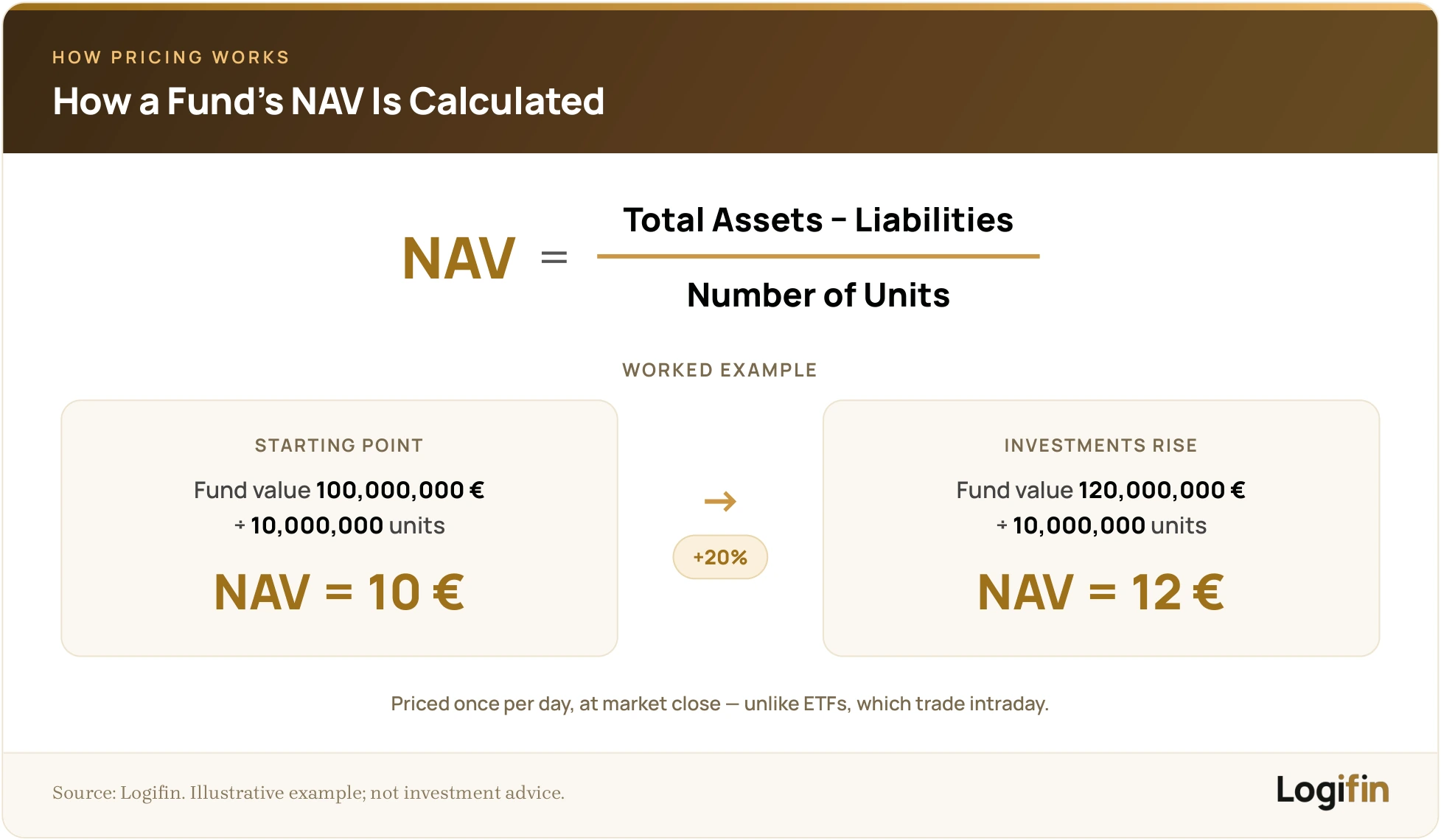
Note: The NAV can change daily, but mutual funds usually do not trade intraday like ETFs. The price is announced at the end of each day.
🔶 Investor entry and exit
The process of entering and exiting mutual funds is relatively simple and transparent, which makes them particularly accessible for the average investor.
Investors buy units at the current NAV (Net Asset Value), i.e. the net asset value of the fund at the moment of the transaction.
When the investor decides to redeem:
- they submit a redemption request
- the fund returns the value of the units based on the NAV of the redemption day
- payment is made directly to the investor’s account
This process offers significant flexibility and liquidity, especially compared with investments such as real estate or other non-tradable assets.
However, unlike ETFs that trade intraday, redeeming mutual funds is not immediate.
A few business days are usually required to complete the transaction, depending on the provider, the type of fund and the country in which it operates.
🔶 Costs & Fees
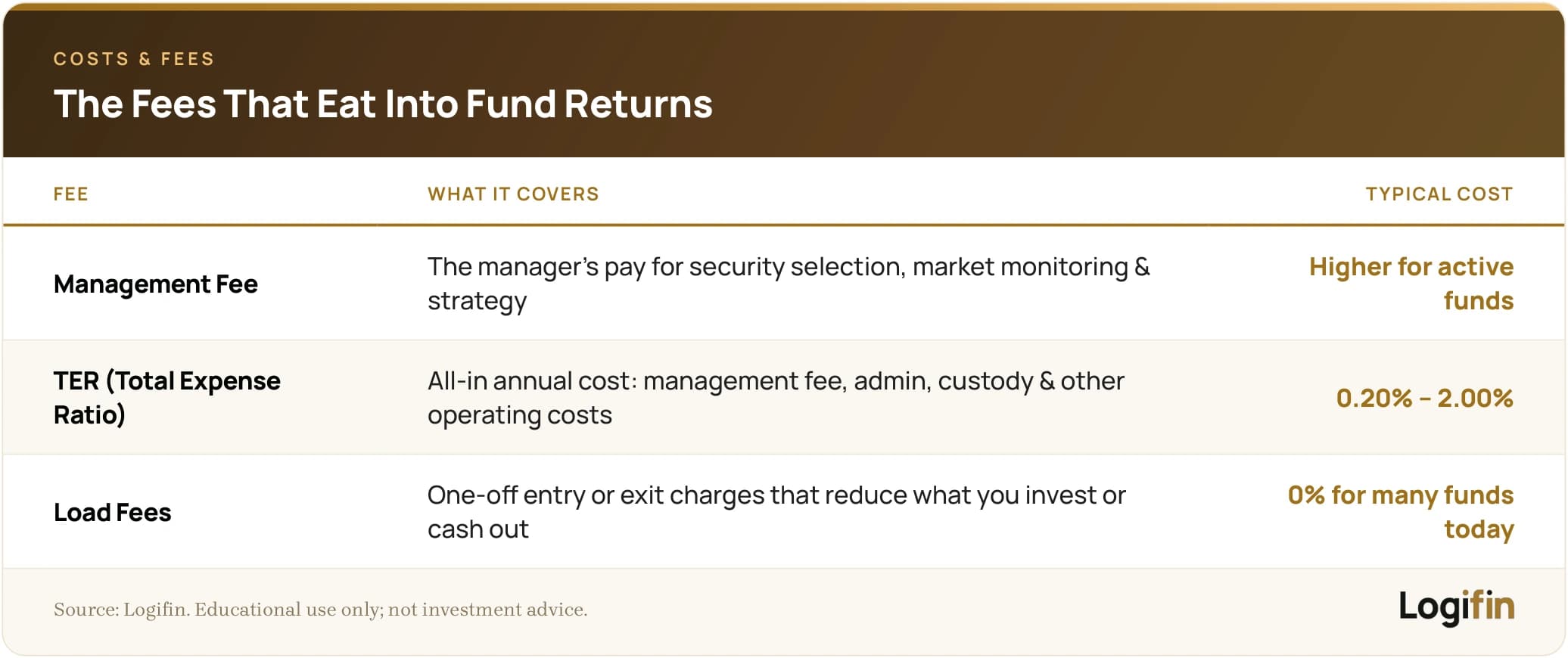
Mutual funds are not free. They have operating costs that reduce the investor’s final return:
Management Fee
- It is the manager’s fee for running the fund.
- It covers security selection, market monitoring and the overall portfolio strategy.
- In actively managed funds it is usually higher, since continuous intervention is required.
TER (Total Expense Ratio)
- The TER shows the total annual cost of the fund as a percentage of assets.
- It includes the management fee, administrative expenses, custody and other operating costs.
- It usually ranges from 0.2% to 2%, depending on the type of fund and whether it is passive or active.
Load Fees
- Some mutual funds charge entry or exit costs, which directly reduce the amount you invest or redeem.
- Although they have decreased in recent years, they still exist in some products and require attention.
Even a small difference in the TER (e.g. 0.5% instead of 1%) can translate into thousands of euros of difference in the final capital over 20–30 years, due to compounding.
🔶 Regulatory framework
In Europe, most mutual funds and ETFs operate under the UCITS regime (Undertakings for Collective Investment in Transferable Securities).
This framework is designed to offer a high level of safety and transparency, especially for the retail investor.
UCITS ensures:
- Strict supervision by regulatory authorities
Funds are supervised by national and European authorities, which reduces the risk of abuse and opaque practices.
- A high level of transparency
Investors have a clear picture of the portfolio composition, the strategy, the costs and the fund’s moves through regular publications and official documents.
- Protection of investors’ capital
The fund’s money is held by an independent custodian, separately from the manager. This means that even in the event of a problem with the manager, investors’ capital remains protected.
For the European investor, UCITS is an important quality filter.
It does not guarantee returns, but it guarantees that the investment takes place within a strictly regulated and institutionally secure environment, which is particularly critical for long-term strategies.
Advantages of mutual funds
Mutual funds remain one of the most popular forms of investment worldwide, precisely because they offer investors a combination of convenience, diversification and professional management.
They are the "entry point" for millions of savers who want to invest safely without having to become experts.
🔶 Diversification with little capital
Instead of investing in 5–10 stocks on your own, through a fund you gain exposure to hundreds or even thousands of securities.
This spread reduces risk, since your outcome does not depend on the fortunes of a single company or sector.
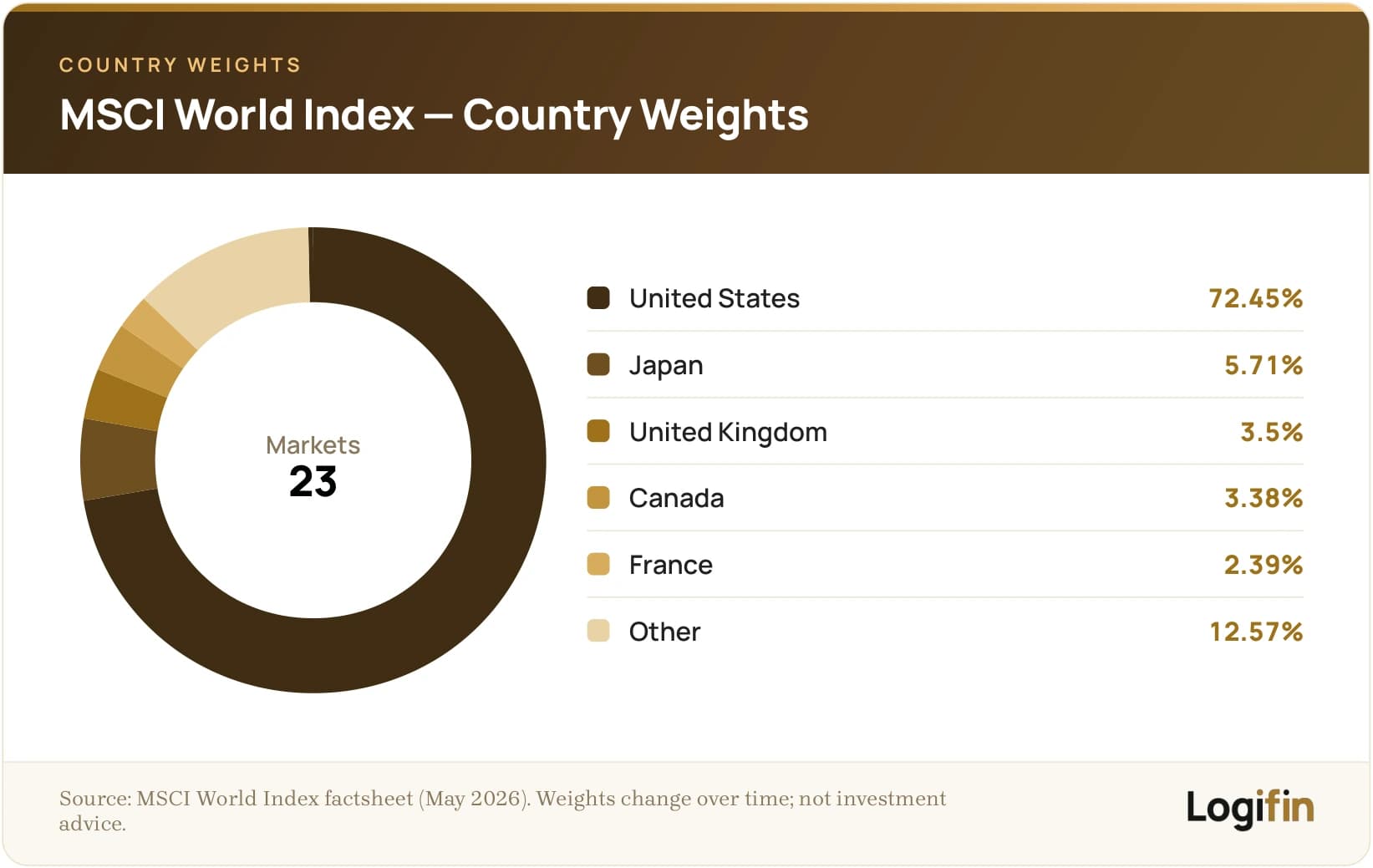
Example: An MSCI World mutual fund can give you a share in companies from the US, Europe, Japan, Australia and emerging markets, even if you invest just 100 €. So, with a small amount, you essentially gain a "global portfolio".
🔶 Professional Management
- The investor does not have to analyse financial statements or forecast the market.
- The fund manager and the team take on that job, using tools and knowledge that the average investor rarely has available.
- The essence is that for a small fee, you "buy" access to professional expertise and experience.
🔶 Liquidity
- Unlike investments such as real estate or private equity, you can sell your units and receive your money usually within 1–3 business days.
- This flexibility makes mutual funds ideal for investors who want access to their money without being "locked in" for years.
🔶 Affordability
- You do not need a large initial amount of capital.
- In many countries, you can start with monthly contributions of 50–100 €, which makes them suitable for investors who want to apply DCA (Dollar Cost Averaging) with small amounts.
- This way, the fund becomes an "investing school" for new savers, since it lets them enter the market gradually and with low risk.
🔶 Regulatory framework & safety
- In Europe, the UCITS directive requires funds to operate with high standards of transparency, diversification and investor protection.
- According to EFAMA, the majority of mutual funds in Europe are UCITS, demonstrating the trust that exists in the institutional framework.
- For the investor, this means the rules are strict and the protection against abuse is strong.
🔶 A wide range of options
- From funds focused on technology stocks to ESG and "green" funds, the options are almost unlimited.
- So, every investor can find something that fits their profile: from conservative investors who want low risk to more aggressive ones who pursue high growth.
- The wealth of options also allows for combinations of funds, so you can build a full portfolio tailored to your own needs.
Disadvantages and risks of mutual funds
Although mutual funds offer easy market access and professional management, they are not without costs or risks.
To use them properly, you need to know the main disadvantages that come with them.
🔶 Costs and Fees
- Mutual funds charge a management fee and other operating expenses, which are reflected in the TER (Total Expense Ratio).
- A TER of around 1.5% may seem small, but over 20 years it can "eat away" tens of thousands of euros from the final return.
- Some funds also have entry/exit fees, which reduces their attractiveness for frequent moves.
🔶 Lack of control over investments
- When you invest in a fund, you do not decide which stocks or bonds will be bought.
- The strategy is determined solely by the manager.
- This means you may have exposure to companies or sectors you would not choose if you invested individually.
🔶 Market volatility
- Mutual funds are not protected from market fluctuations.
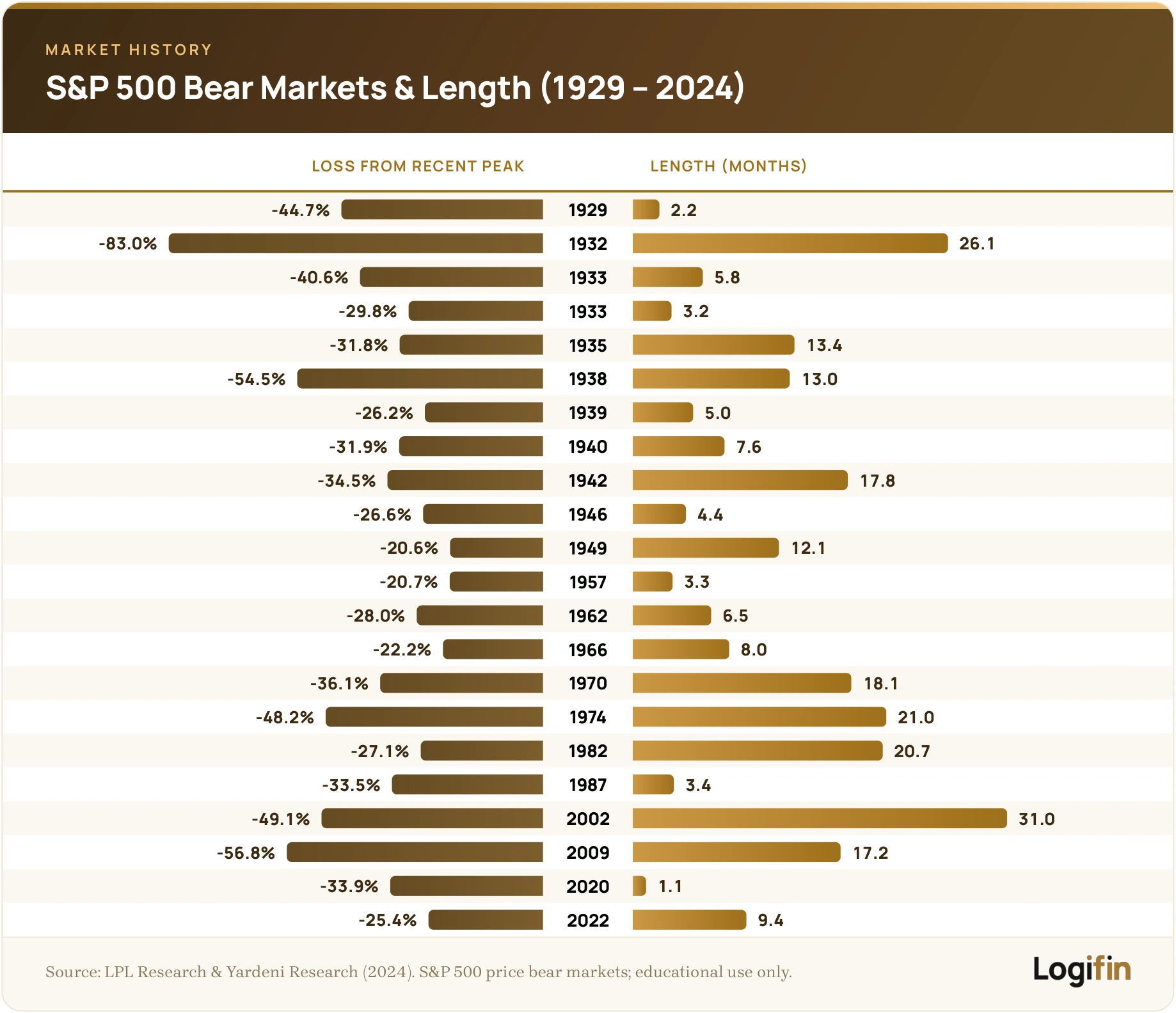
- An equity fund can drop 20–30% in a bear market, just like the stocks it holds.
- "Pooling" does not eliminate investment risk; it simply spreads it.
🔶 Time horizon
To pay off, most mutual funds need a long-term horizon.
If you redeem too early, you may record losses, especially if you buy at a high price and sell in a decline.
Tip: If you are putting in money you will need within the next 12–18 months, it is better to keep it in safer products (e.g. money market funds or deposits).
🔶 Performance Risk
Not all funds perform the same.
Even with an experienced manager and a well-structured strategy, a mutual fund can underperform its benchmark, i.e. deliver a lower return than the "market" in which it invests would give.
This happens because:
- The manager may make choices that do not pay off as expected.
- Management costs and fees "eat away" at the net return.
- In periods of intense volatility, even the most experienced funds struggle to beat their index
🔶 Dependence on the Manager
- Actively managed funds (Active Funds) depend heavily on the skill, experience and strategy of the fund manager.
- Unlike passive products (ETFs or index funds) that simply track an index, the performance of an active fund can differ significantly depending on the manager’s decisions.
- "Manager risk" is one of the main reasons research (e.g. the SPIVA reports) shows that a large share of active funds struggle to consistently beat their indices over time.
How to choose the right mutual fund?
The market is full of thousands of mutual funds.
The right choice is not always easy, but if you follow a few basic criteria, you can avoid traps and find the one that best suits your profile and goals.
🔶 Define your goal
The most important guide is your investment goal:
- Do you want capital growth? Then look at equity funds with a long-term horizon.
- Do you want stable income? Bond funds are more suitable, offering predictability.
- Do you want balance? A balanced fund can offer the best combination.
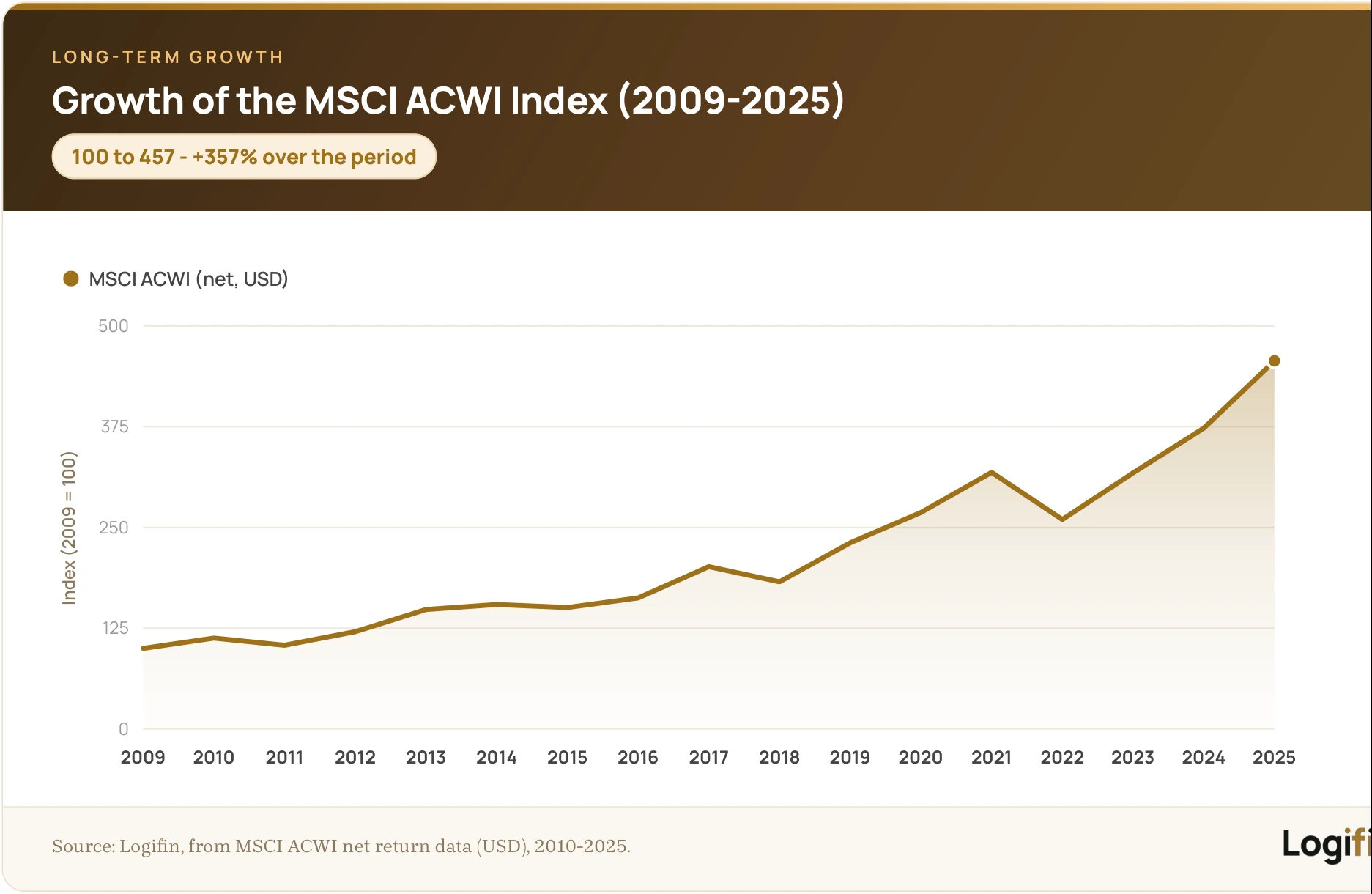
Example: If your goal is retirement in 20 years, an equity fund with global diversification is a more sensible choice than a money market fund, which is more appropriate for short-term liquidity placement.
🔶 Check the costs
Costs are the "invisible enemy" of returns, since they reduce your final gain.
- TER (Total Expense Ratio): Total annual management cost.
- Management fee: The manager’s fee.
- Load fees: Entry or exit costs that some funds impose.
Where possible, prefer funds with a TER below 1%. A difference of 0.5% per year can mean tens of thousands of euros over 20–30 years due to compounding.
🔶 Look at performance over time
- Short-term performance can be misleading.
- What matters is consistent performance over time.
- Check the fund’s performance over 3, 5 and 10 years against its benchmark. If a fund consistently lags the benchmark, it may not be worth its costs.
🔶 Consider geographic and sector diversification
Some funds appear as "global", but in practice are overly concentrated in a few countries or sectors.
Example: A "Global Equity Fund" may have 60% US, 20% Europe and minimal exposure to Asia. So, while it looks global, in practice it remains heavily dependent on the American market.
Always check the top holdings and the allocation of the fund before you invest.
🔶 Look at the manager and the provider
- The reputation and track record of the fund manager are important, as is the credibility of the provider.
- Large international houses such as Vanguard, BlackRock, Fidelity usually offer more transparency, lower costs and a long history of stable management.
- A fund with frequent changes of managers or strategy can be more unstable and less predictable.
🔶 Stability and consistency
- It is better to prefer funds with a stable investment philosophy and a consistent performance record.
- If the fund constantly changes strategy or manager, that is a sign of a lack of coherence, which can increase your risk.
Conclusion and practical takeaways
Mutual funds are one of the most popular and accessible investment tools in the world.
They combine professional management, diversification and liquidity, but they also come with costs and risks that should not be underestimated.
Their value is not that they will make you rich overnight, but that they offer an organised and disciplined way to invest consistently.
🔑 What to remember
- They are a collective investment with professional management.
- They offer easy diversification even with a small amount of capital.
- They are not without risk: the course of the market and the manager’s decisions affect returns.
- Costs (TER, fees) play a decisive role in long-term return. Even small differences can turn into thousands of euros due to compounding.
Practical tips for new investors:
1. Read the prospectus
- The prospectus shows the fund’s strategy, costs and benchmark.
- Never invest "blindly": ten minutes of reading can save you from wrong choices.
2. Choose low costs
- If two funds have a similar strategy, prefer the one with the lower TER.
- The difference that looks small over one year becomes huge over 10–20 years.
3. Watch out for concentration
- Do not be swayed by the title "global" or "international".
- Check the fund’s real allocation; many "global" funds are in practice overly concentrated in the US.
4. Stay consistent
- Investing in funds is a marathon, not a sprint.
- A DCA strategy (e.g. 100 € every month) often works better than trying to "time" the market.
- Discipline is more important than "perfect timing".

The content of this article is provided exclusively for informational and educational purposes and does not constitute investment advice or a recommendation to buy or sell financial products. The information is based on publicly available sources considered reliable, without any guarantee of accuracy or completeness. Before making any financial or investment decision, it is recommended that you consult a certified professional advisor or accountant, taking into account your own financial situation and risk profile. The Logifin team bears no responsibility for any direct or indirect damages arising from the application of the information presented.
Related articles

What is an ETF? The complete beginner's guide
Learn how ETFs work, why they have become so popular and how you can use them to invest with strategy.
22 min read

What is a money market fund and how does it work?
How a fund that holds short dated, high quality debt securities works, what it returns, what risks it carries and when it belongs in a portfolio.
10 min read

How to build a resilient portfolio
A guide for investors who want to build something stable, simple and rewarding over the long term.
19 min read

What is a recession and how it affects investors?
How a recession is defined, what causes one, how the markets usually behave during it and what an investor can do to prepare in advance.
24 min read
EXPLORE LOGIFIN
Everything you need in order to learn, plan and track your investments.
Logifin Blog
Learn everything you need to get your finances in order and invest with confidence.
Logifin Insights
What moves the markets and what it means for a long term investor. Short and without the noise.
Logifin Tools
Free, inside the site, no signup. Everything you calculate stays on your device.
Logifin ETF Hub
Find the ETF that fits you: 550+ UCITS ETFs, smart filters and in-depth comparisons.
Logifin Guides
A series of guides that builds your investment plan step by step. The first guide is free for everyone.
Logifin Circle
The tools and the Hub are free for everyone. You become a member for the intelligence that never stops.