ETF or stocks: Which strategy is right for you?
A guide for investors weighing single stocks against ETFs, covering diversification, cost, taxes and the time each approach really demands.
15 July 2025 · 15 min read

What it means to invest in ETFs and what it means to invest in stocks
When you invest in an ETF (Exchange Traded Fund), you buy with a single move a "basket" of dozens or hundreds of stocks or bonds that tracks an index; when you invest in a single stock, you place your money on the course of one single company.
The basic difference between ETFs and individual stocks is not found in the market they invest in but in the way risk is taken on.
- When you invest in a stock, the outcome depends to a large degree on the course of a specific company.
- When you invest in an ETF, the outcome comes from the collective course of dozens or hundreds of companies.
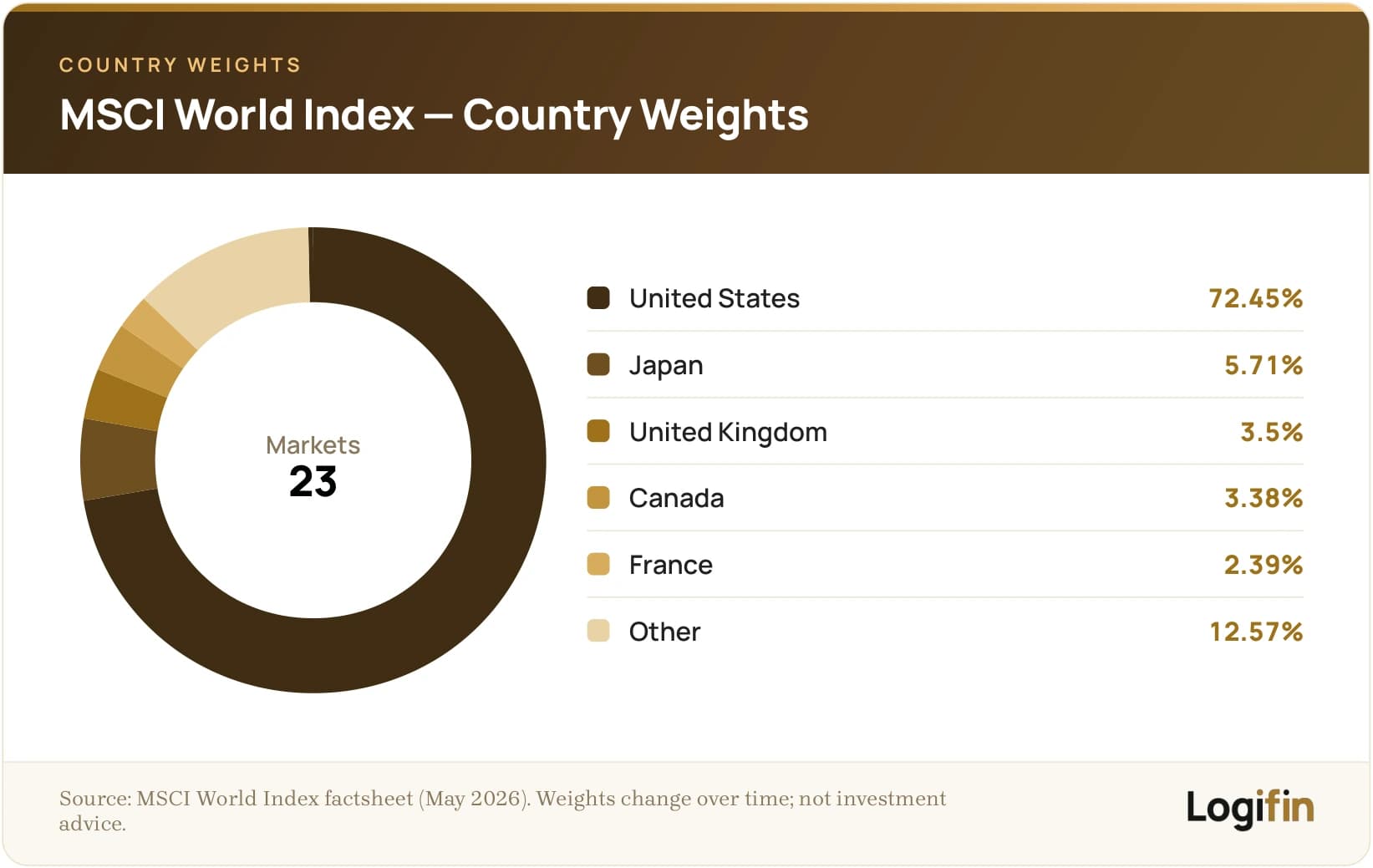
In practice, investing in an ETF means that you gain ready-made diversification.
- An ETF that tracks a broad index gives you exposure to many sectors, different business models and different sources of profitability with a single move.
- You do not need to choose which company will perform best.
- It is enough to believe that, overall, the economy or the market you follow will grow over time.
By contrast, investing in individual stocks requires active decisions.
- You have to evaluate businesses, assess prospects, monitor results and accept that a wrong choice can have a significant impact on your portfolio.
- The possibility of higher return always coexists with the possibility of substantial underperformance.
Another critical element is the way failure is handled.
- In an ETF, the weakening or even the disappearance of a company does not lead to a catastrophic outcome.
- The index readjusts, companies are replaced and the portfolio keeps working.
- In individual stocks, the failure of a choice is not absorbed automatically. It weighs entirely on the investor.
🔶 This does not mean that ETFs are "better" and stocks "worse".
It means that these are different investment philosophies.
ETFs rely on collective growth and on statistical probability. Stocks rely on knowledge, on judgment and on the ability to select.
The right question, then, is not which option has the higher theoretical return but which approach you can support with consistency over time.
That is where it starts to become clear which strategy truly fits each investor.
Diversification, risk and volatility
When we discuss ETFs and stocks, the concept that separates them most clearly is not return but the distribution of risk.
How risk is distributed directly affects the volatility of the portfolio and, ultimately, the behaviour of the investor during difficult periods.
🔶 How does diversification work in practice?
Diversification is not a theoretical concept. It is the mechanism that limits the impact of a negative event.
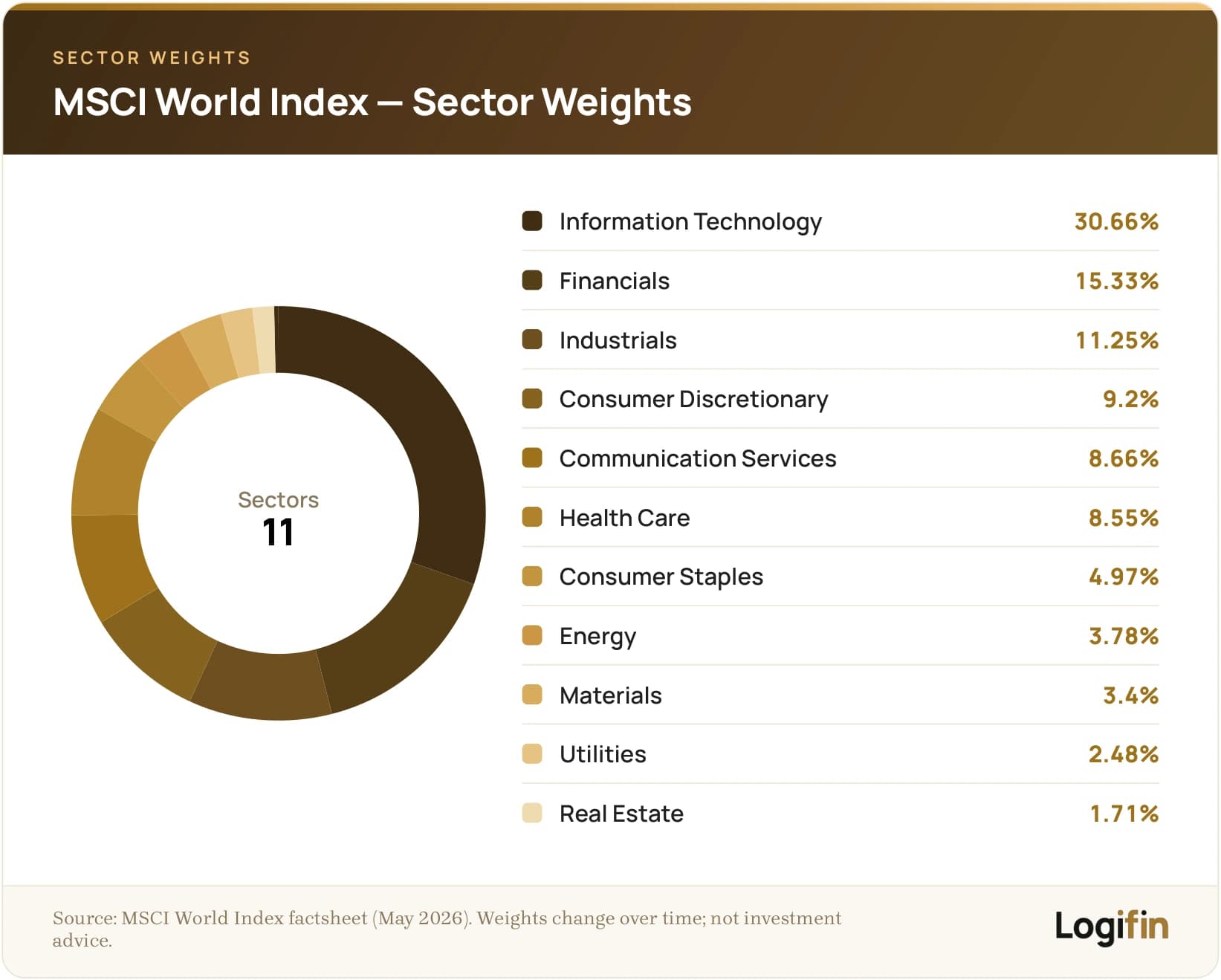
In a broad-based ETF, risk is distributed automatically across many companies, sectors and business models.
This means that:
- a negative development in one company has limited effect
- losses in one sector can be offset by others
- the portfolio follows the overall course of the market and not isolated events
Diversification works as a "shock absorber". It does not eliminate losses, but it reduces extreme swings.
🔶 What changes when you invest in individual stocks?
In stocks, diversification depends solely on the investor.
The fewer stocks an investor holds, the greater the exposure to company-specific risk, that is to risks connected to the course and the particularities of specific companies.
In practice:
- a negative corporate event can strongly affect the portfolio
- volatility is often higher
- continuous monitoring and readjustment are required
Even a "well-chosen" stock portfolio can show large swings if diversification is not sufficient.

🔶 Volatility: numbers vs psychology
Volatility is not only a mathematical concept. It is also a psychological test.
A portfolio with high volatility increases the probability of bad decisions, especially during periods of sharp decline.
In general terms:
- ETFs show a more "smooth" course due to diversification
- stocks can outperform but also underperform sharply
- the greater the volatility, the greater the need for discipline
For many investors, the ability to stay with the plan matters more than the theoretical maximisation of return.
🔶 What does this mean for your strategy?
- The choice between ETFs and stocks affects how you will experience the rises and falls of the market.
- ETFs tend to offer greater stability and fewer extreme surprises.
- Stocks offer a wider range of outcomes, both positive and negative.
The critical question is not which option has the greater potential gain, but which form of risk you can withstand without deviating from your plan.
Example:
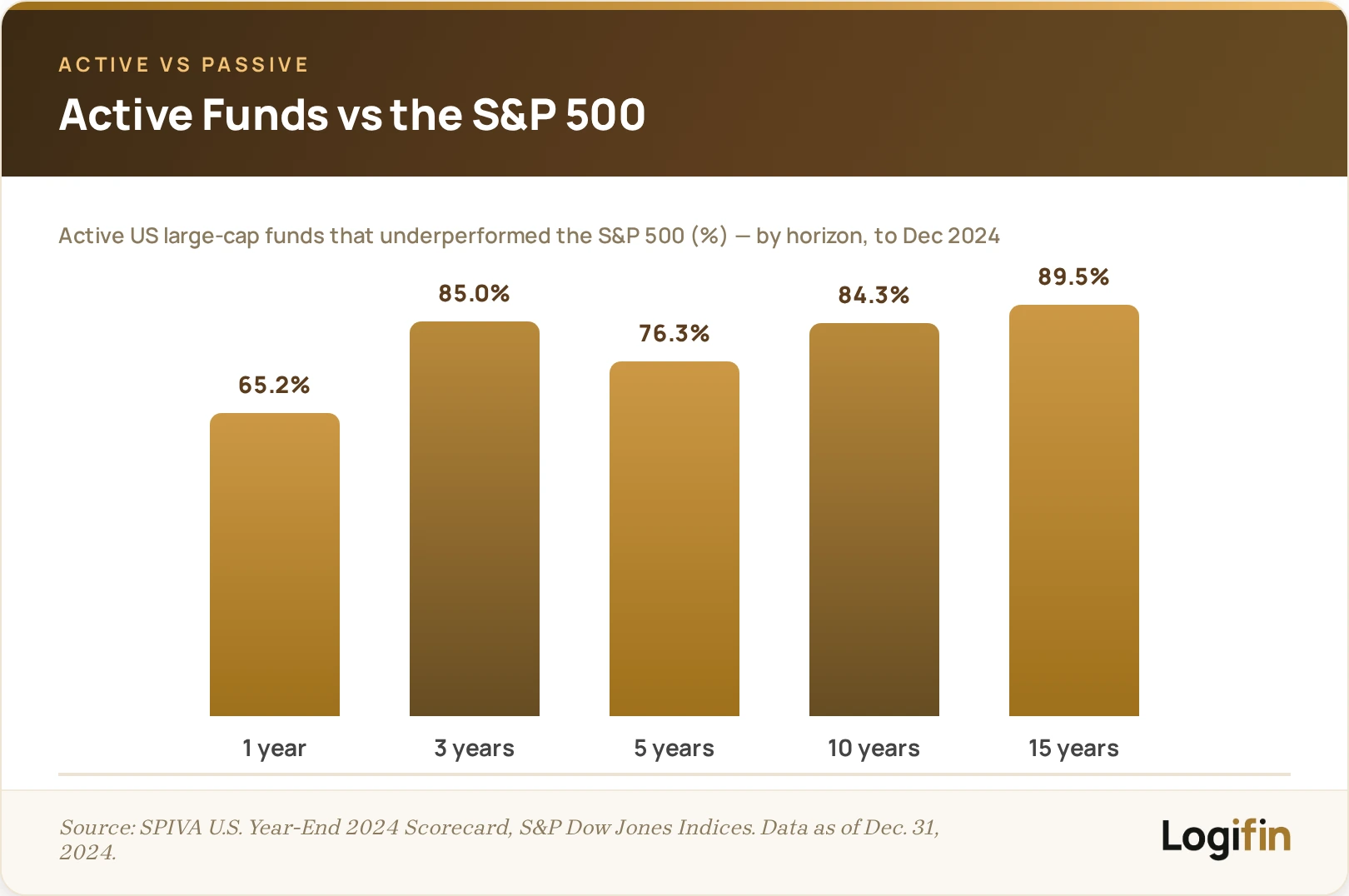
- According to the Morningstar Active/Passive Barometer (2024), over a 10-year horizon the large majority of actively managed funds in the US (often more than 80%) underperform compared to the corresponding passive ETFs, after costs.
- This finding underlines how difficult consistent outperformance against the market is, even for professionally managed portfolios.
Performance in practice: What the data shows
When the discussion moves from theory to performance, it is easy for personal experiences and isolated examples to dominate.
However, if we want a calm answer to the question of ETFs or stocks, it makes sense to look at what systematic data shows over time.
🔶 What studies say about active vs passive strategy
The most reliable comparisons come from long-term studies that examine whether active stock selection manages to outperform the market consistently.
Indicatively, the SPIVA reports by S&P Dow Jones Indices compare actively managed portfolios with their corresponding indices.
The picture that emerges is stable over time:
- the majority of active strategies do not manage to beat the index over a depth of 10 to 15 years
- even those who outperform in one period rarely maintain that outperformance afterwards
- costs and timing mistakes erode a significant part of the returns
This does not mean that no one can succeed with active stock selection.
It means that, at the level of investors as a whole, the probability of consistent outperformance is low.
🔶 What does this mean for ETFs?
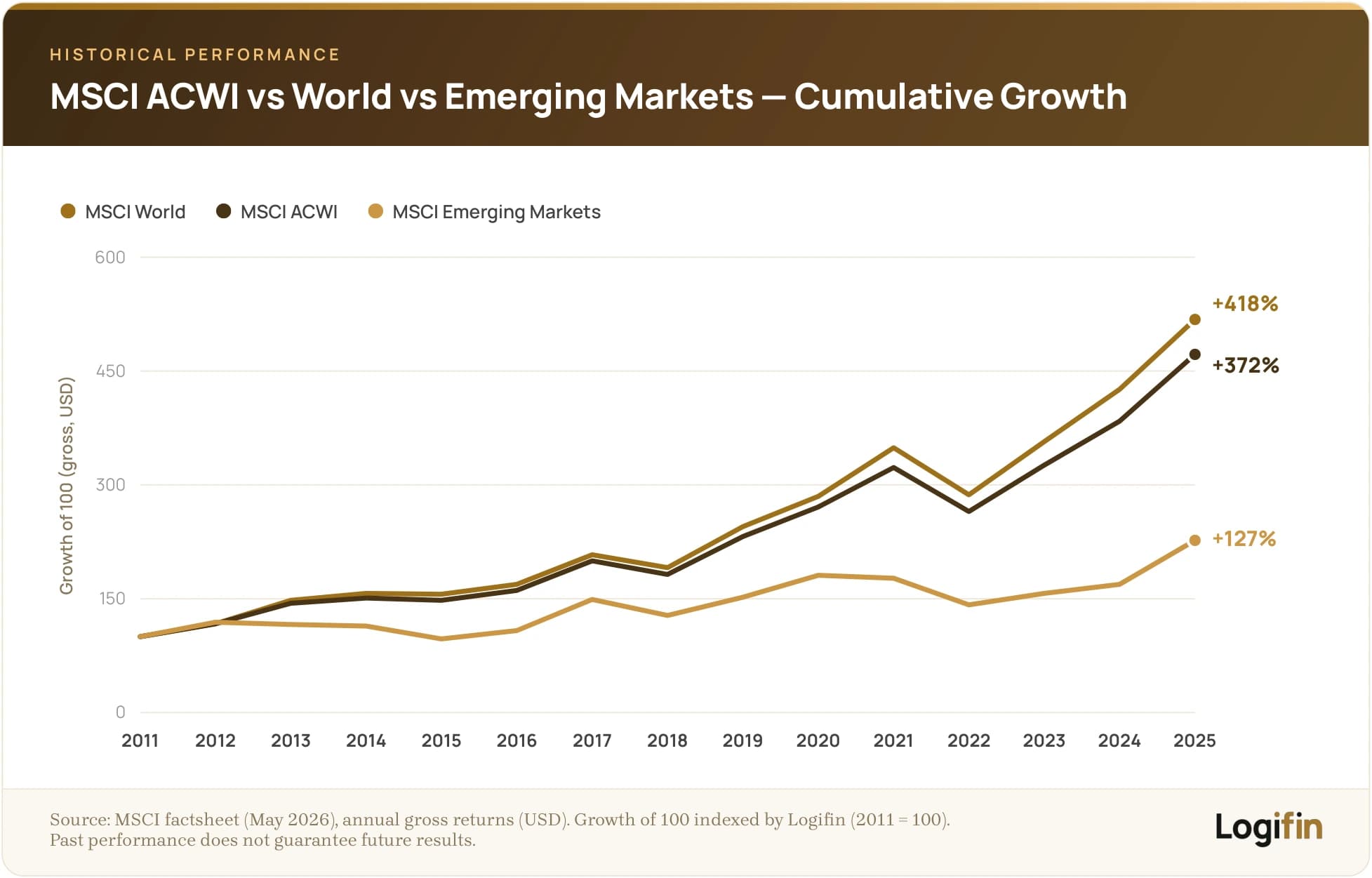
ETFs that track broad indices do not try to "beat" the market.
Their goal is to reproduce it with low cost and consistency. This is exactly their main advantage.
In practice:
- they capture the average return of the market
- they avoid the big selection mistakes
- they limit the need for continuous decisions
Over time, this approach has proven particularly effective for investors who place emphasis on duration and not on prediction.
🔶 And stocks? When does the picture change?
Active investing in individual stocks can lead to higher returns, but this usually happens under specific conditions:
- sufficient diversification
- time and knowledge for analysis
- psychological endurance for large swings
Without these, the probability of underperformance increases.
And here lies the essence: performance does not depend only on the tool but on whether you can apply the strategy correctly and with consistency.
💡 What to keep from the data
The data does not show that ETFs are "superior" in every case nor that stocks are a wrong choice.
It does show, however, that:
- the passive strategy offers a high probability of satisfactory return
- the active strategy increases the range of outcomes, positive and negative
- for most investors, simplicity and low cost work in their favour
The choice between ETFs and stocks, then, is not a matter of philosophy but of realistic assessment of capabilities and expectations.
Time, knowledge and investor psychology
The choice between ETFs and individual stocks is not only a matter of return or risk. It is, to a large degree, a matter of time, knowledge and psychological endurance.
These three factors determine whether a strategy can be applied correctly in practice and not merely in theory.
🔶 Time: the invisible cost of the active strategy
Investing in stocks requires continuous involvement. The initial choice is not enough.
It requires monitoring of results, evaluation of new data and often re-assessment of the initial assumption.
In practice, this means:
- time to study financial statements and news
- time to monitor developments in sectors and markets
- time to make decisions during periods of pressure
ETFs, by contrast, drastically limit this requirement.
The strategy is based more on duration and less on continuous analysis, something that makes them more compatible with the daily life of most investors.
🔶 Knowledge: what each tool requires
Investing in stocks presupposes a substantial understanding of businesses.
The investor is called to evaluate revenue models, competitive advantages, balance sheets and risks that are not always visible.
This implies that:
- knowledge has to be renewed continuously
- mistakes are paid immediately in the portfolio
- excessive confidence can lead to bad decisions
ETFs reduce the burden of individual judgment.
They do not eliminate the need for a basic understanding of the markets, but they limit the effect of mistakes that arise from incomplete information or wrong estimates.
🔶 Psychology: the most underrated factor
Psychology often determines actual performance more than strategy.
Intense volatility, large declines or sharp rises test the discipline of the investor.
In portfolios with stocks:
- large swings are more frequent
- emotional involvement is more intense
- the risk of impulsive moves increases
ETFs, due to diversification, tend to offer a smoother experience.
This does not mean an absence of losses, but a smaller probability of extreme emotional reactions that lead to wrong timing.
🔶 What all this means in practice
The choice of strategy has to take into account not only what the investor would like to do, but what he can realistically support over time.
- If the available time is limited, ETFs offer a clear advantage.
- If knowledge and experience are high, stocks can have a place, but with increased requirements.
- If psychology is easily affected by volatility, simplicity works protectively.
The most effective strategy is not the one that looks best on paper, but the one that can be applied with consistency, discipline and a clear mind.
Cost, taxes and operational complexity
In practice, the difference between ETFs and individual stocks is not limited to what you buy but also to how easily you manage your strategy over time.
Cost, tax treatment and overall complexity play a decisive role in the final outcome.
🔶 Transaction and management cost
ETFs have been designed to operate with low and predictable cost.
The annual management cost is usually small and embedded in the price, without any action being required from the investor.
In practice:
- the cost is known in advance
- it does not increase as the portfolio grows
- it does not require frequent buying and selling
In individual stocks, the cost depends on the activity of the investor.
Many transactions, changes of positions or timing attempts increase commissions and erode the return, even if the choices are correct at a theoretical level.
🔶 Taxation and practical management
Tax management is often simpler with ETFs, especially when it concerns accumulating products.
Profits are reinvested automatically and there is no need for dividend management or continuous recording of moves.
By contrast, with stocks:
- dividends create tax obligations
- sales require the calculation of gains or losses
- record keeping becomes more demanding as transactions increase
This complexity does not mean that stocks are problematic. It does mean, however, that they require greater attention and organisation.
🔶 Operational complexity and mistakes
An often underrated cost is implementation mistakes.
The more complex a strategy is, the greater the probability of errors. In practice:
- ETFs reduce the decisions and the points of intervention
- stocks increase the options but also the margins for error
- complexity tires and often leads to inconsistency
For many investors, simplicity is not a sign of lack of knowledge but a means of protection from bad decisions.
Which strategy fits an investor?
After the analysis of risk, return, time and cost, the question of ETFs or stocks stops being theoretical.
It turns into a purely personal matter of strategy, which depends on the profile, the endurance and the habits of the investor.
🔶 When ETFs are the most realistic choice
For the majority of investors, ETFs work as the most balanced and sustainable solution.
Not because they promise something impressive, but because they reduce the chances of serious mistakes.
ETFs tend to suit more the investors who:
- have limited time for analysis and monitoring
- want clear structure and predictability
- invest with a long-term horizon
- prefer stability instead of intense swings
- apply or want to apply a DCA strategy
In these cases, a portfolio based on ETFs can cover the largest part of the investment needs without requiring continuous interventions.
🔶 When stocks can have a role
Individual stocks are not a wrong choice. They are, however, a demanding choice.
They make sense when the investor has time, experience and psychological endurance.
They usually suit more the investors who:
- have substantial knowledge of company analysis
- accept large swings without impulsive moves
- can monitor their investments systematically
- understand that underperformance is possible over long periods
In these cases, stocks work more as an active strategy than as the basic core of the portfolio.
🔶 The combination of ETFs and stocks: the Core-Satellite strategy
If you find it difficult to choose between ETFs and stocks, there is a smart way to use the advantages of both: the Core-Satellite strategy.
It is an approach that has its roots in the management of institutional portfolios, but adapts ideally for private investors as well who want to balance stability with flexibility.
The term Core-Satellite refers to the structure of the portfolio:
- Core (70–90%): It forms the "base". It includes ETFs with broad spread, passive strategy and a stable profile. It is the "backbone" of the portfolio.
- Satellite (10–30%): It is the "selected part" of the portfolio, which can include individual stocks, thematic ETFs, small markets or sectors with high potential.

This strategy minimises the risk of complete failure, without depriving you of the possibility for selected outperformance.
You are in a position to:
- Benefit from the stability and low cost of ETFs
- Keep a "margin of creativity" with your own choices
- Gain experience in the world of stocks, without being fully exposed
- Stay disciplined, since the core runs without interventions
The application is simple:
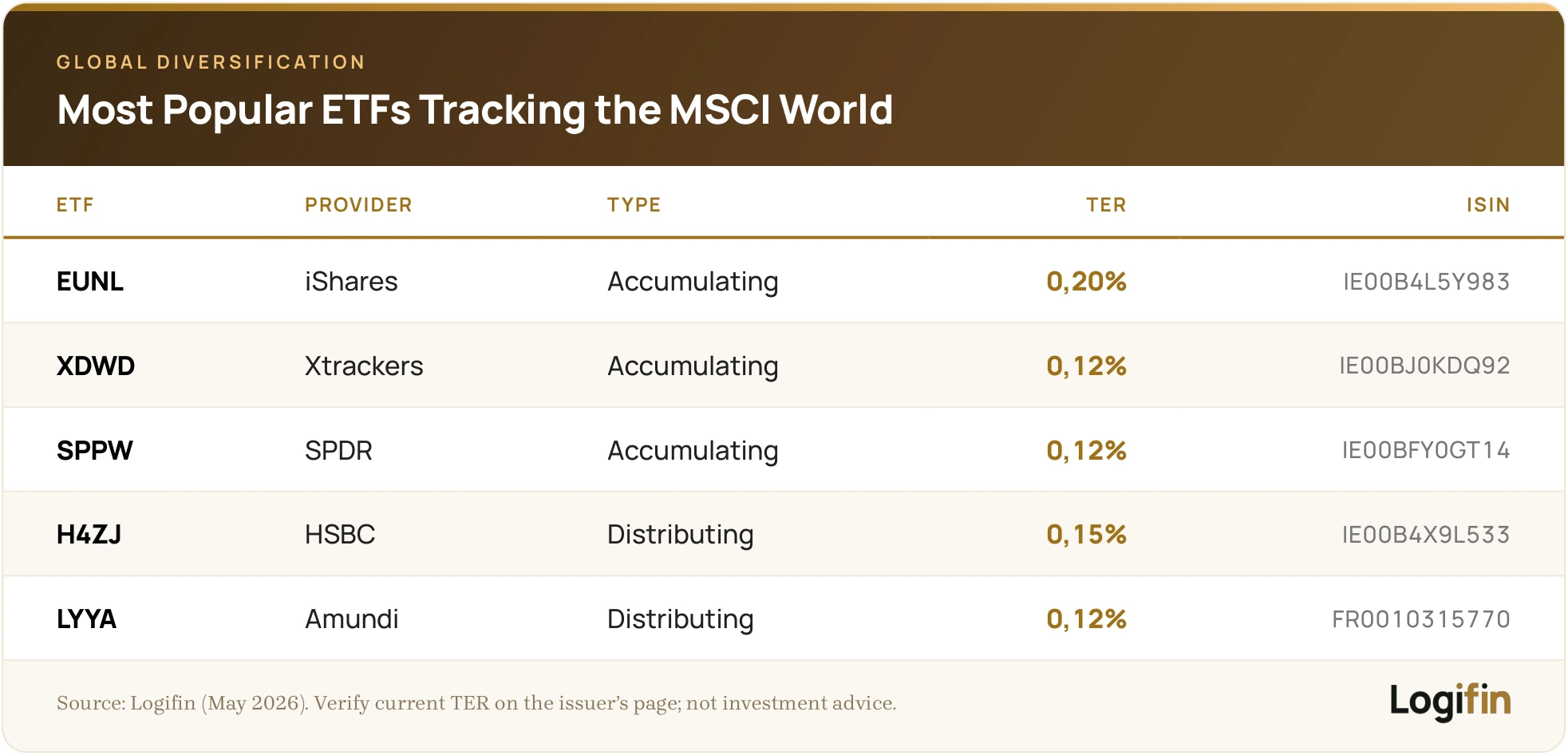
- You define the Core of the portfolio: For example 70% of your capital in broad-based ETFs such as a global or S&P 500 one.
- You define the Satellites of the portfolio: For example 30% in individual stocks that you have analysed and whose long-term prospects you believe in. They can change, adapt or even "freeze" if you see volatility.
- You keep balance: You re-assess the composition every 6 to 12 months. You do not let emotional choices "swallow" the core.
🔶 The most critical question
The final choice should not be based on what looks more attractive in theory, but on what can be applied with consistency over time.
- If your strategy requires continuous involvement that you cannot support, it is likely to fail.
- If volatility pushes you to impulsive moves, the risk is not structured appropriately.
- If simplicity helps you stay with the plan, then it works in your favour.
The right strategy is the one that allows you to stay invested, calm and consistent, even when the markets do not move as you would like.
Conclusion and practical takeaways
Choosing between ETFs and individual stocks is not an exercise of superiority or knowledge. It is an exercise of self-awareness.
Both approaches can work.
The difference lies in whether they can work for you, in the time and the conditions you live in.
The aim is not to predict which strategy will perform best over the next five years, but to build a plan that you can follow without abandoning it at the first serious test.
🔑 What to remember:
- The strategy has to adapt to the person, not the reverse.
- Diversification reduces the mistakes that you cannot predict.
- Simplicity increases the probability of consistency.
- Knowledge is important, but psychology often determines the outcome.
- The best plan is the one that is applied, not the one that impresses.
Practical tips for new investors:
-
Start with structure before opinions
A portfolio with 1 to 2 broad-based ETFs can work as a stable point of reference before you move on to more complex choices.
-
Assess your time honestly
If you cannot monitor your investments systematically, choose a strategy that does not require it.
-
Do not confuse complexity with quality
More options do not mean a better outcome. Often they mean more mistakes.
-
Keep a steady process
Consistency counts more than the initial choice of tool.
-
Review your plan periodically
Not in order to change it constantly, but to make sure that it still fits your life and your goals.

The content of this article is provided exclusively for informational and educational purposes and does not constitute investment advice or a recommendation to buy or sell financial products. The information is based on publicly available sources considered reliable, without any guarantee of accuracy or completeness. Before making any financial or investment decision, it is recommended that you consult a certified professional advisor or accountant, taking into account your own financial situation and risk profile. The Logifin team bears no responsibility for any direct or indirect damages arising from the application of the information presented.
Related articles

What is an ETF? The complete beginner's guide
Learn how ETFs work, why they have become so popular and how you can use them to invest with strategy.
22 min read

What is a stock and how does it generate profit?
What owning a share of a company means, how profit comes from capital gains and dividends, what sets the price and what the risks are.
16 min read

DCA: The most stable investment strategy
What dollar cost averaging is, how it lowers risk and when it beats lump sum investing.
15 min read

What is a recession and how it affects investors?
How a recession is defined, what causes one, how the markets usually behave during it and what an investor can do to prepare in advance.
24 min read
EXPLORE LOGIFIN
Everything you need in order to learn, plan and track your investments.
Logifin Blog
Learn everything you need to get your finances in order and invest with confidence.
Logifin Insights
What moves the markets and what it means for a long term investor. Short and without the noise.
Logifin Tools
Free, inside the site, no signup. Everything you calculate stays on your device.
Logifin ETF Hub
Find the ETF that fits you: 550+ UCITS ETFs, smart filters and in-depth comparisons.
Logifin Guides
A series of guides that builds your investment plan step by step. The first guide is free for everyone.
Logifin Circle
The tools and the Hub are free for everyone. You become a member for the intelligence that never stops.