Investing in the S&P 500: Is SXR8 better than VUAA?
We compare SXR8 with VUAA on performance, cost, spread and the EUR/USD exchange rate, so you can see which one fits a monthly DCA plan.
17 July 2025 · 15 min read

What the S&P 500 index is and why everyone invests in it
When someone talks about investing in the American economy, most of the time they are referring, directly or indirectly, to the S&P 500 index.
It is not a stock, nor a fund, but a stock-market index that captures the path of 500 of the largest listed companies in the United States.
The S&P 500 includes companies that shape the global economy: from technology and healthcare to consumer goods, energy and financial services.
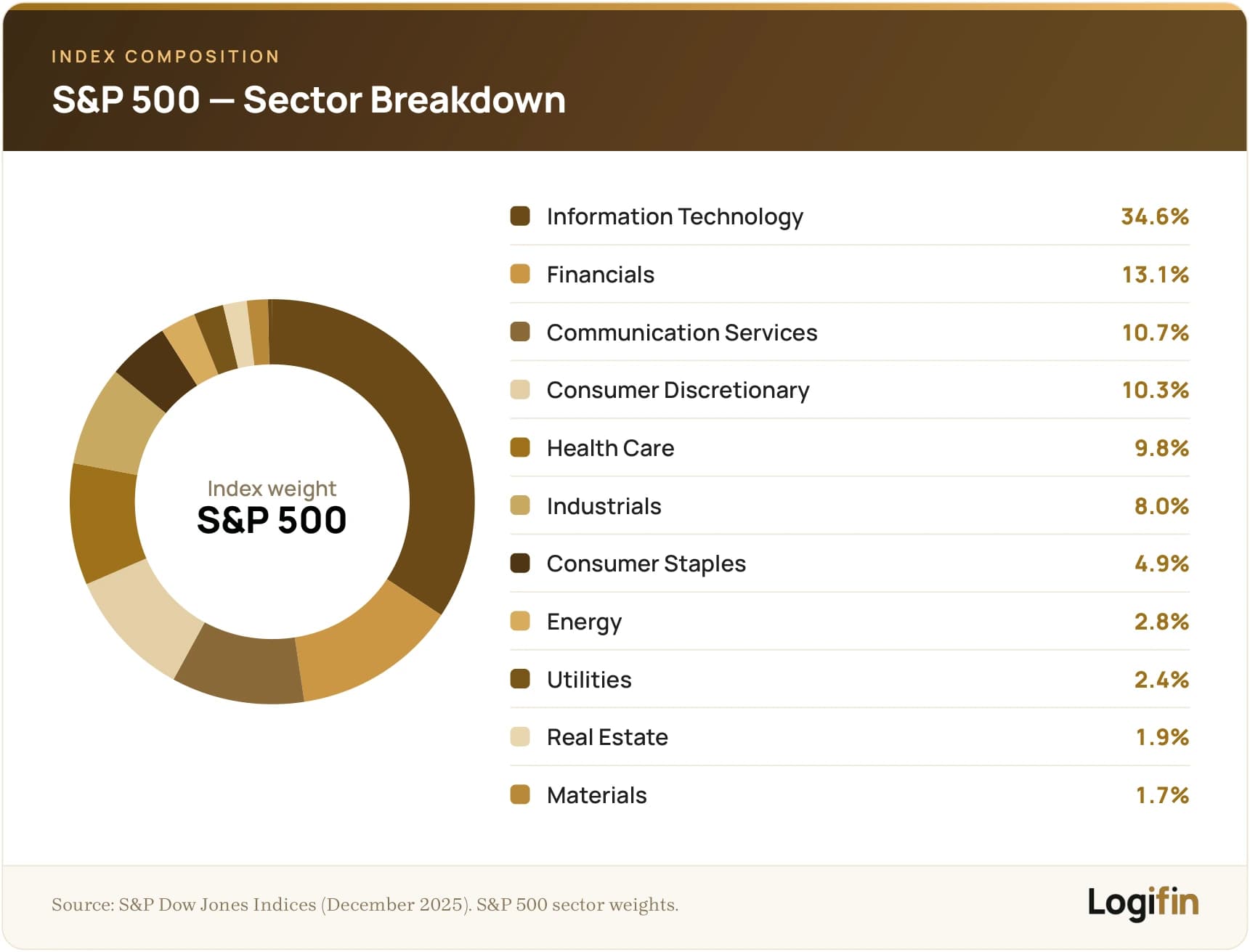
The weight of each company in the index is not equal but is based on its market capitalisation, which means that the largest and most powerful businesses have a greater impact on its overall path.
This is also a basic reason the S&P 500 is considered a quality index: it does not simply include 500 random companies, but those that meet specific criteria of size, liquidity and financial viability.
🔶 Why the S&P 500 is considered the backbone of investing
Historically, the S&P 500 has served as a benchmark for the entire global investment community.
The returns of most professional portfolios are compared with it, not because it is perfect, but because it reliably reflects the evolution of the largest economy in the world.
Over decades, the index has delivered positive real returns despite crises, recessions, wars and technological disruptions.
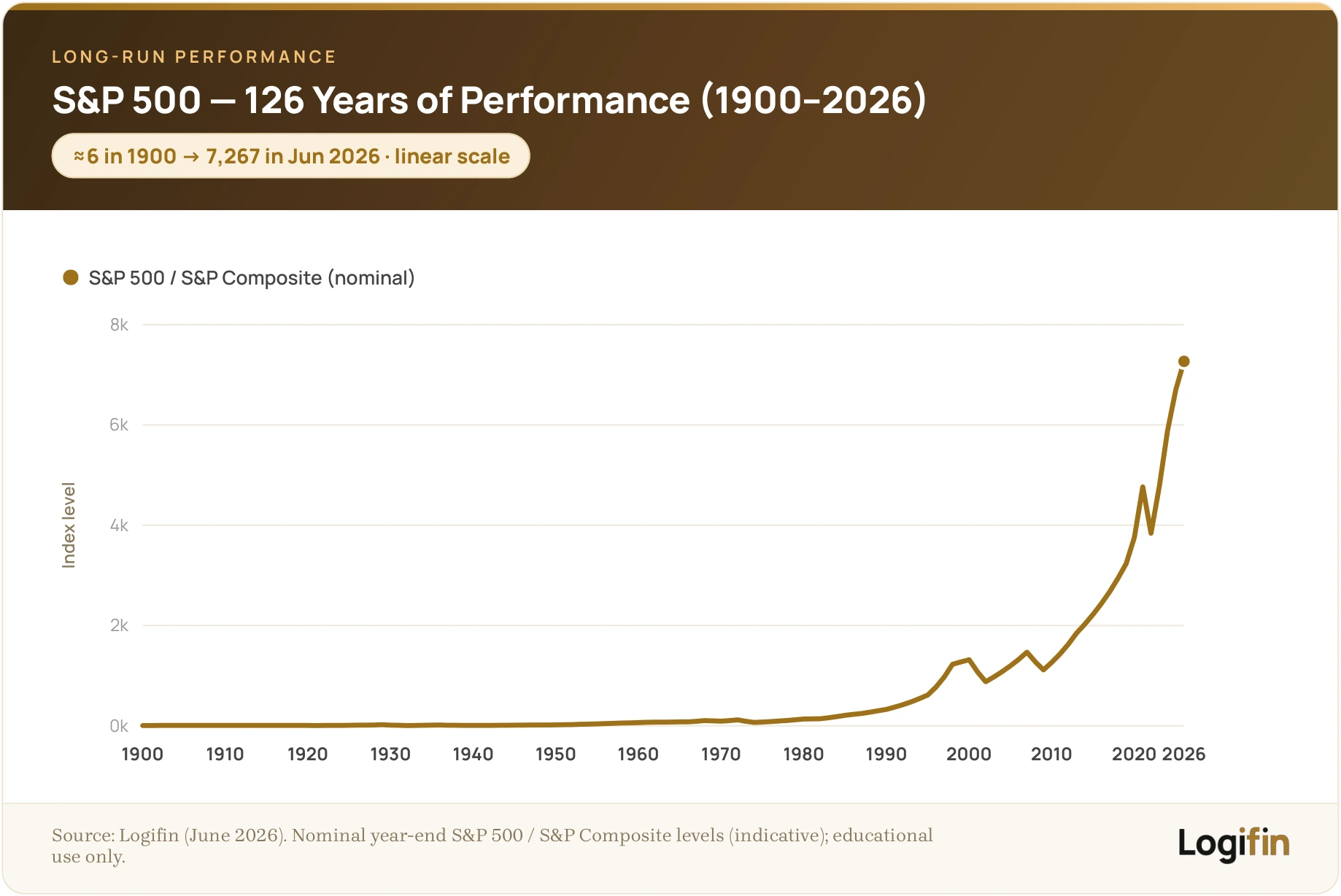
This does not mean it always rises or that it has no large fluctuations. It does mean that over the long term it follows the growth of corporate earnings and productivity.
🔶 Why so many European investors start with the S&P 500
Although it is an American index, the S&P 500 has a global character.
Many of its companies draw a large part of their revenue outside the United States, which offers indirect international exposure, even to investors who do not live in America.
For a European investor, the S&P 500 often works as:
- a basic pillar of the portfolio
- a reference point for long-term growth
- a core investment around which other choices are built
This explains why the discussion is rarely whether to invest in the S&P 500, but much more often: with which ETF to do it.

And somewhere here two names almost always appear: SXR8 and VUAA.
What SXR8 is and what VUAA is
SXR8 and VUAA are two of the most popular ETFs that passively replicate the S&P 500 index, offering direct exposure to the top American companies in a simple and accessible way.
Both ETFs are very reliable, widely used choices for investing in the S&P 500 with the same basic structure and comparable cost.
Their differences are mainly in scale, liquidity and trading details, not in the investment philosophy or the index they track.
🔶 iShares Core S&P 500 UCITS ETF — SXR8
SXR8 is an ETF that aims to track the performance of the S&P 500 index by physically buying the stocks that make it up (physical replication).
- Full name: iShares Core S&P 500 UCITS ETF USD (Acc)
- ISIN: IE00B5BMR087
- Provider: BlackRock / iShares
- Type: Accumulating (dividends are reinvested)
- Cost (TER): 0.07% per year
- AUM (Assets under Management): a very large volume, one of the largest S&P 500 ETFs in the world, around 129 billion EUR in assets
SXR8 is the ticker under which this specific ETF trades on the Xetra exchange (Germany). On the London Stock Exchange it appears as CSPX.
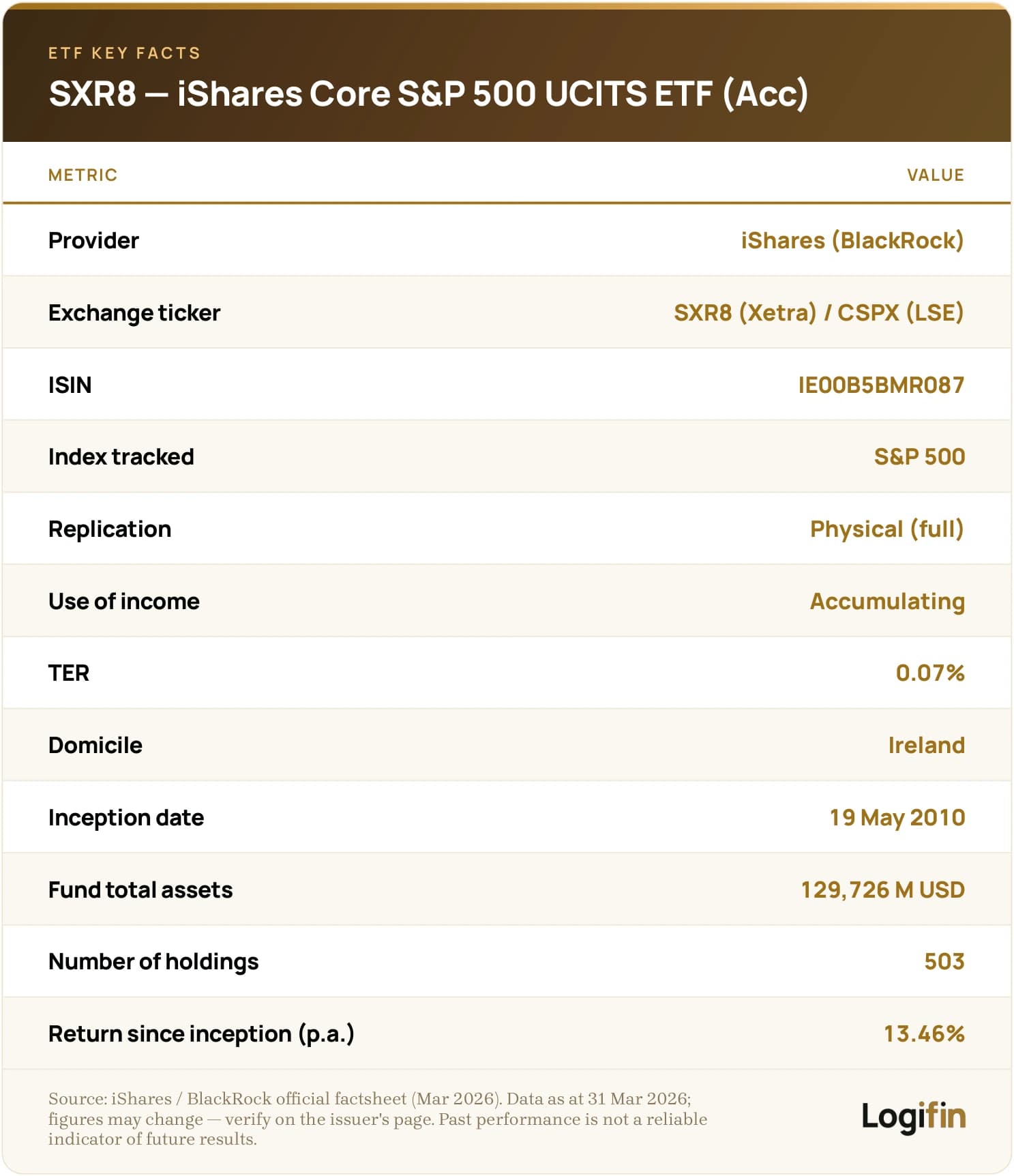
SXR8 is considered by many investors to be the benchmark UCITS ETF for the S&P 500 because of its size and liquidity in the European market.
🔶 Vanguard S&P 500 UCITS ETF — VUAA
VUAA is also an ETF that tracks the S&P 500, with a similar rationale and structure:
- Full name: Vanguard S&P 500 UCITS ETF (USD) Accumulating
- ISIN: IE00BFMXXD54
- Provider: Vanguard
- Type: Accumulating (dividends are reinvested)
- Cost (TER): 0.07% per year
- AUM (Assets under Management): large, in the order of tens of billions of EUR (for example around 29 billion EUR as of the most recent public reporting)
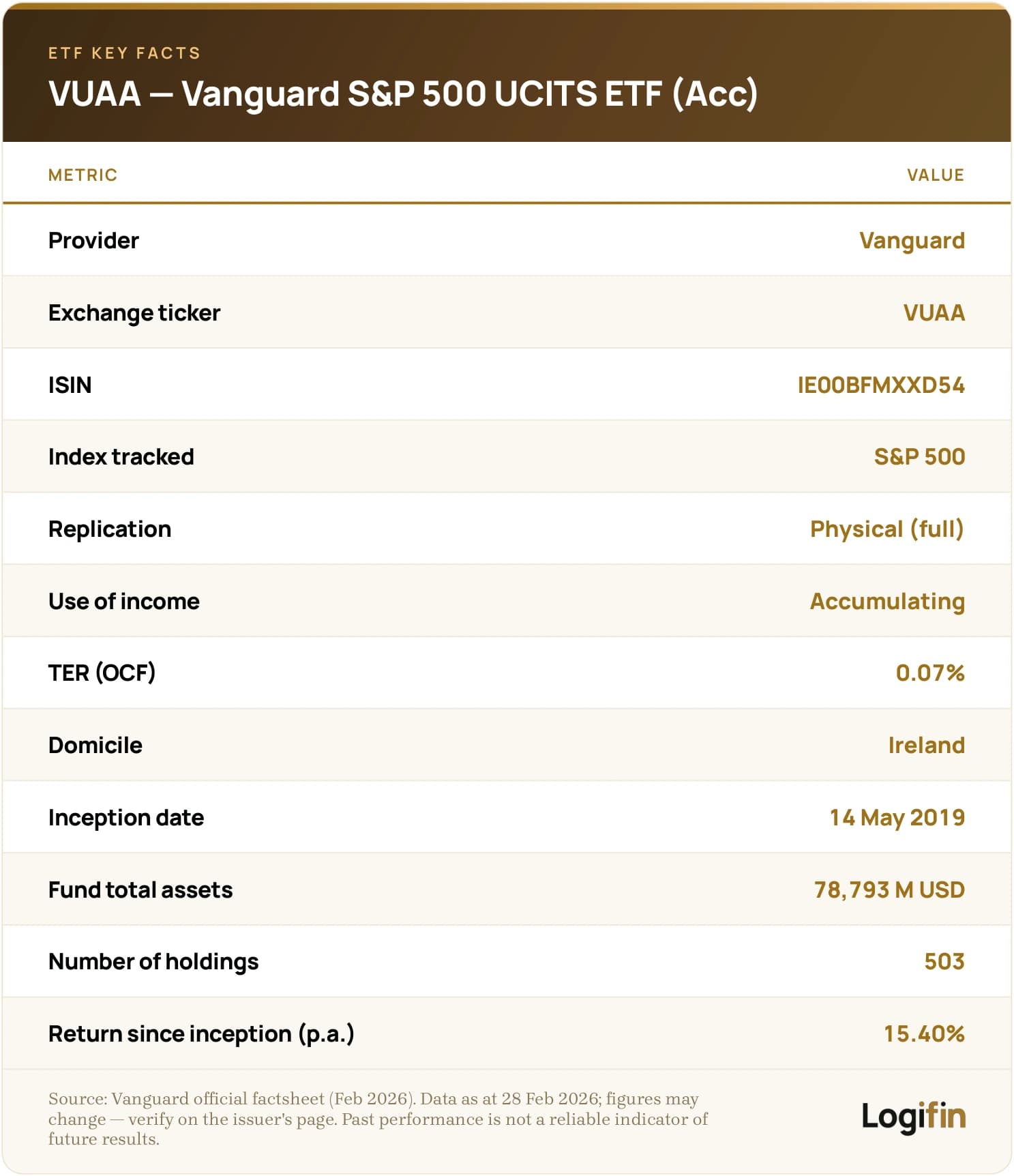
Like SXR8, VUAA uses full replication of the index and is also a UCITS ETF suitable for European investors.
🔶 Common Features
Both:
- are UCITS compliant, therefore suitable for European investors
- are Accumulating ETFs, meaning they do not pay dividends but reinvest them
- have a very low cost compared with other investment solutions
🔶 How They Differ from Each Other
The basic differences are not in what they invest in but in operating and structural details of the ETF that can have an indirect impact:
- Size (AUM): SXR8 is significantly larger in assets, which usually means better liquidity and smaller spreads on trades.
- Provider: SXR8 belongs to the BlackRock/iShares ecosystem, while VUAA belongs to Vanguard. Both are considered among the most reliable companies worldwide.
- Trading currency: VUAA usually trades in USD (although a EUR line exists), while SXR8 trades in EUR, something that can affect the practical relationship with your banking transactions.
Which ETF has performed better in recent years?
When we compare the performance of the iShares Core S&P 500 UCITS ETF (SXR8) with that of the Vanguard S&P 500 UCITS ETF (VUAA) over recent years, the first thing to make clear is this: both track the same index.
This means that, on a theoretical level, their long-term path is almost identical.
In practice, if one looks at the historical total-return charts over a five-year or ten-year horizon, the differences between SXR8 and VUAA are very small.
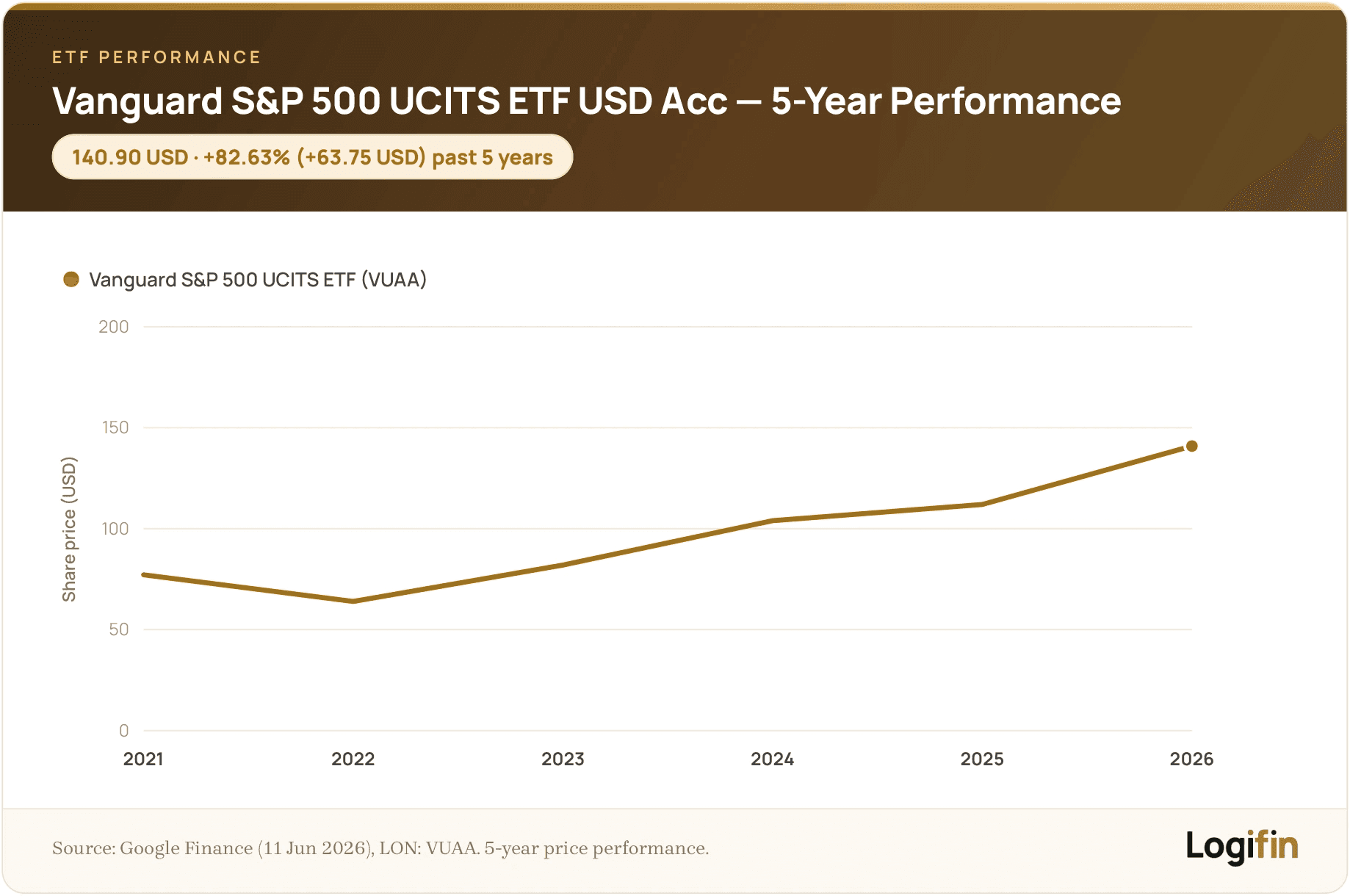

These are not deviations that change an investor's strategy or justify frequent ETF switching.
⚠️ These deviations do not arise because one ETF invests better than the other.
They arise mainly from technical reasons, such as:
- exactly when the dividends are reinvested inside the ETF
- small differences in the total operating cost
- the efficiency of the index replication on a daily basis
At this point it matters to make a distinction: TER on its own is not enough to explain the differences in performance.
What matters in practice is the so-called tracking difference, that is the real deviation of the ETF performance from the index performance after all costs and operating details.
And here both SXR8 and VUAA have historically shown very good behaviour, with deviations that remain limited.
🔶 If someone is looking for a winner based on the returns of recent years, the answer is that there is no clear winner.
In certain periods one ETF may lead marginally and in others the other one does.
These differences are usually in the order of a few tenths of a point over many years and do not substantially change the final result for a long-term investor. What matters more is that both ETFs have managed to reflect the path of the S&P 500 with consistency.
For someone who invests over a horizon of decades, consistency in replicating the index and discipline in the strategy play a much larger role than which ETF had slightly better performance in a specific period.
In other words, the performance comparison does not lead to a clean choice in favour of SXR8 or VUAA.
How the EUR/USD exchange rate affects your final return
One of the most frequent points of confusion in the comparison between the iShares Core S&P 500 UCITS ETF (SXR8) and the Vanguard S&P 500 UCITS ETF (VUAA) concerns the currency.
⚠️ Many investors think that the ETF trading in euros has different exposure to the dollar from the one trading in dollars.
In practice, this is not the case. Both ETFs invest in the same American companies of the S&P 500, which are priced in dollars.
This means that, regardless of the trading currency of the ETF on the exchange, the investor has full exposure to the EUR/USD exchange rate.
- If the dollar strengthens against the euro, the return in euros increases.
- If it weakens, the return in euros decreases.
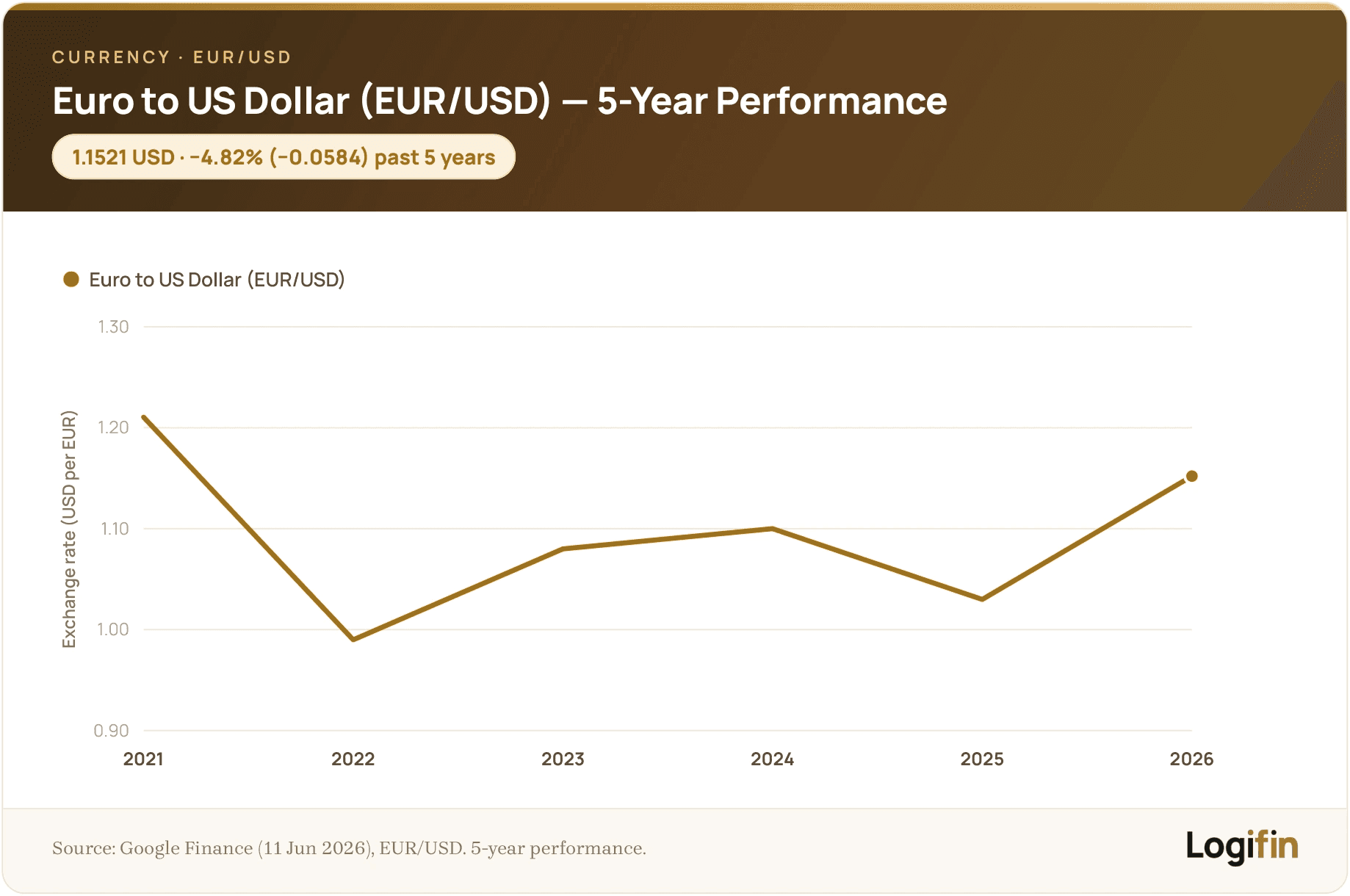
The currency in which you buy the ETF does not change this relationship. It simply affects the way you see the price on your screen and how the transaction is settled.
The underlying investment remains the same. Over time, the exchange rate can create periods where the return of the S&P 500 in euros diverges noticeably from the return in dollars.
There were years where the strengthening of the dollar worked in favour of the European investor, but also periods where the opposite reduced the returns.
These fluctuations are part of the overall experience of investing in international markets and are not a particular feature of SXR8 or VUAA.
🔶 It is also important to clarify what these ETFs do not do.
- They do not have a currency-hedging mechanism.
- They do not lock in the exchange rate and do not protect the investor from changes in EUR/USD.
- The return you see always reflects the combination of the index path and the currency movement.
💡 For a long-term investor, the exchange rate works more as a factor of volatility than as a criterion for choosing an ETF.
- Over a horizon of decades, the fluctuations tend to smooth out and the overall return is determined mainly by the path of the companies in the index.
- For this reason the choice between SXR8 and VUAA cannot be based on the trading currency, but on more practical and structural characteristics.
- If you follow a DCA strategy over many years, the effect of the exchange rate tends to smooth out.
- If however you invest a lump sum, your moment of entry in relation to the exchange rate can make a difference to your final return.
Cost, spread and brokers
When two ETFs track the same index and present similar performance, attention reasonably turns to cost.
Here, however, a closer look is needed, because cost is not limited only to the TER written on the factsheet.
Both the iShares Core S&P 500 UCITS ETF (SXR8) and the Vanguard S&P 500 UCITS ETF (VUAA) have a very low annual management cost.
Their TER is at the same level and, on its own, is not enough to substantially differentiate one choice from the other. For a long-term investor, such differences are practically negligible.
🔶 In everyday practice, the spread matters more, that is the difference between the buying price and the selling price at the moment of the transaction.
- The spread is directly linked to the liquidity of the ETF and the trading volume on the exchange where it trades.
- An ETF with high assets and large daily volume tends to have smaller spreads, therefore a lower hidden cost for the investor.
At this point, SXR8 often shows a small practical advantage, since it is among the largest and most actively traded S&P 500 ETFs in Europe.
This does not mean that VUAA has a liquidity problem.
On the contrary, both are considered perfectly adequate for retail investors. The difference mainly concerns those who trade frequently or invest large amounts.
🔶 Beyond the ETF itself, the buying platform also plays an important role.
Transaction costs, commissions, whether free ETF buying is offered or whether there is a regular-investing plan can affect the final result more than the difference between SXR8 and VUAA.
For example, a platform with zero commission on monthly purchases can fully cancel out any small difference in the spread.
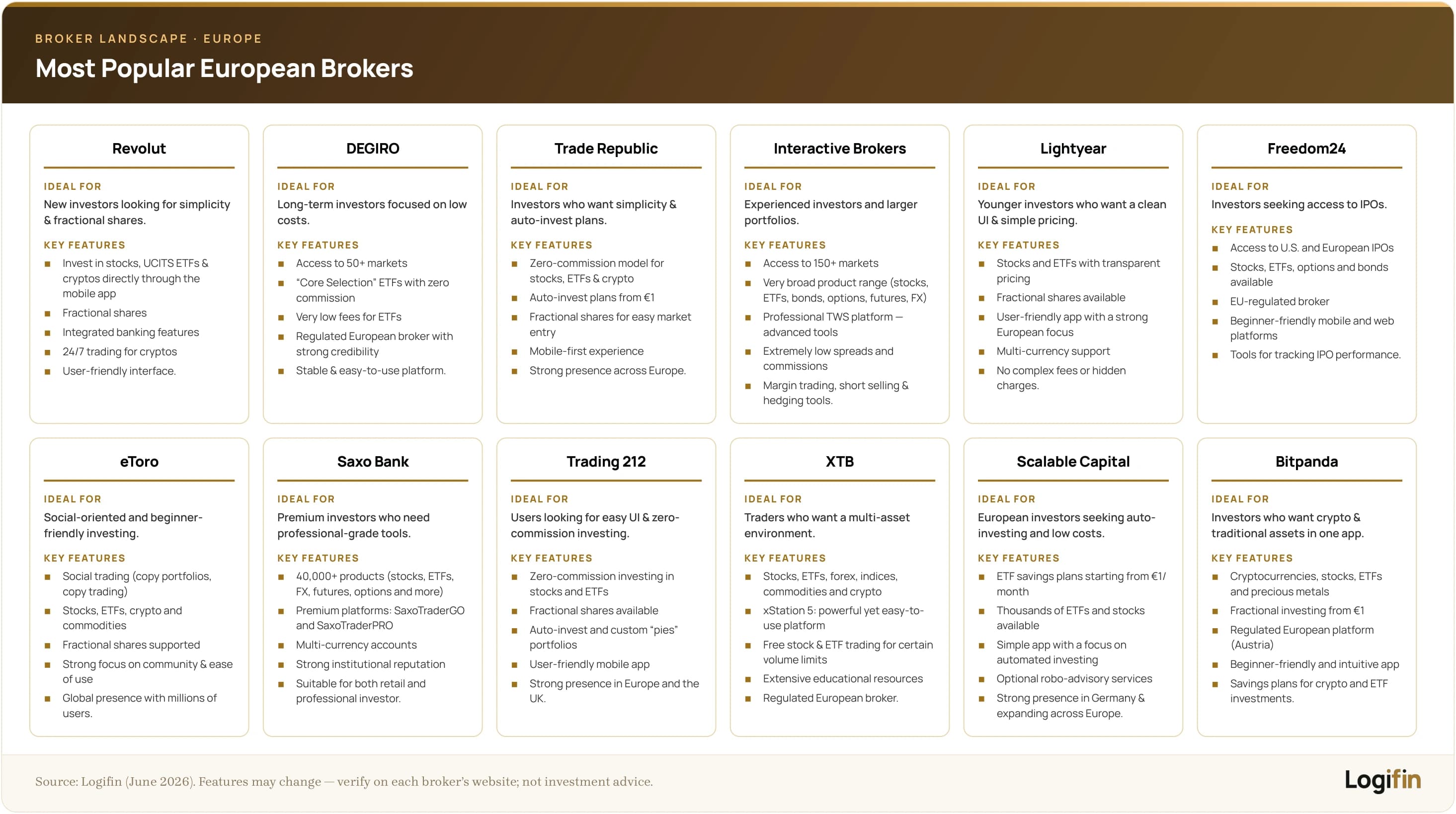
This is why it makes sense for the investor to look at the overall picture. Not only which ETF they choose, but also:
- on which exchange it trades
- what the commission per transaction is
- whether the strategy they want to follow is easily supported
In the end, cost is not only numbers in a table. It is the sum of small practical details.
Which option is more suitable for DCA?
For a DCA (Dollar Cost Averaging) strategy the goal is not to find the perfect ETF but the one that allows steady application without friction.
From this angle, both the iShares Core S&P 500 UCITS ETF (SXR8) and the Vanguard S&P 500 UCITS ETF (VUAA) are suitable, with small practical differences.
In a regular-purchase plan, the basic points that matter are:
🔶 Liquidity and trade execution
- Both ETFs are sufficiently liquid for retail investors.
- The larger size and higher volume of SXR8 on major European exchanges often translate into slightly smoother execution, especially in periods of high volatility.
🔶 Share price and practical flexibility
- The lower price per share of VUAA can make it easier to invest fixed amounts when fractional shares are not supported.
- This reduces the unused balance after each purchase.
🔶 Platform support
- Many brokers offer regular-investing plans for specific ETFs with low or zero commissions.
- Often, the final choice is not determined by the ETF but by which one is best supported in the plan the investor uses.
🔶 Consistency and discipline
- The fewer obstacles there are in practice, the easier it is to keep to the plan.
- Stable access, good liquidity and simple processes help more than any small difference in features.
Overall, both ETFs can work effectively in DCA.
The more correct choice is the one that fits best with the investor amount, frequency and platform, so that the strategy is applied without interruptions over time.
What to choose in the end and what to avoid
After comparing returns, currency, cost and practical details, it becomes clear that the choice between the iShares Core S&P 500 UCITS ETF (SXR8) and the Vanguard S&P 500 UCITS ETF (VUAA) is not a matter of a good ETF and a bad ETF.
Both are reliable, low cost and reflect the path of the S&P 500 index with consistency.
The choice has more to do with the context in which you invest than with the product itself.
In general terms:
- SXR8 tends to favour investors who emphasise maximum liquidity and ease of execution, especially when they make larger or frequent transactions on major European exchanges.
- VUAA often fits better with investors who follow DCA with fixed amounts and want more flexibility in allocating each monthly investment, particularly when fractional shares are not available.
🔶 What is worth avoiding is excessive focus on small differences.
- Switching ETFs based on minimal performance deviations or temporary cost differences usually adds complexity without real benefit.
- For a long-term investor, consistency and discipline carry far more weight than the choice of the slightly better ETF.
💡 Whether one chooses SXR8 or VUAA, the result will depend mainly on:
- the duration of the investment
- the regularity of the purchases
- the ability to stay on the plan, even in periods of high volatility
In this context, the ETF is the tool. The strategy is what determines the final result.
Conclusion and practical takeaways
The choice between SXR8 and VUAA is not a decision that will, on its own, determine the success or failure of an investment strategy.
Both ETFs offer reliable, low cost and consistent exposure to the S&P 500 and work effectively as a basic pillar of a long-term portfolio.
The real goal is not to find the perfect ETF but to fit the investment into a plan that can be applied with consistency over time. The small technical differences matter far less than the duration, the discipline and the psychology of the investor, especially in periods of high volatility.
🔑 What to remember:
- Long-term performance comes from consistency and not from comparing small differences between similar products.
- A strong core portfolio with a broad-based ETF can cover the needs of most investors.
- Currency and market fluctuations are part of the journey and not a reason to change strategy.
- Low cost and reliable index replication are more important than short-term performance deviations.
- Discipline and psychology play a larger role than technical knowledge.
Practical tips for new investors:
-
Start simple
You do not need to choose many ETFs to invest in the S&P 500. One reliable core ETF is enough to build a stable base without unnecessary decisions.
-
Make the DCA strategy automatic
A standing order reduces emotional noise and helps you stay consistent regardless of market conditions.
-
Do not focus on the monthly return
Short-term moves say nothing about the success of a plan that spans decades. What matters is time in the market.
-
Avoid frequent ETF changes
Jumping from product to product rarely adds value and often undermines your strategy.
-
Review your plan periodically, not constantly
An annual check is enough to see whether your strategy remains aligned with your goals and your financial reality.

The content of this article is provided exclusively for informational and educational purposes and does not constitute investment advice or a recommendation to buy or sell financial products. The information is based on publicly available sources considered reliable, without any guarantee of accuracy or completeness. Before making any financial or investment decision, it is recommended that you consult a certified professional advisor or accountant, taking into account your own financial situation and risk profile. The Logifin team bears no responsibility for any direct or indirect damages arising from the application of the information presented.
Related articles

How to choose between ETFs that track the same index
VUAA, SXR8, D500 – all track the S&P 500. Which one is actually worth it?
26 min read

Dow Jones vs Nasdaq-100 vs S&P 500: The differences and when to follow each one
The three leading U.S. indices compared on composition, concentration and risk, with guidance on which one is worth following and when.
11 min read

Accumulating vs distributing ETFs: Which one suits you and why
How to choose between accumulating and distributing ETFs based on taxation, your tax residence and what you plan to do with the dividends.
13 min read

What is a recession and how it affects investors?
How a recession is defined, what causes one, how the markets usually behave during it and what an investor can do to prepare in advance.
24 min read
EXPLORE LOGIFIN
Everything you need in order to learn, plan and track your investments.
Logifin Blog
Learn everything you need to get your finances in order and invest with confidence.
Logifin Insights
What moves the markets and what it means for a long term investor. Short and without the noise.
Logifin Tools
Free, inside the site, no signup. Everything you calculate stays on your device.
Logifin ETF Hub
Find the ETF that fits you: 550+ UCITS ETFs, smart filters and in-depth comparisons.
Logifin Guides
A series of guides that builds your investment plan step by step. The first guide is free for everyone.
Logifin Circle
The tools and the Hub are free for everyone. You become a member for the intelligence that never stops.