What is a money market fund and how does it work?
How a fund that holds short dated, high quality debt securities works, what it returns, what risks it carries and when it belongs in a portfolio.
30 August 2025 · 10 min read

What is a money market fund?
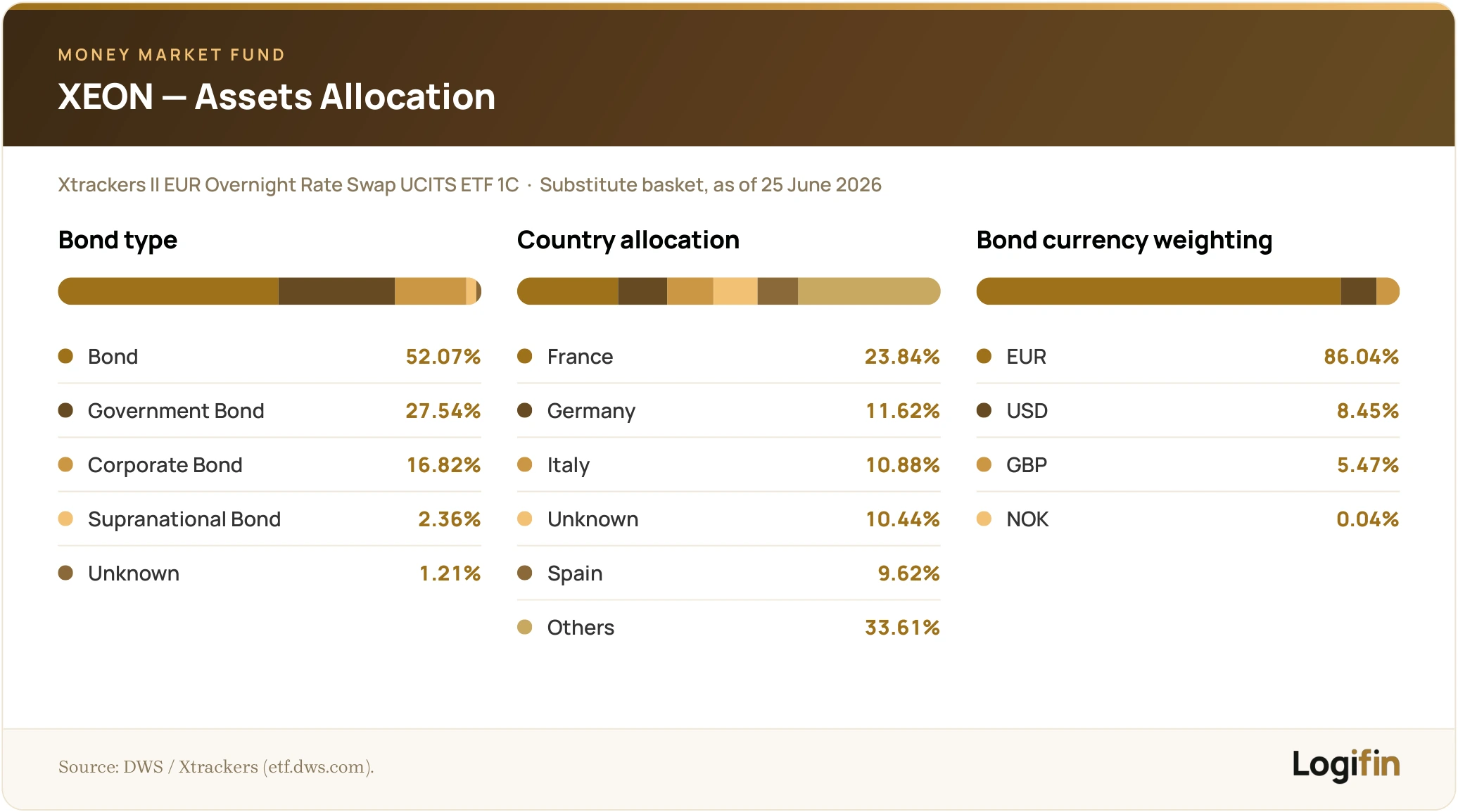
A Money Market Fund (MMF) is a type of mutual fund that invests in short-term, high-quality, low-risk debt securities.
Its main goal is not to achieve high returns, but to preserve capital and provide liquidity.
In other words, MMFs act as an “intermediate stop” for an investor’s money: you neither leave it idle nor expose it to major risks.
🔶 What are the main instruments an MMF invests in?
The main instruments they use are:
- Treasury bills (T-bills): Short-term government borrowing with very low credit risk.
- Deposits and commercial paper: Short-term obligations of large, reliable companies and banks.
- Interbank loans: Very short-duration loans between banks, a core element of the system’s daily liquidity.
- Short-term, high-credit-rating bonds: Securities with short duration and a low probability of default.
All of the above are characterised by extremely low credit risk and short duration, which make MMFs one of the most conservative investment vehicles.
🔶 Key characteristics of MMFs
Objective:
- Capital stability and the avoidance of sharp fluctuations.
- MMFs do not aim for impressive returns, but for preserving value and a smooth yield close to short-term interest rates.
Liquidity:
- One of their biggest advantages.
- The investor can redeem their money almost immediately, unlike other mutual funds that have time or operational constraints.
Use:
MMFs act like a “parking” spot for capital. They are ideal when you:
- are waiting for an investment opportunity
- want a temporary place to park liquidity
- do not want exposure to market volatility
MMFs are the most conservative form of investing within the mutual fund space. They are ideal for short-term needs, for maintaining liquidity and as a temporary refuge for capital in periods of uncertainty.
🔶 Money Market Funds are not the same as a simple savings account.
Although they are similar in logic, they usually offer slightly higher returns because they invest in short-term investment products.
In everyday use, however, they work as an alternative for those who want a bit more than a bank account without taking on substantial risk.
Advantages of money market funds
Despite their conservative profile, Money Market Funds (MMFs) have significant advantages that explain why they remain popular with both institutional and retail investors.
They are a category that “bridges” the need for safety with the desire for a basic return.
🔶 High safety
- Most MMFs invest in securities with very low credit risk: government treasury bills, deposits at high-rated banks, or short-term bonds from reliable issuers.
- This makes them ideal for investors who want to minimise the probability of capital loss.
Example: A fund that invests exclusively in short-term German Bunds or US T-bills is considered almost equivalent to a state guarantee, as those states are regarded as “zero-risk” issuers.
🔶 Liquidity & flexibility
The investor can redeem their holdings quickly, usually within 24 hours, unlike other mutual funds that have longer delays.
This makes them ideal for “parking” capital that you do not want to lock up for a long period.
For many institutions, MMFs act like a “cash account” for capital waiting to be invested elsewhere, while offering a small but useful return.
🔶 Stable value
Most Money Market Funds (MMFs) aim to maintain a stable net asset value (NAV), usually $1 per share or the equivalent in euros.
This goal is not accidental. It is a core element of their philosophy as a liquidity-management tool rather than a risk-taking vehicle.
In practice this means that:
- the investor does not see strong fluctuations in the value of their holding
- returns come mainly from the interest rate of the underlying instruments and not from price changes
- the experience feels more like a “safe parking of capital” than a market investment
That is why MMFs are often used by investors who want to protect capital temporarily, without exposure to sharp fluctuations.
🔶 Better returns than deposits
In a rising-rate environment, Money Market Funds (MMFs) often tend to offer higher returns than simple bank deposit accounts.
This is not circumstantial. It is a result of the way they work.
The main reason is that MMFs invest in short-term securities that adjust quickly to new market interest rates.
When interest rates rise, the yields of these securities incorporate the change almost immediately.
By contrast, banks:
- are slow to pass interest-rate increases on to depositors
- keep deposit rates low for a longer period
- improve their margins first before raising returns for customers
For the investor this means that, without significantly increasing risk, they can achieve a better return on their liquidity than a simple deposit, especially when interest rates are rising.
🔶 Regulatory protection
In Europe and the US, Money Market Funds (MMFs) operate within a strict regulatory framework, precisely because they manage capital considered “low risk” and are often used as a liquidity alternative.
Regulatory supervision ensures that:
- MMFs invest only in high-quality, short-term instruments
- there are strict limits on duration and credit risk
- diversification rules are followed, so that risk is not concentrated in a single issuer
- liquidity-management mechanisms are applied for periods of stress
In Europe, MMFs are governed by the dedicated EU Money Market Fund Regulation, while in the US they are supervised by the SEC with specific rules on transparency, liquidity and investor protection.
Disadvantages and risks of money market funds
Although Money Market Funds (MMFs) are considered among the safest investment options, they are not entirely risk-free.
Like every investment tool, they have limitations and risks that every investor should know before adding them to their portfolio.
🔶 Low returns
Compared with stocks or long-term bonds, MMFs offer much lower returns.
MMFs were designed for:
- capital stability
- high liquidity
- minimal volatility
and not for maximising profits.
In periods of low interest rates, their returns can be marginal or even zero in real terms.
Example: During 2015–2019, many European MMFs had returns below 0.5%, essentially equal to those of a deposit account. In such an environment, the investor effectively gains nothing beyond safety.

🔶 Inflation risk
- Even if the nominal return is positive, in periods of high inflation the real return can be negative.
- This means that, while capital “stays safe” in numerical terms, in practice it loses purchasing power.
Example: If an MMF yields 2% per year but inflation is 6%, the investor has a real loss of –4%.

🔶 Liquidity risk in a crisis
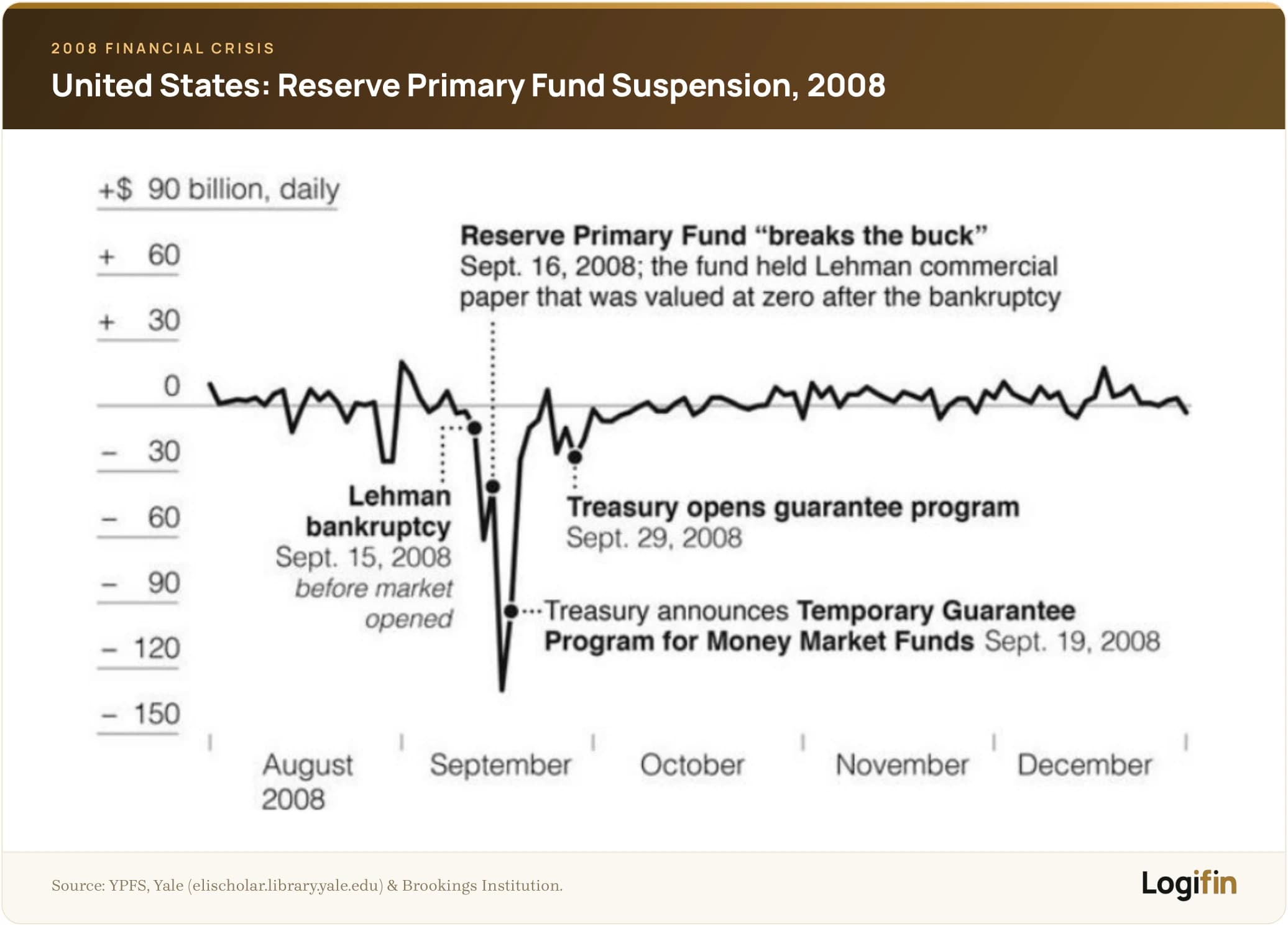
Though rare, in periods of systemic crisis MMFs can face liquidity problems, when all investors ask to redeem at the same time.
Example:
- In 2008, the Reserve Primary Fund in the US became the first major money market fund to “break the buck”, that is, its value per share fell below $1 (to $0.97), due to losses on Lehman Brothers securities.
- The event triggered massive outflows of over $300 billion from prime money market funds within a few days, showing that not even MMFs are fully immune in extreme conditions.
🔶 Management costs
- Despite their low risk, MMFs carry management fees.
- In a low-rate environment, these costs can “erase” almost all of the return.
Tip: Before choosing a fund, check the TER (Total Expense Ratio) carefully. A 0.5% cost may be negligible in an equity fund returning 8%, but in an MMF returning 1%–2% it can “swallow” most of the gain.
🔶 Dependence on the regulatory framework
- The safety of an MMF depends heavily on the regulations that govern it.
- In Europe, they are regulated by the EU Money Market Fund Regulation (Regulation (EU) 2017/1131), one of the strictest frameworks worldwide, while in the US the SEC Rule 2a-7 applies.
- These frameworks limit the duration and risk of the securities they can invest in.
- But if there is no strong supervision, or if the rules are loosened, the risk to the investor increases.
The role of money market funds in a portfolio
Money Market Funds (MMFs) may seem “unexciting” compared with stocks or bonds, yet they play a very specific and useful role in every investor’s strategy: they offer liquidity, stability and balance.
They act as the “cushion” on which the long-term strategy rests, providing flexibility in periods of uncertainty.
🔶 Position as a “safe haven”
- MMFs are used to reduce the overall volatility of a portfolio.
- In periods of crisis, they act as a “cushion” that protects capital and lets the investor avoid panicking.
Example: An investor with 70% stocks, 20% bonds and 10% in an MMF can better withstand a sudden market drop, having liquidity immediately available for new investment opportunities.
🔶 Liquidity management
- MMFs are ideal for “parking” capital until the right investment opportunity arises.
- They act as a bridge between bank deposits and long-term investments, offering something more than a simple savings account.
- Many institutional investors use MMFs as a temporary station for huge amounts of capital, so they remain fully invested but with minimal risk.
🔶 A strategic tool in high-rate environments
- When interest rates are high, MMFs become even more attractive, as their returns usually exceed bank deposits.
- In 2023, the largest US MMFs were yielding over 5%, a rate far above most bank time deposits.
🔶 Importance for conservative investors
- More conservative investors often incorporate MMFs as a core part of their portfolio for stability reasons.
- Even so-called balanced funds often include a share of money market securities to smooth out fluctuations.
🔶 Psychological benefit
- Having a liquidity “cushion” gives the investor greater calm and discipline.
- Knowing that part of their capital is immediately available and safe, they can avoid rushed moves when markets fall.
- This psychological advantage is often more valuable than the return percentages themselves.
Conclusion and practical takeaways
Money Market Funds (MMFs) may not have the glamour of stocks or the steady income of bonds, but they play a decisive role in the safe management of liquidity.
They are the tool that lets you keep capital available without it sitting “idle” in the bank, while offering flexibility to seize opportunities immediately.
🔑 Key takeaways
- They offer safety, liquidity and stable value.
- They have low returns, but often higher than deposits, especially in periods of elevated interest rates.
- They are vulnerable to inflation (since they do not keep up with rising prices) and, in rare cases, to liquidity crises.
- They are used mainly as “capital parking” and as a portfolio-smoothing tool, so the investor keeps “dry powder” available.
-
Use them for short-term needs
If you know you will need money in the next 3–12 months, an MMF is a more efficient choice than a simple savings account, as it can offer higher returns with a similar level of liquidity.
-
Look carefully at costs
A 0.5% TER can “eat” a large part of an already low return. Prefer funds with low operating costs so you maximise your net return.
-
Do not see them as a wealth investment
MMFs are not a tool for building long-term wealth. They are a tool for stability, safety and flexibility, ideal for “parking” money until you find your next big investment move.
The content of this article is provided exclusively for informational and educational purposes and does not constitute investment advice or a recommendation to buy or sell financial products. The information is based on publicly available sources considered reliable, without any guarantee of accuracy or completeness. Before making any financial or investment decision, it is recommended that you consult a certified professional advisor or accountant, taking into account your own financial situation and risk profile. The Logifin team bears no responsibility for any direct or indirect damages arising from the application of the information presented.
Related articles

What are bonds and why do professionals invest in them?
What a debt security is, which types of bonds exist, what risks come with them and the role they play inside a portfolio.
13 min read

What is a mutual fund? The complete guide
The most widely used form of collective investment and why it remains popular worldwide
16 min read

What is the ECB and how does it affect the economy and the markets?
The role of the European Central Bank in our everyday lives and investments
15 min read

What is a recession and how it affects investors?
How a recession is defined, what causes one, how the markets usually behave during it and what an investor can do to prepare in advance.
24 min read
EXPLORE LOGIFIN
Everything you need in order to learn, plan and track your investments.
Logifin Blog
Learn everything you need to get your finances in order and invest with confidence.
Logifin Insights
What moves the markets and what it means for a long term investor. Short and without the noise.
Logifin Tools
Free, inside the site, no signup. Everything you calculate stays on your device.
Logifin ETF Hub
Find the ETF that fits you: 550+ UCITS ETFs, smart filters and in-depth comparisons.
Logifin Guides
A series of guides that builds your investment plan step by step. The first guide is free for everyone.
Logifin Circle
The tools and the Hub are free for everyone. You become a member for the intelligence that never stops.