Minimalism and investing: Can they coexist?
How the idea of less but better organises your spending and leads to a simple portfolio you can hold for years without second guessing it.
7 September 2025 · 14 min read

What is minimalism and why is it gaining momentum?
Minimalism is a way of life built on the idea of "less but better".
It does not mean living poorly or depriving yourself; it means letting go of whatever is unnecessary and keeping only what holds real value for you.
This can apply to objects, relationships, habits and also to the way you manage your finances. This same principle, "less but better", can become the foundation of a simple, low-cost investing strategy.
Example: A minimalist may prefer a simple but quality wardrobe with a few clothes that fit perfectly, instead of closets full of purchases that go unused.
The same holds for managing your time or your space: fewer things, less stress, more freedom.
🔶 Why is it gaining ground today?
Modern life is full of overconsumption, constant purchases and steady pressure to acquire more.
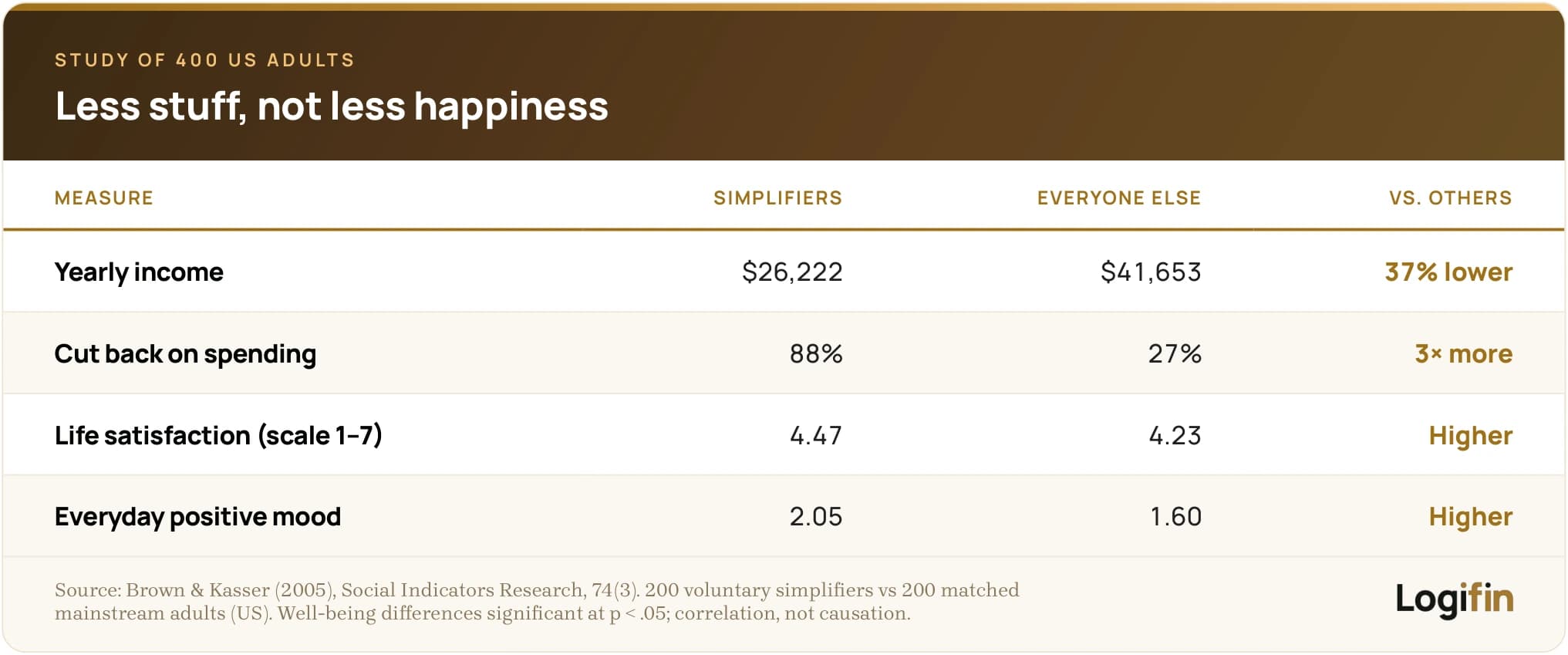
Even so, research suggests that this does not lead to greater happiness. Minimalism appears as a counterweight:
- It places emphasis on quality rather than quantity.
- It offers a clear mind and less stress.
- It strengthens financial independence, since it reduces pointless spending.
Research has shown that adopting minimalist practices (such as limiting consumption and seeking meaning rather than ownership) is associated with lower levels of financial and psychological stress, greater mental clarity and higher levels of everyday life satisfaction.
🔶 The common ground with investing
Minimalism and investing have more in common than you think:
- Both push you to focus on the essentials.
- Both rely on consistency and on the ability to avoid temptations.
- Both offer long-term benefits instead of short-term pleasures.
How does minimalism influence your financial habits?
Minimalism is not limited to a "tidy closet" or a simpler space at home. It is a life philosophy that radically changes the way you spend, save and invest money.
When you adopt this mindset, you start to tell apart far more clearly the difference between real needs and temporary wants.
And this distinction is one of the most powerful skills in personal finance.
🔶 Fewer impulse purchases
Minimalist thinking helps you stop spontaneous, emotional spending.
Instead of buying automatically, you learn to ask one simple but decisive question: "Do I really need this?"
This way you drastically cut waste on items that quickly lose their value:
- clothes that stay unworn in the closet
- gadgets forgotten in a drawer
- purchases that gave a momentary joy but no lasting value
The result is less financial "bleeding" on spending with no real return.
Example: Instead of changing smartphone every year, you keep the same one for 3–4 years and redirect the difference to savings or investments. A small change in habit with a large long-term effect.
🔶 Priority on value, not on quantity
Minimalism pushes you to pay for quality and durability, not for quantity. This logic fits perfectly with the world of investing.
Just as in investing you prefer a few well-chosen ETFs over dozens of scattered positions, so in life you prefer fewer goods but with real value and resilience over time.
Instead of many cheap items that are constantly replaced, you choose fewer but higher-quality ones.
The same principle applies to your portfolio: better one reliable ETF than 5 "lottery-ticket stocks".
🔶 Boosting your savings
However much we talk about investing, the first step is always the same: to have money available.
And this starts with your way of life. A structured approach such as the 50-30-20 strategy makes this step easier.
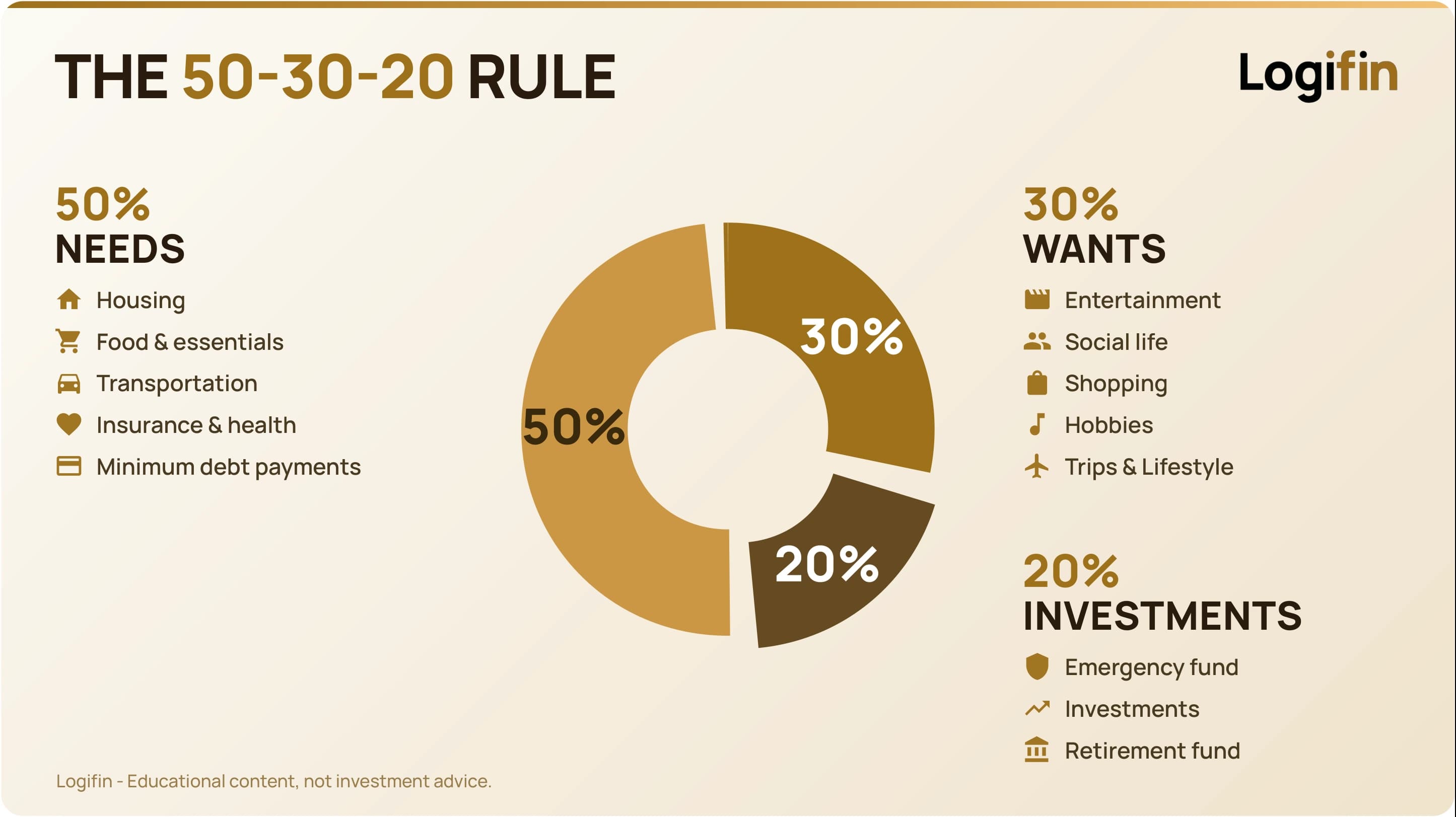
By reducing overconsumption, you free up capital that can be directed:
- to savings
- to an emergency fund
- to investments with a long-term horizon
Minimalism thus works like an "automatic" saving strategy. It does not require deprivation. It requires filtering.
Example: If you cut unnecessary spending by 150 € per month and invest it at an average return of 7%, in 25 years the capital exceeds 120,000 €. And this amount comes from money you would probably not even remember where it went.
🔶 The psychological dimension
Minimalism is not only a financial tool. It also has a strong psychological effect.
- it reduces anxiety around money
- it limits the need to constantly chase the "next best thing"
- it frees up time and mental energy
This energy can be directed to more meaningful goals, such as:
- financial independence
- personal growth
- a better quality of life
In short, minimalism does not take things away from you. It gives you back control, calm and a long-term perspective.
Minimalism and investing: Where do they meet?
Minimalism and investing may at first glance look like two entirely different worlds. The first is about a way of life; the second is tied to money and the markets.
However, they share the same philosophy: simplicity, consistency and focus on what holds real value.
🔶 Fewer, but more meaningful
Minimalism teaches you to choose based on quality and not quantity.
Instead of filling your life with objects, you choose a few but meaningful ones.
In investing, the same principle translates into preferring a clean and simple strategy over dozens of complex choices that confuse you, cost more and raise your risk.
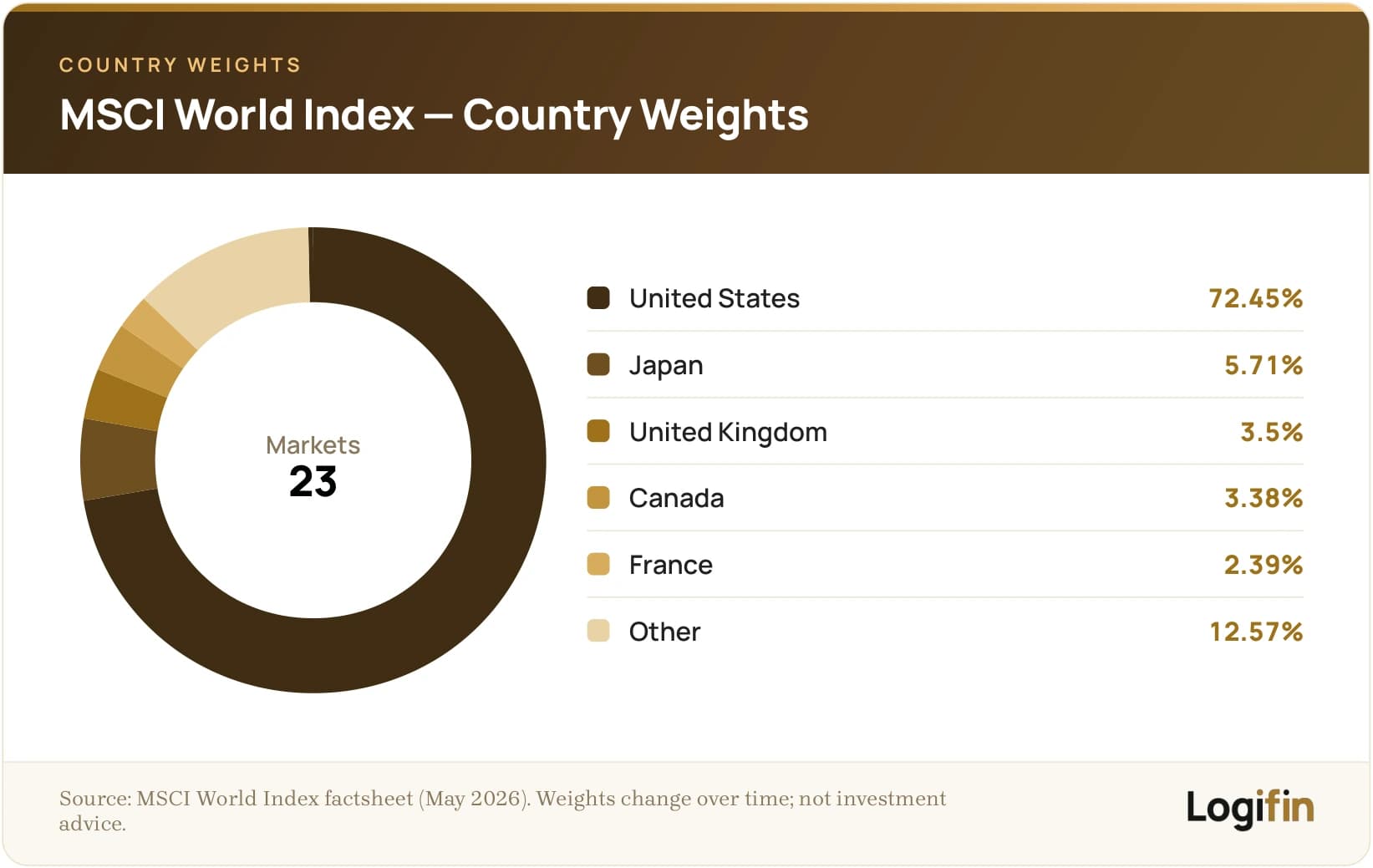
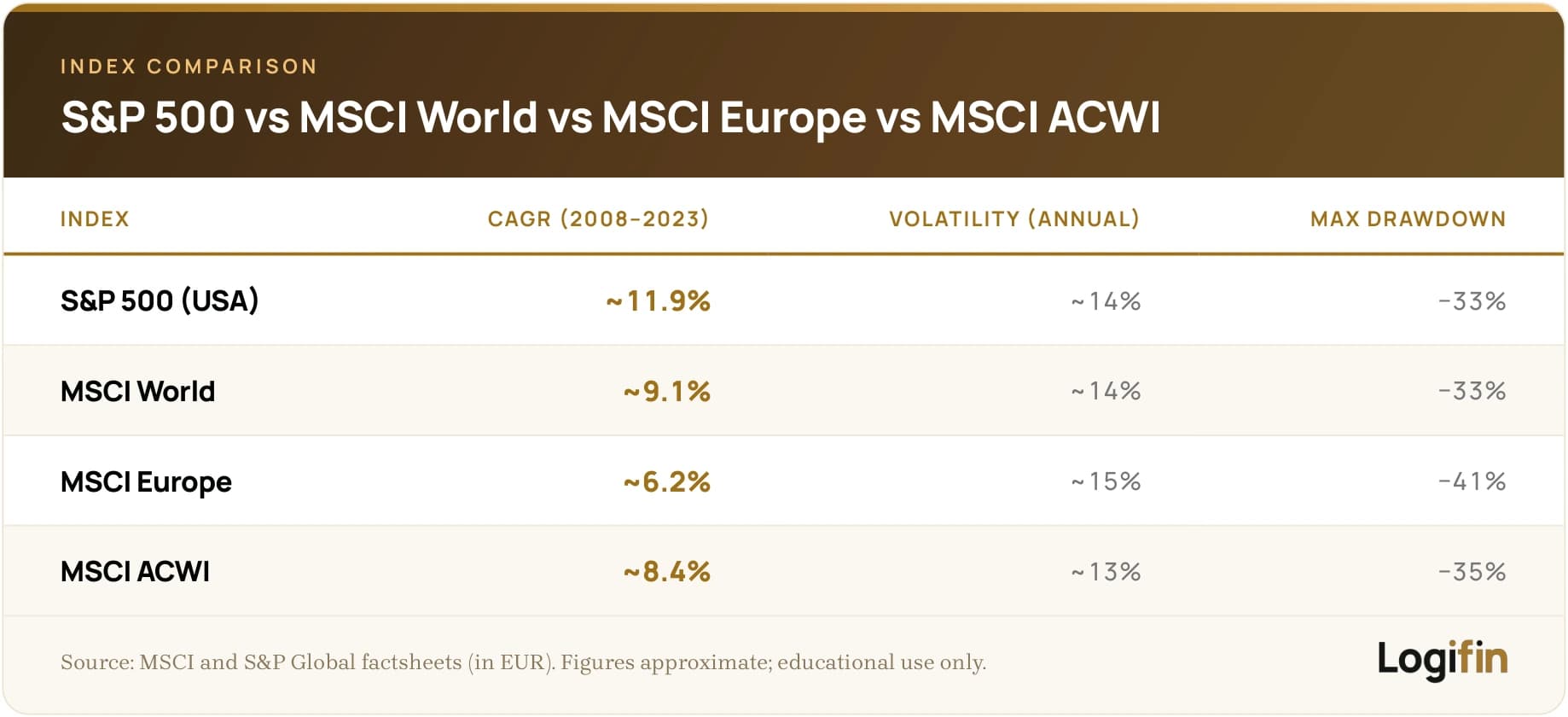
Example: Instead of constantly chasing the "next big trade", you can build a portfolio with 2–3 ETFs that cover the world (for example a global index, an American one and a European one) and stay consistent for years.
🔶 Stability instead of excess
Minimalism says: "Fewer objects, less stress". In investing, this becomes: "Fewer assets, less noise".
The simpler and clearer your strategy, the more easily you stay faithful to it, without being swept up by every new "trend" or the daily market chatter.
Stability is more powerful than the excitement of excess.
It is no coincidence that many successful investors prefer index investing: it combines simplicity, transparency and low cost, three principles that fit perfectly with the minimalist philosophy.
🔶 Patience and consistency
A minimalist is not in a rush to acquire more; they make conscious choices and let time confirm their value. They do not act impulsively but methodically.
Exactly the same holds in the investing world. To see results, you need discipline and patience.
Compounding does not work in a single day; it needs years of continuous investing in order to "build" the snowball of wealth.
Examples of applying minimalism to investing
Minimalism in investing does not mean that you "invest less".
It means that you invest more simply, smartly and with focus.
The goal is not to fill your portfolio with dozens of products but to have a clean strategy that works for decades.
🔶 Example 1: The one-ETF portfolio
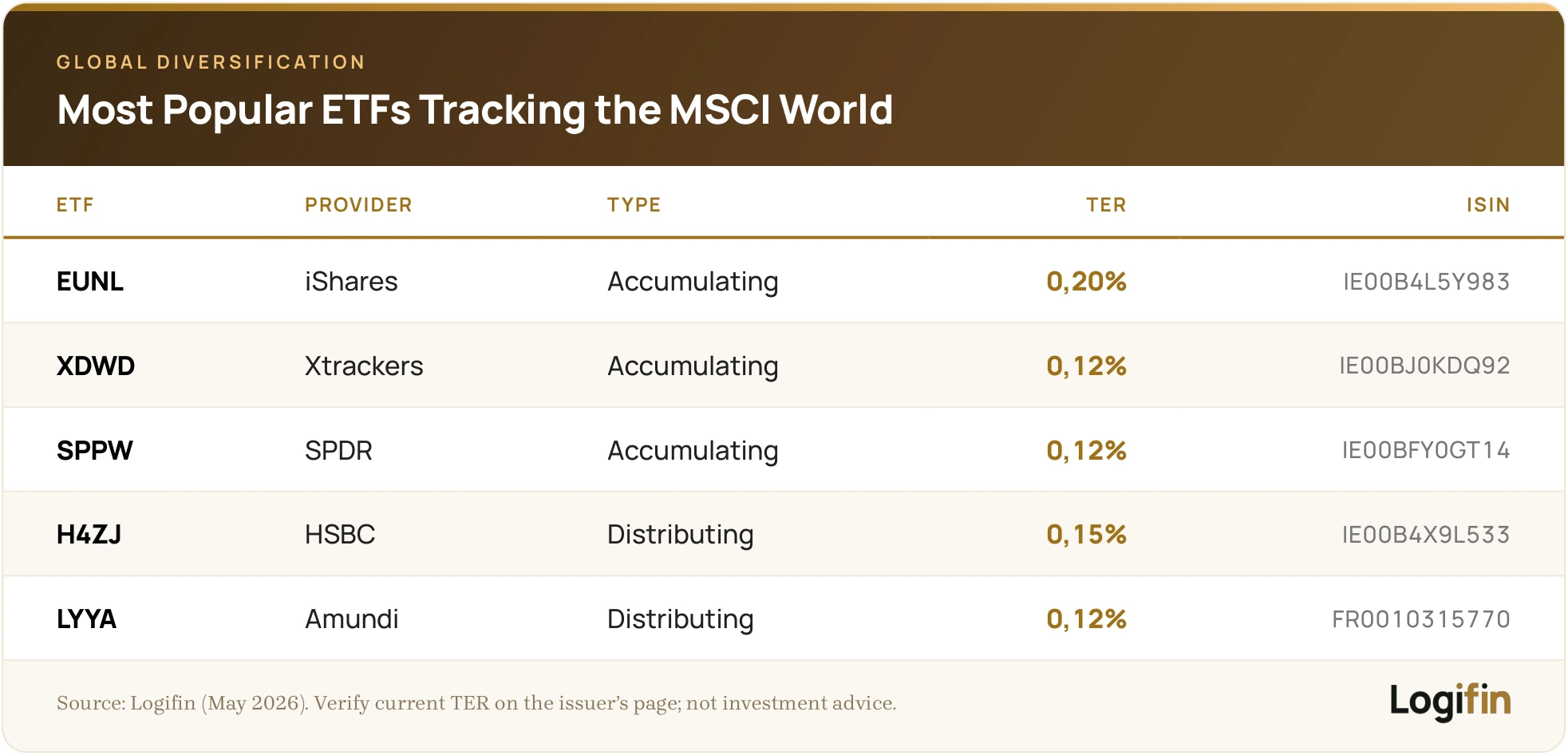
The most minimalist approach is to invest in one global ETF (for example MSCI World or FTSE All-World) and hold it for decades.
- You do not need to follow individual stocks every day.
- You do not need to chase market trends.
- You get instant diversification across thousands of companies with a single move.
🔶 Example 2: The three-ETF portfolio
For more diversification, a minimalist can build a portfolio with just 3 ETFs:
- One US ETF (for example the S&P 500).
- One Europe ETF.
- One Emerging Markets ETF.
With this mix you get exposure to most of the global market (~85–90%) with minimal complexity.
🔶 Example 3: Automatic investing (DCA)
Minimalism is not only about what you invest in but also about how.
With an automatic DCA (Dollar Cost Averaging) plan you invest steadily every month without thinking about whether the market is "high" or "low".
- You avoid the stress of timing.
- You build consistency and discipline.
- You let compounding work for you.
🔶 Example 4: Avoiding unnecessary fees
The minimalist investor knows that costs "eat into" returns. That is why they:
- prefer low-cost ETFs over expensive mutual funds.
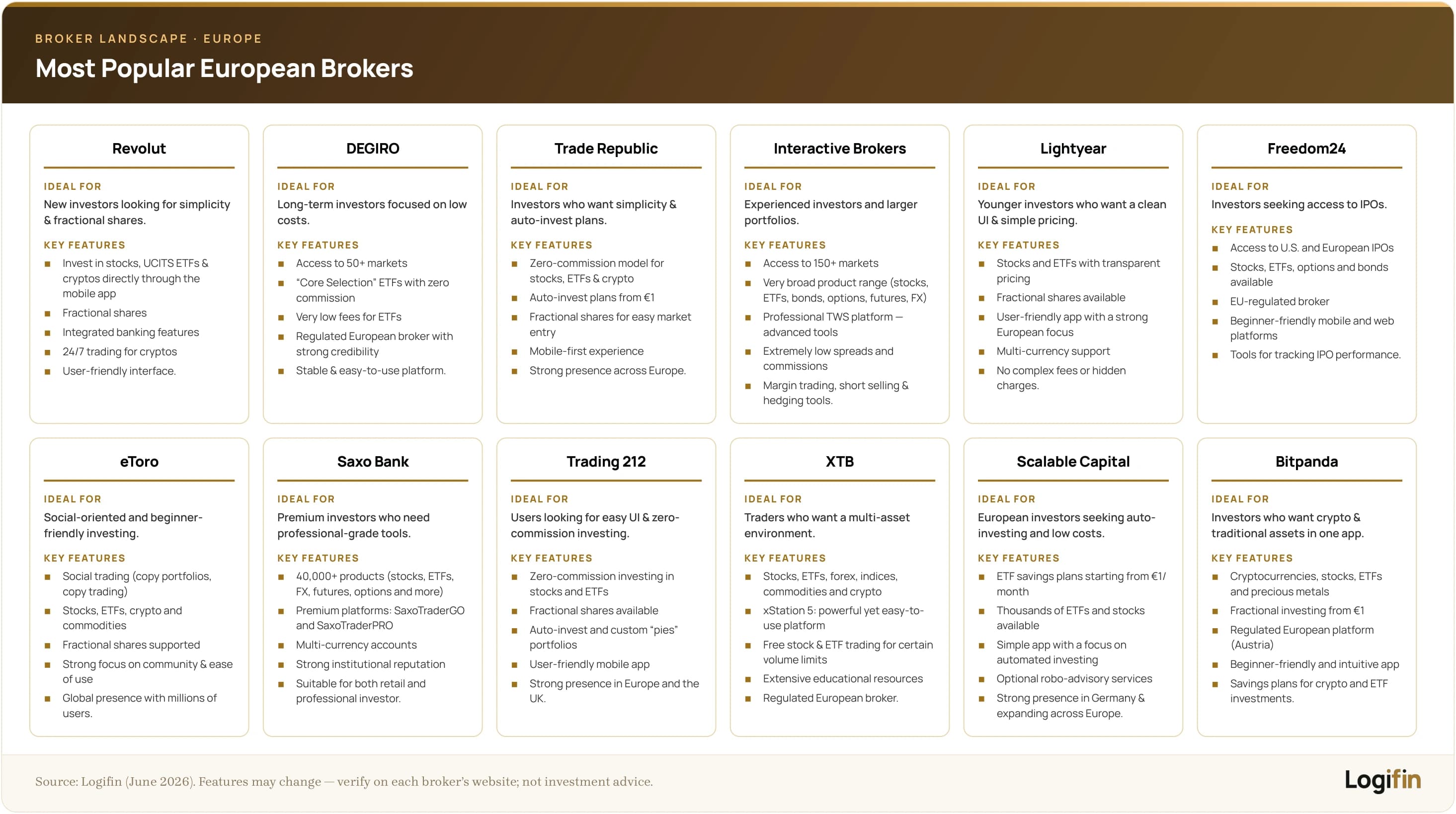
- use brokers with low fees.
- invest for the long term, avoiding constant buying and selling.
Even a difference of 0.5% in costs can reduce your final capital by tens of thousands of euros over a 30-year horizon.
🔶 Example 5: Investing with clear goals
Minimalism also means knowing why you invest.
You do not scatter yourself across every "opportunity" but follow a strategy that serves your own goals:
- Retirement.
- Financial independence (see also the F.I.R.E. movement).
- Children’s education or future projects.
Clarity in your goals protects you from the temptation of "quick wins" and keeps your portfolio on the right track.
The advantages of a minimalist investment strategy
Adopting minimalist principles in investing is not only a matter of "simplicity".
It is an approach with clear advantages over more complex strategies and it gives the investor calm, discipline and often better results.
🔶 Less stress
When you do not need to follow dozens of stocks or complex products, the noise drops and the stress recedes.
You can focus on your life, knowing that your investments work in the background without demanding daily attention.
Example: An investor with 3 ETFs and broad diversification does not need to "run" every time Amazon reports earnings or Tesla falls. Diversification covers these moves.
🔶 Lower cost
One of the biggest advantages of minimalism in investing is that it limits costs.
Simple strategies rely mainly on low-cost ETFs rather than expensive mutual funds or constant trading that "eat into" returns.
- Fewer fees → more net return for you.
- The leaner the strategy, the smaller the bite taken by fees and management costs.
Low cost means you let compounding work without obstacles, something that makes a huge difference over decades.
🔶 Greater discipline
Simplicity is an ally of discipline. When you have a clean and simple portfolio, it is easier to stay consistent with your plan without being swept up by the daily market "noise".
The more complex the portfolio, the greater the temptation to "tinker" with it, to chase trends or to make unnecessary trades.
- Fewer choices = fewer chances for impulsive moves.
- A simple portfolio helps you focus on the long-term goal, not on short-term volatility.
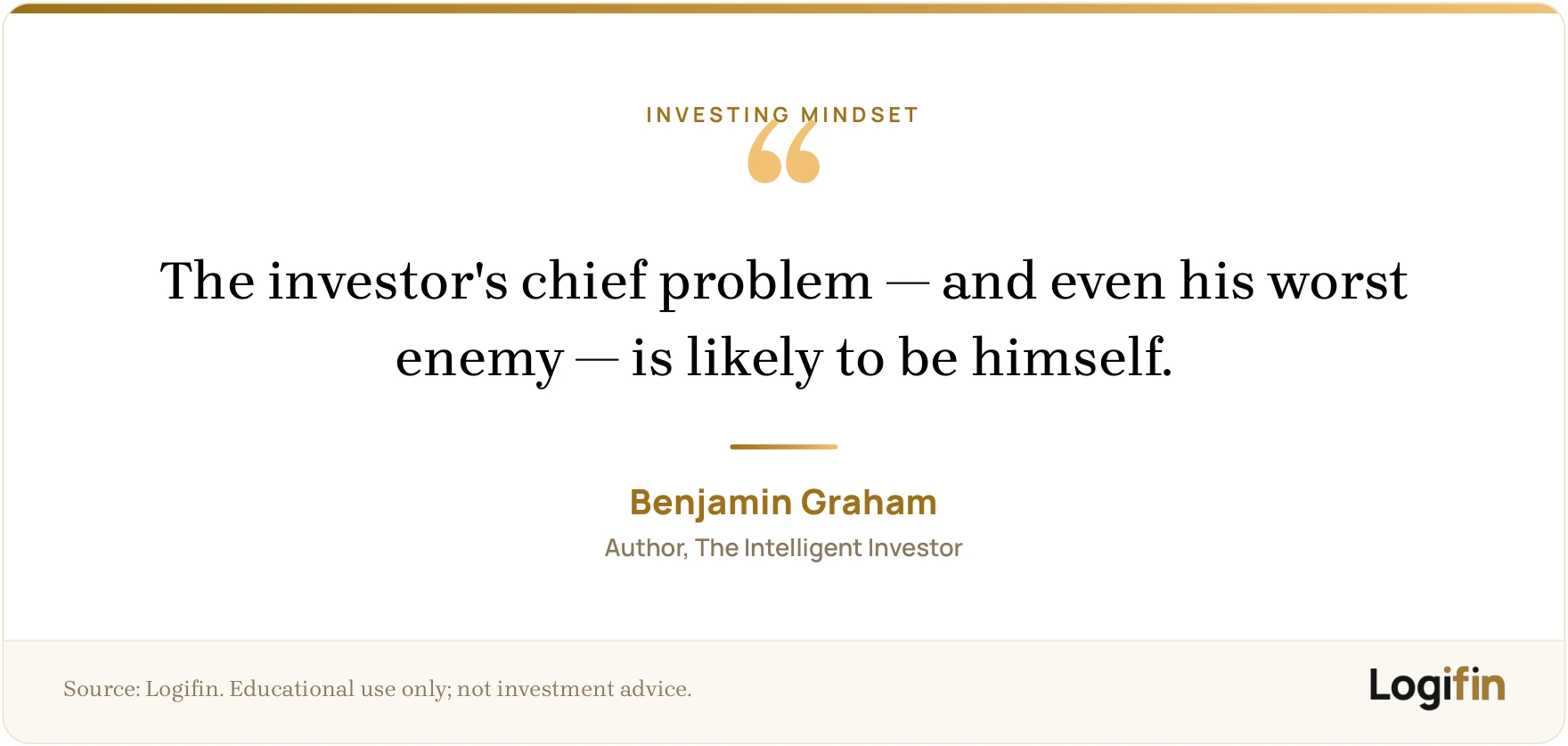
The biggest mistake investors make is to keep changing course. Minimalism reduces this trap, keeping you focused on your strategy and on your real goal.
🔶 Long-term performance
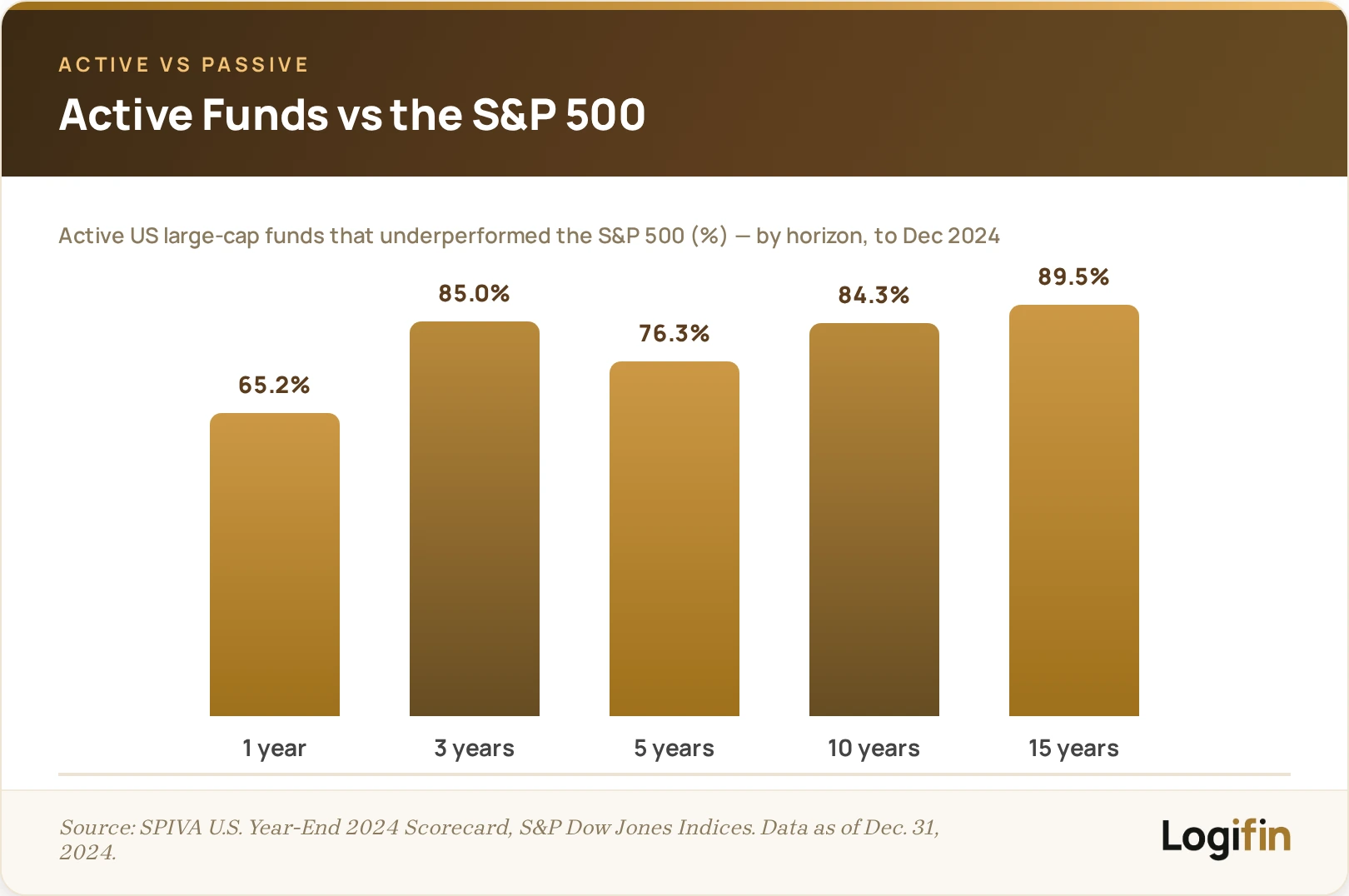
Minimalist strategies, based on index investing (passive investing in indices) and on the consistency of Dollar Cost Averaging (DCA), have historically been shown to beat most active strategies over time.
- Instead of trying to "beat the market", you invest in the market itself.
- Low fees, diversification and discipline create a strong advantage over time.
- Compounding works smoothly, without being "gnawed away" by frequent strategy changes.
Example: According to the SPIVA reports by S&P Dow Jones Indices (2024), over long horizons such as 15 years, the large majority of actively managed mutual funds (often more than 80%) underperform their respective benchmarks.
🔶 Psychological freedom
Minimalism in investing offers a sense of control and clarity.
You do not need to worry about whether you missed an "opportunity"; you know that your plan is long-term, reliable and sufficient.
This reduces investment stress and frees up energy that you would otherwise spend on endless worry or excessive trading.
The risks of minimalism in investing
Although minimalism has many advantages, it is not a panacea.
Excessive simplification can lead to risks that every investor should know about.
As with any strategy, it needs balance and flexibility.
🔶 Limited diversification
Simplicity is a strength, but if it goes to the extreme it can leave the portfolio exposed to risks.
A portfolio made up of 1–2 ETFs is indeed easy to manage, but that does not mean it is fully shielded.
- It may not cover all the main sectors or geographic regions.
- The absence of commodities, real estate or emerging markets reduces the ability to hedge during periods of crisis.
- Dependence on a single market or economy raises concentration risk.
Example:
- An ETF that tracks the S&P 500 gives full access to the US, but leaves out Europe, Emerging Markets and commodities.
- So the portfolio depends too much on the path of the American economy and the dollar.
🔶 Excessive "confidence" in simplicity
A common mistake is for the investor to assume that because they have a simple portfolio, everything is automatically under control. This illusion of certainty can lead to complacency and a lack of monitoring.
Minimalism does not mean inaction; it means you keep only what is necessary, but you monitor it.
A portfolio needs a periodic review to make sure it stays aligned with your goals, your risk tolerance and your personal needs.
The market changes, just as the investor’s goals change (for example starting a family, preparing for retirement).
🔶 Ignoring the alternatives
The minimalist approach, if applied with excessive zeal, can keep you from considering useful tools:
- Bonds of different durations for stability.
- Real estate (REITs) for income and hedging.
- Alternative investments that may offer protection during periods of crisis.
Minimalism does not mean "cutting everything". It means keeping only what holds real value and a role in the portfolio.
🔶 The risk of psychological rigidity
Minimalism is useful as a philosophy, but excessive attachment can become a trap. Some investors tend to treat the minimalist portfolio like a "holy grail", refusing to make changes even when conditions demand it.
Markets change; new sectors emerge, different regions develop and the economy moves through cycles.
Insisting on an oversimplified plan without any adjustment can prove just as risky as excessive complexity.
Flexibility is part of a healthy strategy; minimalism does not mean standing still.
Conclusion and practical takeaways
Minimalism is not only a design or lifestyle trend; it is a mindset that finds strong application in the world of investing too.
The philosophy of simplicity, discipline and focus on the essentials can help you organise your finances better and invest with more clarity and less stress.
🔑 What to keep in mind
- Minimalism reduces overconsumption and boosts your savings.
- In investing it translates into clean strategies, low costs and consistency.
- The advantages: simplicity, less stress, better discipline and often higher net returns.
- The risks: possible lack of diversification, rigidity and ignoring opportunities.
Practical tips for new investors:
1. Start simple
- Do not get lost in dozens of products and complex allocations.
- One to three ETFs are more than enough to get global diversification and build a solid base.
- Simplicity reduces mistakes and raises the chance that you stay consistent with your plan.
2. Keep costs low
- Costs work quietly against you.
- Choose platforms with low fees and ETFs with a low TER, because even small differences add up over time.
- Whatever you save on costs stays in your portfolio and compounds.
3. Avoid the trading temptation
- Minimalism in investing means a long-term commitment, not constant buying and selling.
- Frequent trading raises costs, stress and the chance of mistakes.
- By contrast, discipline and time are the most reliable allies.
4. Do a periodic review
- Minimalism does not mean indifference.
- Review your portfolio 1–2 times a year to make sure it stays well balanced and aligned with your goal.
- Not daily, not weekly, only as much as needed.
The content of this article is provided exclusively for informational and educational purposes and does not constitute investment advice or a recommendation to buy or sell financial products. The information is based on publicly available sources considered reliable, without any guarantee of accuracy or completeness. Before making any financial or investment decision, it is recommended that you consult a certified professional advisor or accountant, taking into account your own financial situation and risk profile. The Logifin team bears no responsibility for any direct or indirect damages arising from the application of the information presented.
Related articles

FIRE: The road to financial independence
What the FIRE movement is, how to calculate your own number and what you can keep from its philosophy, even if you are not aiming to exit at 40.
12 min read

What is the 50-30-20 rule and how can you apply it?
The simple rule that helps organise your finances and build financial stability
16 min read

How much you should save and invest each month
What the data says, what the well-known rules suggest and how to find the number that fits your own life.
11 min read

What is a recession and how it affects investors?
How a recession is defined, what causes one, how the markets usually behave during it and what an investor can do to prepare in advance.
24 min read
EXPLORE LOGIFIN
Everything you need in order to learn, plan and track your investments.
Logifin Blog
Learn everything you need to get your finances in order and invest with confidence.
Logifin Insights
What moves the markets and what it means for a long term investor. Short and without the noise.
Logifin Tools
Free, inside the site, no signup. Everything you calculate stays on your device.
Logifin ETF Hub
Find the ETF that fits you: 550+ UCITS ETFs, smart filters and in-depth comparisons.
Logifin Guides
A series of guides that builds your investment plan step by step. The first guide is free for everyone.
Logifin Circle
The tools and the Hub are free for everyone. You become a member for the intelligence that never stops.