Logifin Insights
Why did diesel hit a record in Europe?
The US is allowing purchases of Russian diesel again, the EU is not. Why diesel has risen far more than oil and why Europe is so exposed.
12 October 2026 · 6 min read
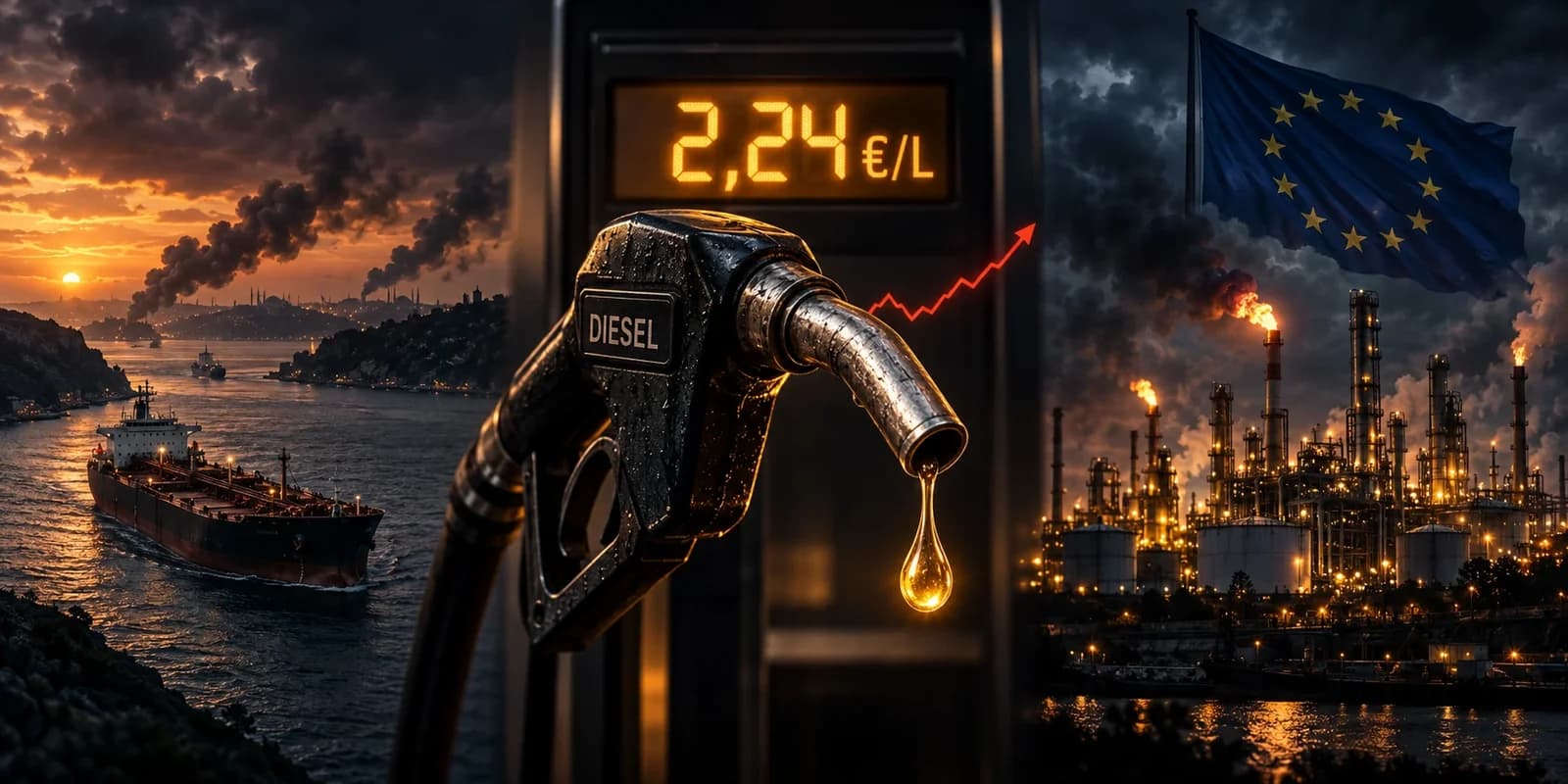
On Friday 9 October, after a phone call with Vladimir Putin, Donald Trump announced that Russia would send up to 4.8 million tonnes of diesel to the United States. The same day the US Treasury authorised purchases of Russian diesel until 7 April 2027. Nothing changes for Europe, because the EU ban on Russian fuels remains in force. And diesel in Europe has already hit a record: on 28 September the average pump price reached 2.24 euros a litre, above the previous record of 2.03 euros in June 2022.
What the US and Russia agreed
According to Trump's post, Russia will send 300,000 tonnes immediately, another 500,000 in November and one million tonnes right after that. A further three million tonnes will follow within a short period, depending on the condition of Russian refineries.
The Russian government has banned diesel exports since 8 July, after Ukrainian drone attacks cut the output of its refineries. On 10 October it allowed, as an exception, the sale of 500,000 tonnes abroad.
In the United States the pressure shows at the pump. The average diesel price reached 6.53 dollars a gallon on 21 September, the highest ever recorded by the US Energy Information Administration (EIA).
The EU response was negative. "Suspending sanctions on Russian diesel provides Moscow with more revenues to wage war," EU foreign policy chief Kaja Kallas said on Saturday. The ban on imports of Russian fuels, in place since 5 February 2023, stays as it is. On Monday 12 October EU foreign ministers also meet to add some 1,600 individuals and entities to the sanctions lists.
Why diesel has risen more than oil
From 27 February, the last trading day before the war with Iran, to 9 October, the New York diesel futures contract rose 77% while Brent rose 44%. Brent now trades at around 104 dollars a barrel, below its spring highs. Diesel, by contrast, hit a new record in mid-September.
The same gap shows up at the pump. Until February, on the EU average, diesel was cheaper than petrol: 1.59 euros a litre against 1.64. On 5 October it was 14 cents more expensive, at 2.15 euros against 2.01.
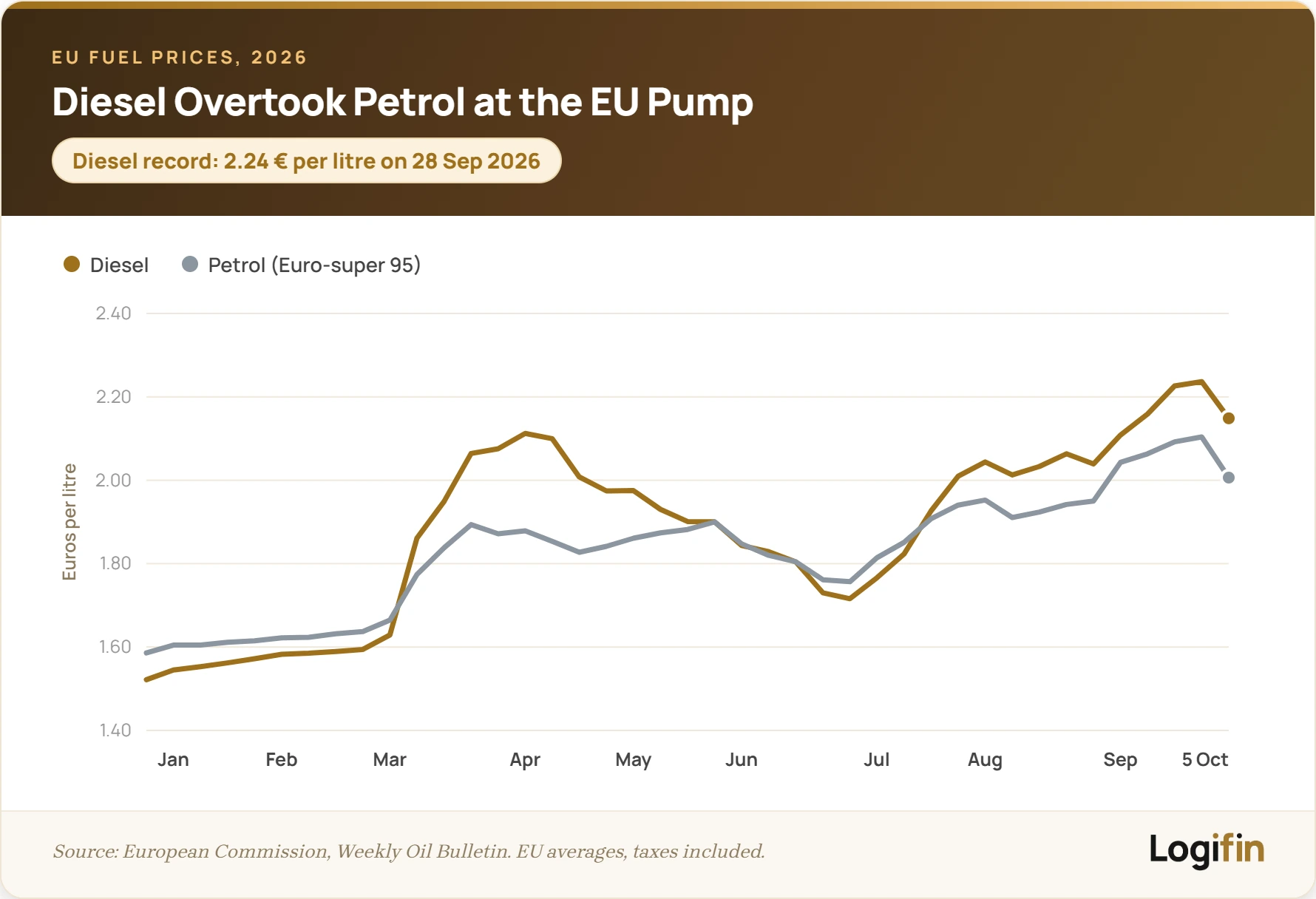
Diesel is not oil as it comes out of the ground. It is a refined product and its price has two parts: the price of crude and the refining margin, which is the difference between the price of the fuel and the price of the crude it is made from. This year it is mostly the second part that has risen: based on the New York contract and Brent, the diesel refining margin went from about 40 to about 94 dollars a barrel.
Which diesel is missing from the market
According to the monthly report of the International Energy Agency (IEA) of 11 September, crude from the Persian Gulf has partly found other routes. With pipelines that bypass the Strait of Hormuz and US naval escorts, the loss in Gulf crude exports narrowed to below 45%. There was no similar solution for refined products. In August net diesel exports from the Gulf countries were 390,000 barrels a day, just over a quarter of their pre-war level.
At the same time Russia almost stopped exporting fuels, after more intense Ukrainian attacks on its refineries. In February the Gulf and Russia together supplied almost 45% of the diesel shipped by sea around the world. In August they shipped 1.6 million barrels a day less than in February. Refineries elsewhere are running at the limit of their capacity, but they cover only part of the gap.
Why Europe is so exposed
Every year the EU imports more than 40 million tonnes of diesel and heating gas oil from countries outside the Union. In 2021 almost half of those imports, 47.5%, came from Russia. After the 2023 ban Europe found other suppliers. In 2024, the most recent year with Eurostat data, 40.4% of imports came from Gulf countries, mainly Saudi Arabia, 19.9% from the United States and 14.2% from India.
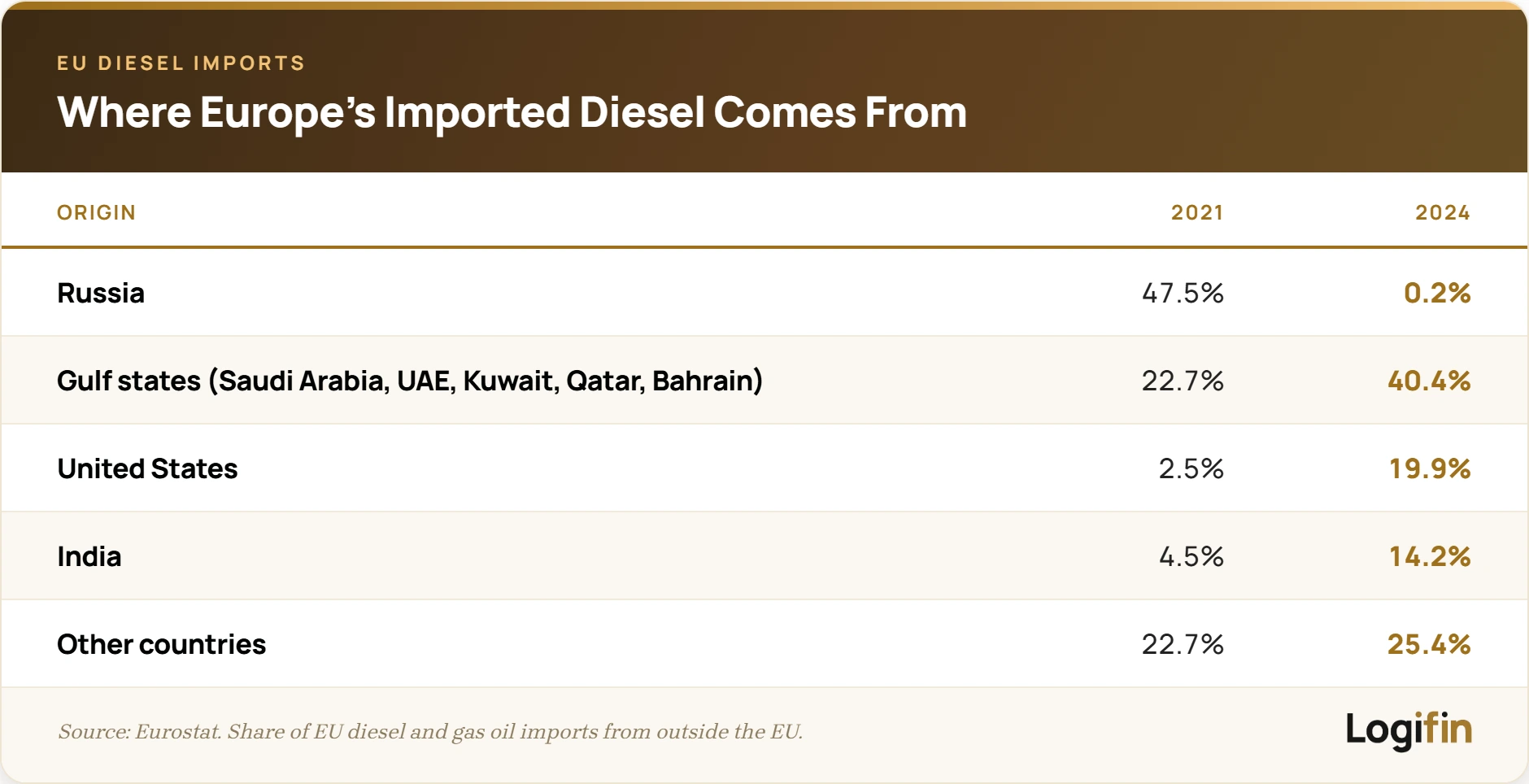
In other words, Europe replaced Russian diesel mainly with diesel from the Gulf. The two suppliers now missing from the global market are exactly the ones Europe has relied on over the past five years, first Russia and then the Gulf.
The US and Russia deal does not reach Europe directly and the volumes are small compared with the gap. If all 4.8 million tonnes are delivered, they amount to about 36 million barrels, which is less than 200,000 barrels a day over the six months of the licence, against a gap of 1.6 million barrels a day. There is an indirect effect, because diesel is a global market and the United States is one of the EU's largest suppliers. Every barrel of Russian diesel that arrives there leaves US refineries with one more barrel to export.
What it means for inflation and interest rates
Diesel powers trucks, ships and farm machinery. Its price therefore passes, with a delay of months, into the cost of almost every product that has to be transported. According to Eurostat's flash estimate, energy inflation rose to 18.8% in September, from 14.3% in August. Headline inflation in the euro area reached 3.8%. Excluding energy and food inflation was 2.5%, so the September increase came mainly from energy.
The ECB had already attributed the August increase mainly to fuel refining margins and raised interest rates in September to keep the energy shock from passing into other prices and wages. For anyone holding deposits or bonds, inflation that stays high means the real return, that is the return after inflation, is lower than the interest rate suggests.
What to watch
- Whether Russia actually ships diesel. The export ban formally applies until the end of October and the remaining tonnes depend on refineries that are still coming under attack.
- Fuel exports from the Gulf. They are the larger of the two gaps. In October attacks on ships around the Strait of Hormuz have continued almost daily.
- Final inflation data and the ECB. Eurostat publishes final September data on 16 October and the ECB announces its next decision on 29 October.
What to take away
- Diesel has risen more than oil because refined fuel is missing: in August the Gulf and Russia shipped 1.6 million barrels of diesel a day less than in February.
- Europe is particularly exposed, because it replaced Russian diesel with diesel from the Gulf. The US and Russia deal does not affect it directly.
- The cost is already reaching inflation: energy rose 18.8% in September and the ECB decides again on 29 October.
EXPLORE LOGIFIN
Everything you need in order to learn, plan and track your investments.
Logifin Blog
Learn everything you need to get your finances in order and invest with confidence.
Logifin Insights
What moves the markets and what it means for a long term investor. Short and without the noise.
Logifin Tools
Free, inside the site, no signup. Everything you calculate stays on your device.
Logifin ETF Hub
Find the ETF that fits you: 500+ UCITS ETFs, smart filters and in-depth comparisons.
Logifin Guides
A series of guides that builds your investment plan step by step. The first guide is free for everyone.
Logifin Circle
The tools and the Hub are free for everyone. You become a member for the intelligence that never stops.