Logifin Insights
Why did the ECB raise rates?
On 10 September the ECB raised its deposit rate to 2.50%, while core inflation was easing. The explanation lies in what it is trying to get ahead of.
11 September 2026 · 5 min read

On 10 September the European Central Bank raised all three of its key rates by 25 basis points. The deposit facility rate goes to 2.50% from 16 September. Now look at the data it had in front of it: inflation excluding energy and food fell to 2.4%, services inflation dropped from 3.3% to 3.0%, and on pay the ECB writes that wages do not show a material response to the energy shock at this stage.
Almost every gauge that normally justifies a rise moved down, and the ECB raised rates anyway. That is not a contradiction, it is how monetary policy works.
The August rise came from energy
Euro area inflation rose to 3.3% in August, from 2.9% in July. Energy inflation, however, rose to 14.3%, from 10.3% in July. The ECB attributes the acceleration in particular to refining margins on liquid fuels and to higher energy commodity prices.
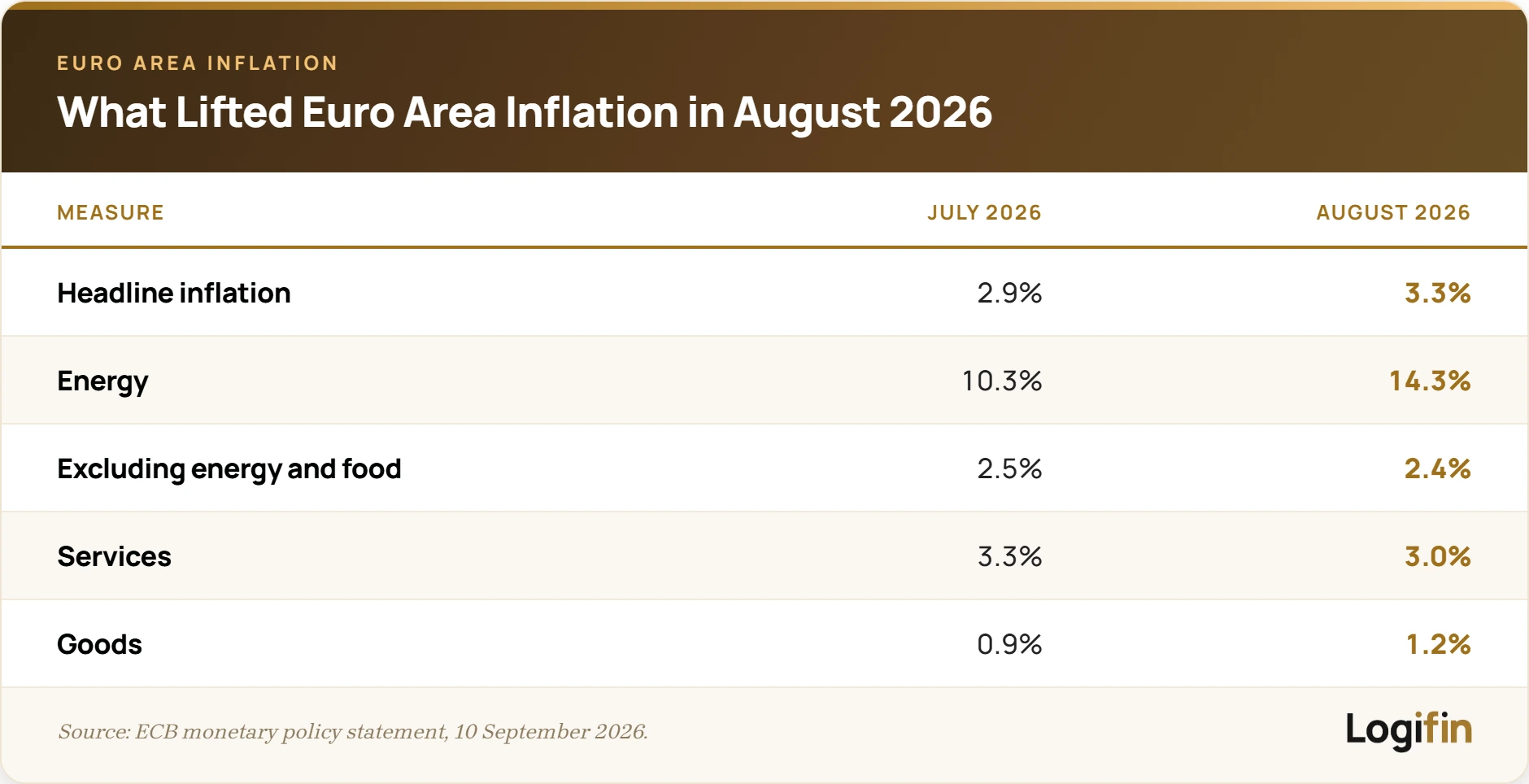
Take out energy and food and the picture changes: the gauge that shows underlying pressure edged down, from 2.5% to 2.4%. On the August data alone, the ECB had no reason to raise rates. The inflation a household sees on an electricity bill is not the same as the inflation that shows whether high prices have taken root in the economy.
Which rates the ECB raised
The ECB raised all three of its key rates: the deposit facility rate to 2.50%, the main refinancing rate to 2.65% and the marginal lending rate to 2.90%. For markets the most important of the three is the deposit facility rate, because the ECB has steered its monetary policy stance through it since March 2024.
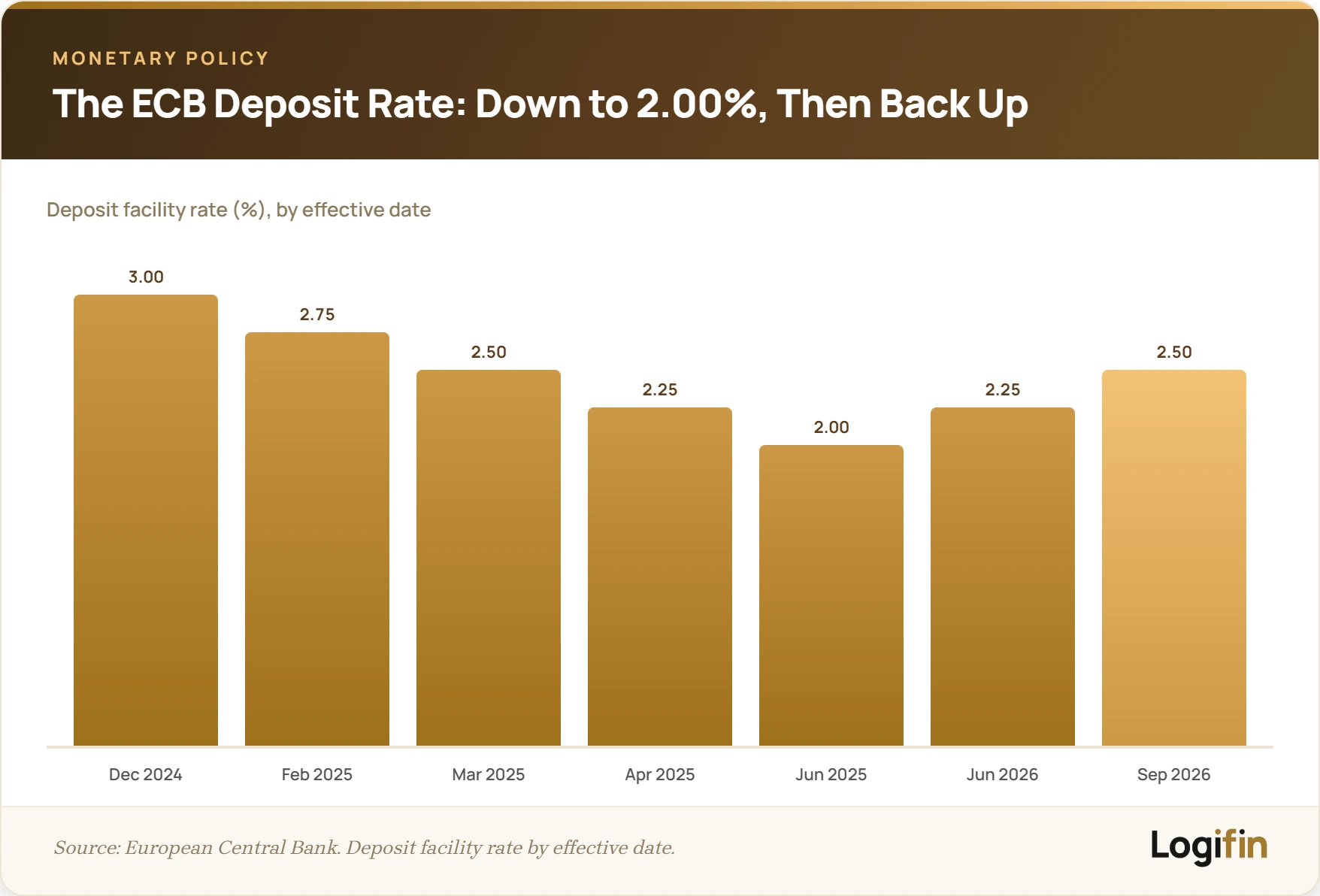
From 3.00% in December 2024 the deposit facility rate came down in four steps to 2.00% in June 2025, stayed there for a year and has been climbing again since June 2026. With this rise it sits at the same level as in March 2025, although back then the rate was falling.
Why the ECB acts before the problem shows
Rate rises take time to reach the real economy. They work first on loans, saving and investment, while the effect on prices usually shows up several quarters later. If the central bank waits to see the problem in the data, it is already late.
And the problem with an energy shock is not the shock itself. It is the second round: higher energy prices start passing into other prices and into wages, and keep inflation elevated even once energy becomes cheaper again. The ECB says so plainly, that higher energy prices are expected to feed through gradually to core and food price inflation, and that the longer energy prices stay high, the more likely they are to drive up broader inflation.
Three figures in the ECB statement explain why it takes that risk seriously.
- The ECB projections. Headline inflation is projected to fall, 3.0% in 2026, 2.5% in 2027 and 2.1% in 2028. The gauge excluding energy and food, however, rises first, from 2.5% in 2026 to 2.6% in 2027, and only then eases to 2.3%. The ECB expects the pressure to pass from energy into the rest of the economy.
- Wages. Compensation per employee grew 3.3% in the second quarter, down from 3.5% in the first. The ECB wage tracker nonetheless points to a modest uptick in negotiated wage growth, to 2.7%, in the first half of 2027.
- Unit profits. Growth in unit profits rose from 0.3% to 2.2%.
The ECB is therefore not responding to the core inflation it sees today, but to the one it expects in a year or two.
What the rise means for bonds and deposits
The deposit facility rate is what banks earn for leaving money at the central bank overnight. No bank has a reason to lend short term for less than the deposit facility rate, so that rate effectively sets short-term yields in the market. It passes quickly into money market funds and into the yields on newly issued debt.
For anything already issued, the mechanism runs the other way. A bond promises a fixed coupon. When new bonds arrive paying more, nobody pays the old price for the old one, so its price falls until its yield matches the yield on the new bonds. That is why a rate rise shows up as a drop in the value of a bond fund, with nothing having changed in the creditworthiness of the issuer.
The effect is not the same across every bond ETF. It depends on which bonds each one holds and on their maturity. The Logifin ETF Hub shows what each ETF tracks.
What to watch from here
If energy eases as the ECB expects, the headline number will come down as the energy effect fades. For the second round, two other figures matter: the gauge excluding energy and food in the monthly readings ahead, which stands at 2.4% today, and wages, which have not responded so far.
The next ECB monetary policy meeting is on 29 October. Two more inflation readings will have been published by then.
What to take away
- The ECB raised rates even though core inflation edged down in August and wages had not responded.
- Monetary policy needs quarters to affect prices, so decisions rest on what is expected rather than on what has already been recorded.
- In the ECB's own projections the gauge excluding energy and food rises in 2027 before easing, which is what the decision is built on.
EXPLORE LOGIFIN
Everything you need in order to learn, plan and track your investments.
Logifin Blog
Learn everything you need to get your finances in order and invest with confidence.
Logifin Insights
What moves the markets and what it means for a long term investor. Short and without the noise.
Logifin Tools
Free, inside the site, no signup. Everything you calculate stays on your device.
Logifin ETF Hub
Find the ETF that fits you: 550+ UCITS ETFs, smart filters and in-depth comparisons.
Logifin Guides
A series of guides that builds your investment plan step by step. The first guide is free for everyone.
Logifin Circle
The tools and the Hub are free for everyone. You become a member for the intelligence that never stops.