Logifin Insights
Why Google is buying nuclear power
On 6 October Google signed a 20-year contract for 890 megawatts of new nuclear capacity from reactors that are already running. Why it pays for plant upgrades, why Constellation's stock rose 12% and which other technology companies are buying nuclear power.
7 October 2026 · 6 min read
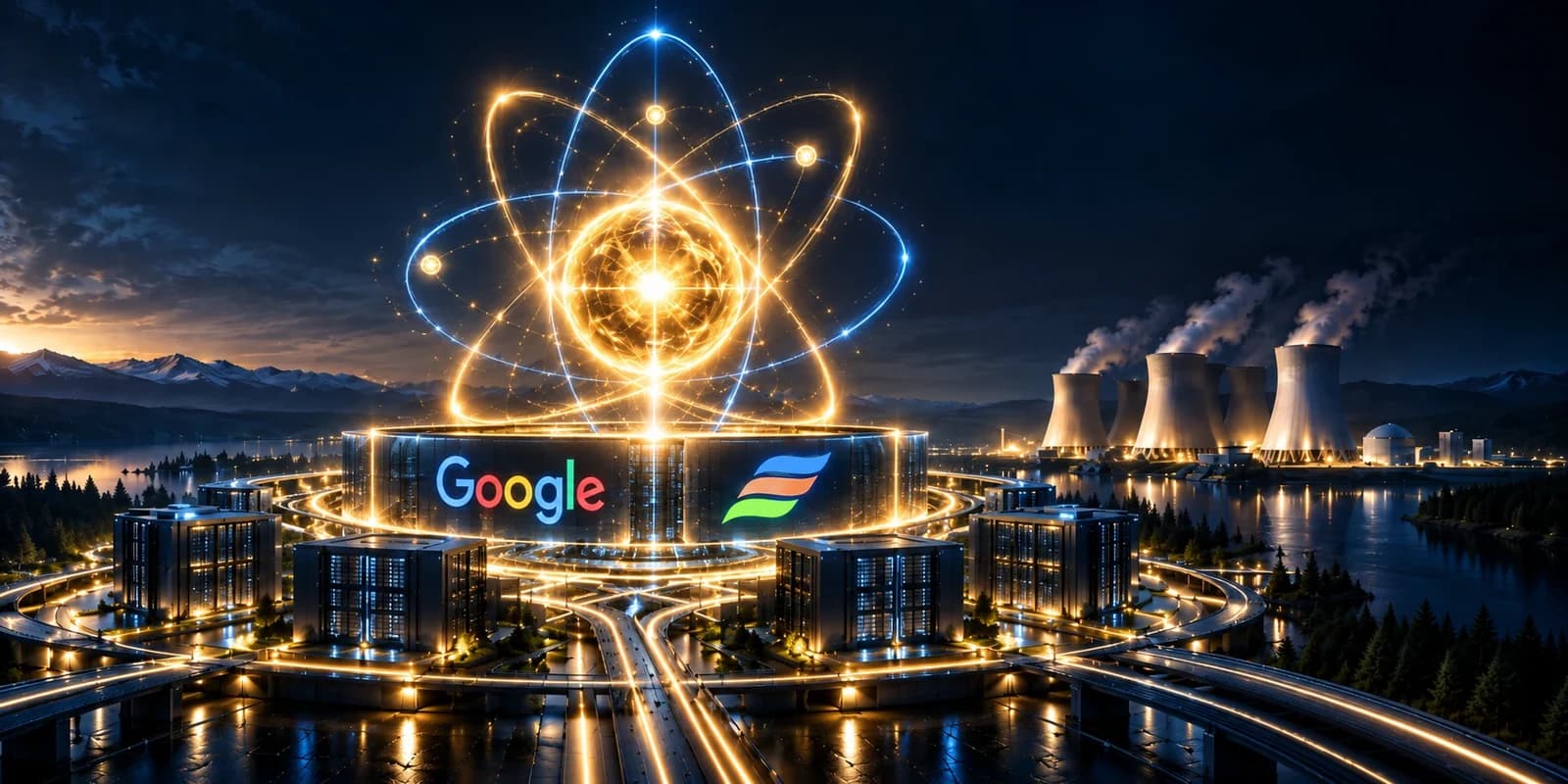
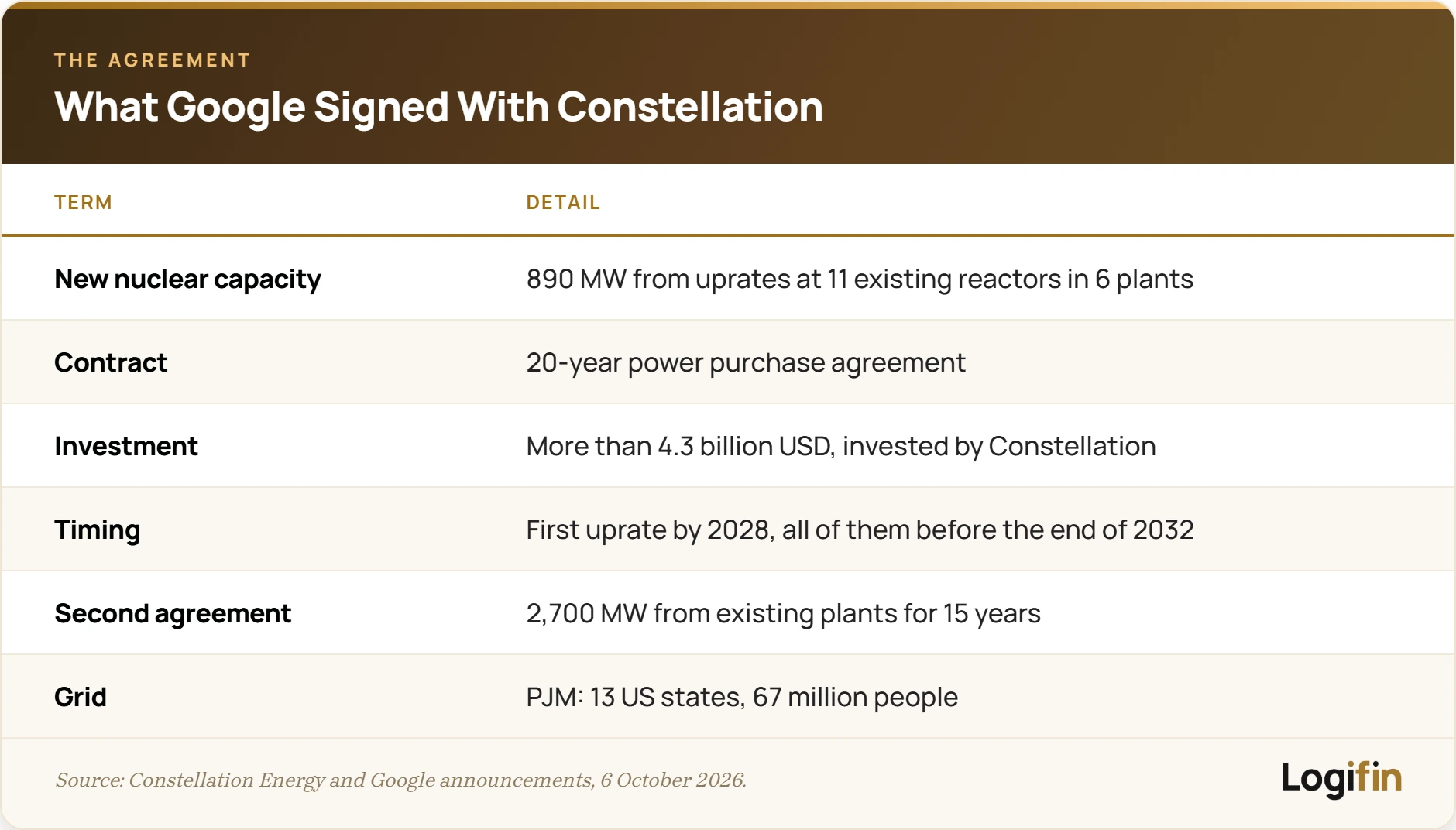
On Tuesday 6 October Google and Constellation Energy, the largest nuclear energy company in the United States, announced a 20-year power purchase agreement. Under the agreement Constellation will upgrade 11 reactors that are already running at six plants in Illinois, Pennsylvania and New Jersey, so that they produce more electricity. The upgrades will add 890 megawatts to the grid, roughly the output of a large new nuclear reactor. Constellation will invest more than 4.3 billion dollars and Google will buy the resulting power for 20 years. According to the two companies, the first upgrade will be completed by 2028 and all of them before the end of 2032.
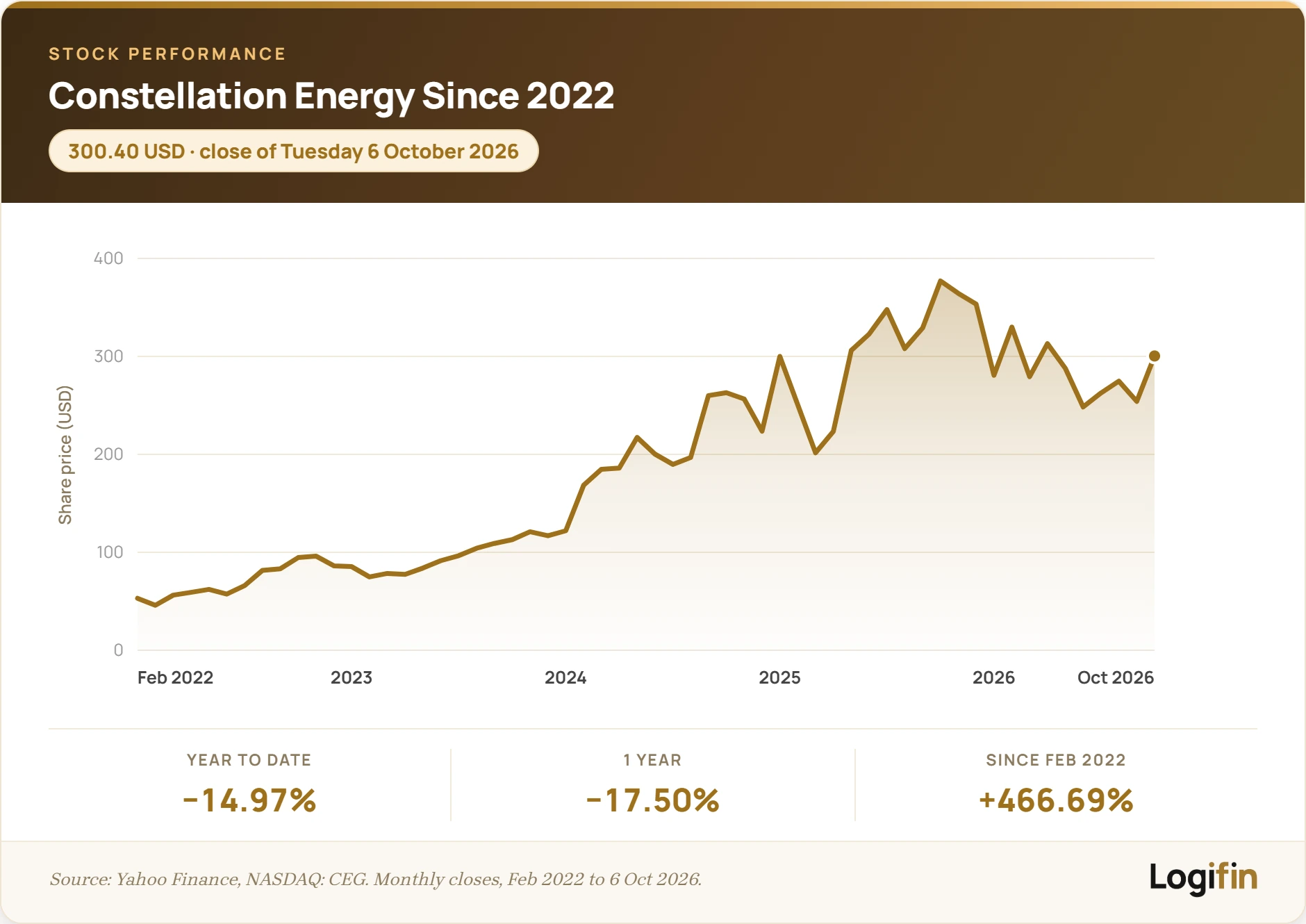
On the same day Constellation's stock closed at 300.40 dollars, up 12.25%. Even after that rise, the stock is down 14.97% since the start of the year and remains below its record close of 403.95 dollars on 15 October 2025. Constellation has been a separately listed company since February 2022, when it was spun off from Exelon.
What Google and Constellation signed
A power purchase agreement, or PPA, is a contract in which a large customer commits to buying electricity from a producer for many years, on terms agreed at the outset. The price of this contract was not disclosed.
Google is not paying for a new plant but for more output from plants that already operate. A power uprate means new turbines, steam generators and digital control systems at reactors that are in service. Every uprate needs approval from the US Nuclear Regulatory Commission (NRC).
The two companies also signed a second, 15-year agreement for 2,700 megawatts from Constellation plants that supply the grid today.
Why data centres need so much electricity
Data centres that train and run artificial intelligence models operate without pause, so they need power that does not depend on the weather or the time of day. A large share of the spending by big technology companies on artificial intelligence goes into these centres. In April 2025 the International Energy Agency (IEA) estimated that electricity use by data centres worldwide would more than double by 2030, to around 945 terawatt hours, slightly more than the entire consumption of Japan.
The rise in demand is already visible in PJM, the grid where the plants in the agreement are located. PJM covers 13 states with 67 million people and secures the capacity it will need through auctions, in which producers commit to having power available for a future year. In the auction of 14 July, for the period from June 2028 to May 2029, PJM secured 6,831 megawatts less than its reliability requirement. It was the second auction in a row with a shortfall and the price reached the maximum allowed, 325 dollars per megawatt per day. PJM's chief executive, David Mills, said that demand for electricity is growing faster than supply.
Electricity use by data centres is rising in Europe too. In Ireland data centres consumed 23% of the country's metered electricity in 2025, up from 5% in 2015, according to the Irish Central Statistics Office (CSO).
Why Google pays for uprates
A new nuclear plant needs many years of design, licensing and construction before it connects to the grid. Uprates take place at plants that are already connected, so they avoid the multi-year timelines and connection delays of a new plant, as Constellation points out. According to Google, the 890 megawatts will arrive years sooner than they would from a newly built reactor.
Google says it has now secured contracts for more than 1.5 gigawatts of new nuclear capacity in the United States, from uprates and from restarts of plants that had closed. Because Google is the main buyer of the power from the uprates, other customers on the grid will not bear their cost, according to the two companies.
Google is not the only technology company buying nuclear power from Constellation. In 2024 Microsoft signed a 20-year contract for the restart of the Crane plant, formerly Unit 1 of Three Mile Island. In 2025 Meta signed a 20-year contract for the Clinton plant in Illinois. On 30 September Amazon signed a 20-year contract for 690 megawatts from the Calvert Cliffs plant in Maryland, of which 190 will come from an uprate.
Why a 20-year contract lifted the stock 12%
A company's market value rests on the profits investors expect in the years ahead. A producer that sells power on the wholesale market receives prices that change constantly, so its revenue for 2035 or 2040 is uncertain. With the contract, part of Constellation's revenue for the next 20 years now has a buyer that has committed to pay. Google describes this as the long-term revenue certainty Constellation needs to invest in the upgrades.
The first upgrade will be ready by 2028, yet the stock rose on the day of the announcement. A share price already reflects the profits expected in the future, so a contract that makes them more certain changes the price immediately rather than when the money arrives.
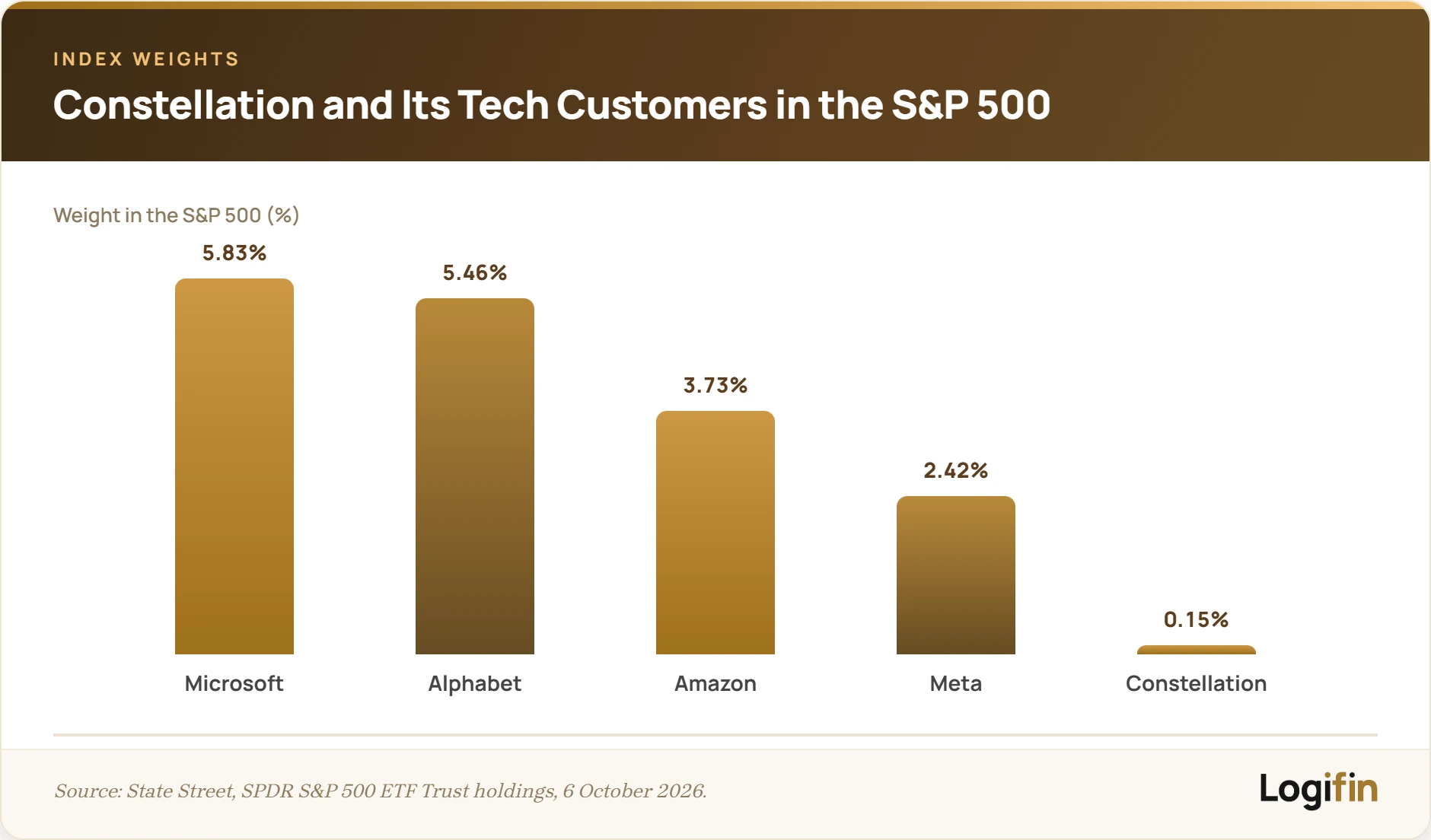
Even after the rise, Constellation remains far smaller than its customers. On 6 October, according to the holdings of the SPDR S&P 500 ETF Trust, it weighed 0.15% in the S&P 500, while Microsoft weighed 5.83%, Alphabet, the parent company of Google, 5.46%, Amazon 3.73% and Meta 2.42%. With such a small weight, Constellation's rise added less than 0.02 percentage points to the index. The S&P 500 rose 0.58% that day and closed at a new record of 7,818.93 points.
What to watch
The uprates first need approval from the NRC. The applications for the 11 uprates are expected to be filed over the coming years.
The next PJM auctions will show whether the capacity shortfall is narrowing. Within one week Constellation signed two 20-year contracts, with Amazon and with Google. It remains to be seen whether other large consumers will pay for new capacity in the same way.
What to take away
- Google is paying for 890 megawatts from uprates at 11 reactors that are already running, because this way the new capacity reaches the grid years sooner than it would from a new plant.
- A 20-year contract makes a producer's future revenue more certain. That is why Constellation's stock rose 12.25% for power that will start reaching the grid from 2028.
- On the PJM grid demand for electricity already exceeds supply. The auction for June 2028 to May 2029 secured 6,831 megawatts less than the reliability requirement.
EXPLORE LOGIFIN
Everything you need in order to learn, plan and track your investments.
Logifin Blog
Learn everything you need to get your finances in order and invest with confidence.
Logifin Insights
What moves the markets and what it means for a long term investor. Short and without the noise.
Logifin Tools
Free, inside the site, no signup. Everything you calculate stays on your device.
Logifin ETF Hub
Find the ETF that fits you: 500+ UCITS ETFs, smart filters and in-depth comparisons.
Logifin Guides
A series of guides that builds your investment plan step by step. The first guide is free for everyone.
Logifin Circle
The tools and the Hub are free for everyone. You become a member for the intelligence that never stops.