Logifin Insights
Gold is at 4,400 dollars and nobody mentions the other half
Gold opened Monday 10 August at 4,400 dollars an ounce. The same metal had touched roughly 5,590 dollars in late January. Both statements are true.
10 August 2026 · 3 min read
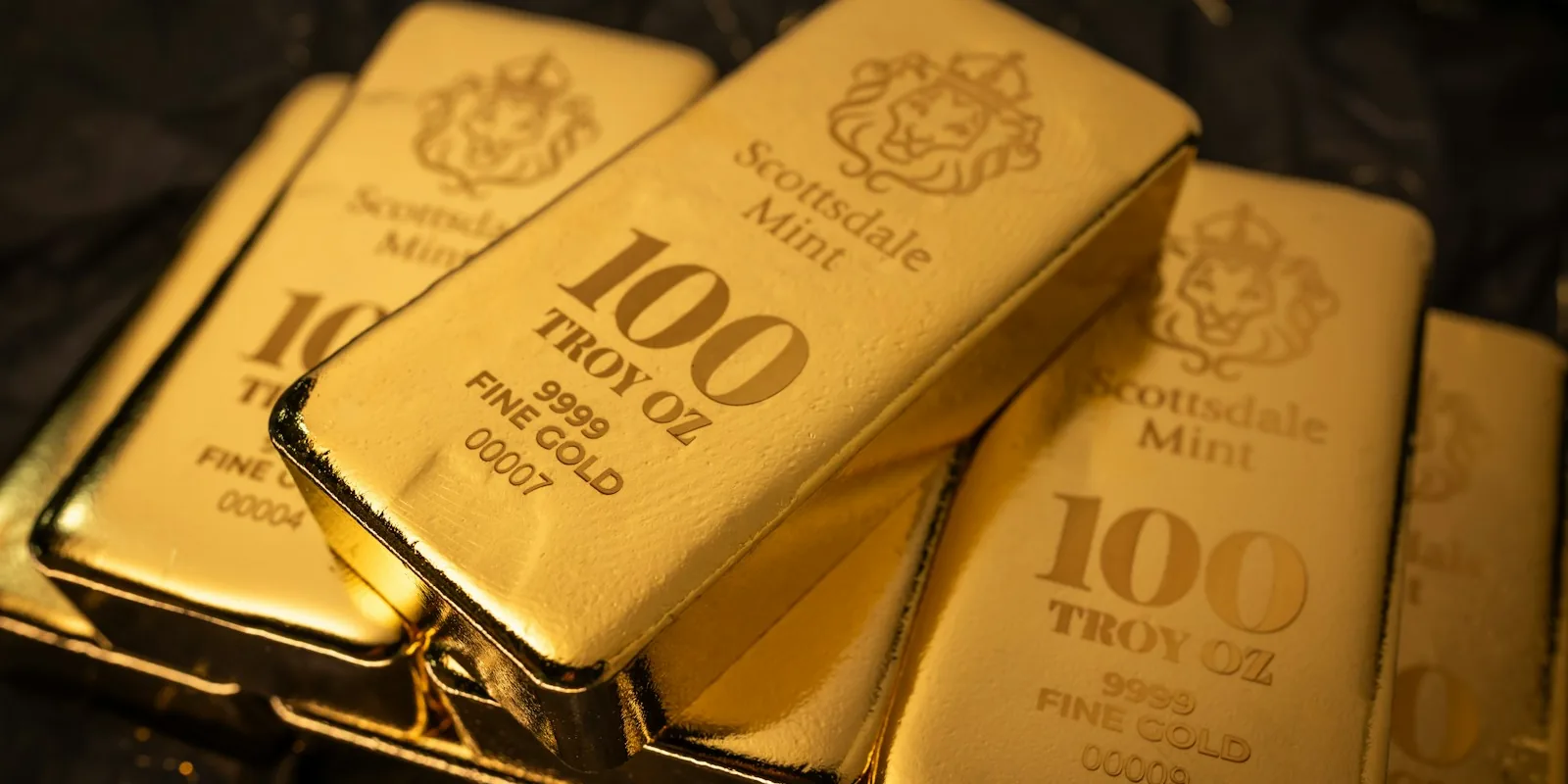
On Monday 10 August the December gold contract opened at 4,400 dollars an ounce, flat against Friday's close. Spot prices have moved above 4,400 and futures briefly touched 4,500. The headlines call it a rally.
The same metal reached roughly 5,590 dollars on 28 January, the highest level in its history. Both things are true at once.
How it can be a rally and a decline
It depends where you measure from. Since June the move is upward and the coverage is not lying. Since January the price sits about 21% lower.

That second number has a consequence worth seeing clearly. To get from 4,400 back to 5,590, gold needs a rise of about 27%. A fall and its recovery are never the same percentage, and the deeper the fall the wider that gap becomes: a 50% decline needs a 100% gain to get even. It is the same arithmetic described in the ANCHOR guide for equities, and metals get no exemption from it.
This is not a criticism of gold. It is a reminder that every percentage return needs a starting date before it means anything. Without one, the same chart supports both excitement and disappointment, depending on where somebody puts the left edge.

What is driving the price right now
Three reasons are cited:
- Geopolitical tension. Gold rises when uncertainty carries no expiry date.
- Central bank buying. It continues, with China at the front.
- Doubt about the global economy. The same doubt that keeps interest rates waiting.
Notice what is missing from that list. There are no earnings, no dividend and no interest. Gold produces nothing. Its return is entirely the change in its price, which means it depends completely on what the next buyer is willing to pay.
There is also a hidden cost that never appears on the chart. When interest rates are high, holding gold means giving up the yield a bond or a money market fund would pay you. That is why gold usually struggles when real interest rates rise and breathes easier when they fall.
What that means inside a portfolio
An asset without income cannot be valued the way a company is. There is no cash flow to discount, so there is no fair value in the sense that a share or a bond has one. Nobody can argue from first principles that gold is worth 4,000 or 6,000, because there is nothing to measure beyond the mood of the market.
That does not make gold useless. It makes it different. Its role is discussed in terms of how it behaves under stress rather than in terms of expected return, which is why those who use it usually give it a small fixed share rather than a position that grows as the price does.
In Europe there is also a legal detail that confuses many people: gold is not sold as an ETF but as an ETC, because a UCITS fund is not allowed to hold a single asset. How to invest in gold through an ETC explains the difference and what it means for the holder.
What to take away
- Every percentage return needs a starting date. Without one, the same chart says whatever the headline wants.
- Gold produces no income. The return is only the price, and the price is only demand.
- In practice the exposure comes through an ETC, not an ETF. The Logifin ETF Hub shows exactly what each product holds and what it costs.
EXPLORE LOGIFIN
Everything you need in order to learn, plan and track your investments.
Logifin Blog
Learn everything you need to get your finances in order and invest with confidence.
Logifin Insights
What moves the markets and what it means for a long term investor. Short and without the noise.
Logifin Tools
Free, inside the site, no signup. Everything you calculate stays on your device.
Logifin ETF Hub
Find the ETF that fits you: 550+ UCITS ETFs, smart filters and in-depth comparisons.
Logifin Guides
A series of guides that builds your investment plan step by step. The first guide is free for everyone.
Logifin Circle
The tools and the Hub are free for everyone. You become a member for the intelligence that never stops.